Modernism
T. S. Eliot
1888 – 1965
US-British poet (1888–1965)
- United States · United Kingdom · United Kingdom
- British
- Modernism
- modernist-literature
- ◆ Nobel 1948
- Literary Theory
About
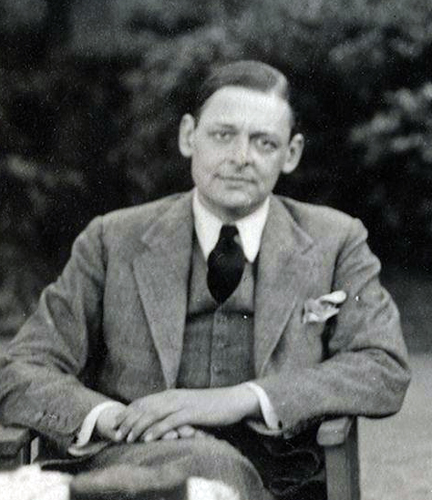
Thomas Stearns Eliot was a poet, essayist and playwright. He was a leading figure of modernist poetry in the English language where he altered the art through his use of pessimistic language, writing style, and verse structure. Awarded the Nobel Prize in Literature in 1948, he is considered one of the greatest poets of the English language. He is also noted for his critical essays, which often re-evaluated long-held cultural beliefs.
Source: Wikipedia (CC BY-SA). Portrait by Thomas Stearns Eliot with his sister and his cousin by Lady Ottoline Morrell.jpg: Lady Ottoline Morrell (1873–1938) derivative work: Octave.H (Public domain) via Wikimedia Commons.
Life on the Timeline
Major Works
Exam Dossier
Most-asked topics
- The Waste Land: five sections, allusions, and Grierson/Pound connection
- Objective correlative and Hamlet and His Problems
- Tradition and the Individual Talent: impersonal theory of poetry
- Dissociation of sensibility (The Metaphysical Poets)
- The Love Song of J. Alfred Prufrock: dramatic monologue and modernist anti-hero
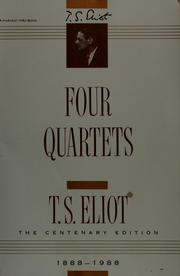
- Four Quartets: titles, structure, and religious meditation
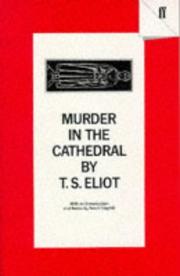
- Eliot's verse drama: Murder in the Cathedral, The Cocktail Party
- Eliot as critic: The Sacred Wood, The Function of Criticism
- Eliot's classicism, royalism, Anglo-Catholicism (For Lancelot Andrewes)
- Nobel Prize 1948 and Eliot's place in Anglo-American modernism
Previous-year themes
- Identification of the five sections of The Waste Land and their order
- The dedication of The Waste Land to Ezra Pound ('il miglior fabbro')
- Definition and source of the 'objective correlative'
- 'Dissociation of sensibility' and the Metaphysical poets
- Epigraphs and famous lines from Prufrock and The Hollow Men
- Titles of the Four Quartets and Eliot's plays
- Eliot's critical essays and their central arguments
- Murder in the Cathedral: Thomas Becket and the four tempters
Common confusions
- Objective correlative appears in 'Hamlet and His Problems', NOT in 'Tradition and the Individual Talent' — students routinely swap the two essays' key terms.
- 'Dissociation of sensibility' is from 'The Metaphysical Poets' (1921); its positive counterpart, unified sensibility, describes Donne — not the Romantics.
- Ash-Wednesday (1930) is NOT one of the Four Quartets; the four are Burnt Norton, East Coker, The Dry Salvages, Little Gidding.
- Murder in the Cathedral is about Thomas Becket (d. 1170), not Thomas More — and it is Eliot's play, not to be confused with Tennyson's Becket.
- 'Prufrock' was published in Poetry (Chicago) in 1915; the volume Prufrock and Other Observations came in 1917 — different years for poem and collection.
- Eliot edited The Criterion; Scrutiny was F. R. Leavis's journal — both mid-century critical quarterlies often confused with each other.
Memory tricks
Waste Land sections — 'Burial, Game, Fire, Water, Thunder': B-G-F-W-T ('Big Games Fire Wild Thunder').
Four Quartets order: 'BEDL' — Burnt Norton, East Coker, Dry Salvages, Little Gidding ('Burnt Eggs, Dry, Little').
Three creeds of 1928: C-R-A — Classicist (literature), Royalist (politics), Anglo-Catholic (religion).
HOC: Hamlet essay → Objective Correlative; MPD: Metaphysical Poets → Dissociation.
Key dates ladder: 1915 Prufrock poem, 1922 Waste Land + Criterion, 1930 Ash-Wednesday, 1935 Becket play, 1943 Quartets, 1948 Nobel — roughly a milestone every 7 years.
Plays in order: 'Sweeney Murders the Family at the Cocktail Party over a Confidential Statesman' — Sweeney Agonistes, Murder in the Cathedral, The Family Reunion, The Cocktail Party, The Confidential Clerk, The Elder Statesman.