Modernism
Ezra Pound
1885 – 1972
American poet and critic (1885–1972)
- United States
- American
- Imagism
- Modernism
About
Ezra Weston Loomis Pound was an American poet and critic, a major figure in the early modernist poetry movement, and a collaborator in Fascist Italy and the Salò Republic during World War II. His works include Ripostes (1912), Hugh Selwyn Mauberley (1920), and The Cantos.
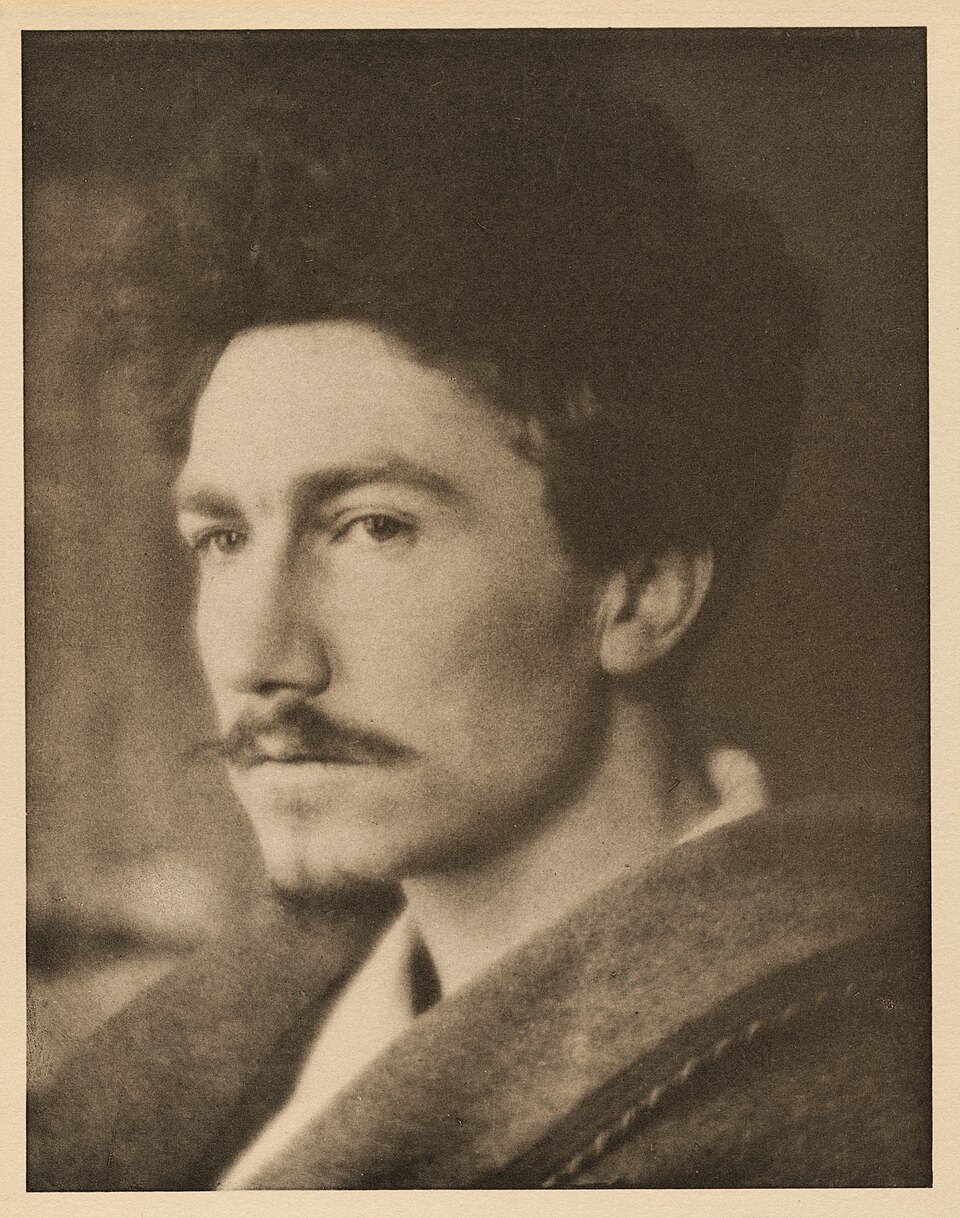
Source: Wikipedia (CC BY-SA). Portrait by Alvin Langdon Coburn (CC0) via Wikimedia Commons.
Life on the Timeline
Major Works
No works have been hung in this gallery yet — the acquisitions team is at work.
Exam Dossier
Most-asked topics
- Imagism and the 'In a Station of the Metro' aesthetic
- Pound's editing of T.S. Eliot's The Waste Land
- The Cantos as modernist epic
- Vorticism and Pound's manifestos
- Hugh Selwyn Mauberley as a critique of war and culture
- Pound's 'Make It New' dictum and modernist poetics
- Pound's translations and Cathay
- Pound's fascist broadcasts and the Bollingen controversy
Previous-year themes
- Pound's role as founder/theorist of Imagism
- Pound's influence on T.S. Eliot and the shaping of The Waste Land
- Definition and principles of Imagism (direct treatment of the thing, economy of language)
- The Cantos as a fragmentary modernist long poem
- Pound's critical slogan 'Make It New'
- Hugh Selwyn Mauberley as commentary on WWI and the artist's alienation
- Pound's association with Vorticism and BLAST
Common confusions
- Confusing Pound's Imagism with T.E. Hulme's earlier theoretical groundwork for the movement.
- Mixing up Ripostes (1912) with Personae (1909, Pound's earlier collection) as the starting point of Imagism.
- Confusing Pound's editorial role in The Waste Land with authorship of the poem itself.
- Mistaking Vorticism (visual/literary avant-garde with Wyndham Lewis) for Imagism (a purely poetic movement).
- Confusing Hugh Selwyn Mauberley's persona-based critique with straightforward autobiography.
- Conflating The Cantos with a single completed, unified epic rather than an open-ended, fragmentary lifework.
Memory tricks
'Make It New' = Pound's modernist mantra — remember 'P' for Pound and 'P' for Progress/New.
Cathay = 'Chinese' poems — think 'Cathay' sounds like an old name for China.
Mauberley (1920) rhymes with 'war-weary' — the poem reflects post-WWI disillusionment.
Vorticism = Pound + Wyndham Lewis + BLAST magazine (V for Vortex, visual/literary whirl).
Il miglior fabbro (Eliot's dedication to Pound) = 'the better craftsman' — Pound edited The Waste Land.
Imagism = Image + economy — direct treatment of the 'thing', no excess words.