Renaissance
John Donne
1572 – 1631
English poet and cleric (1572-1631)
- Kingdom of England
- British
- Metaphysical Poets
About
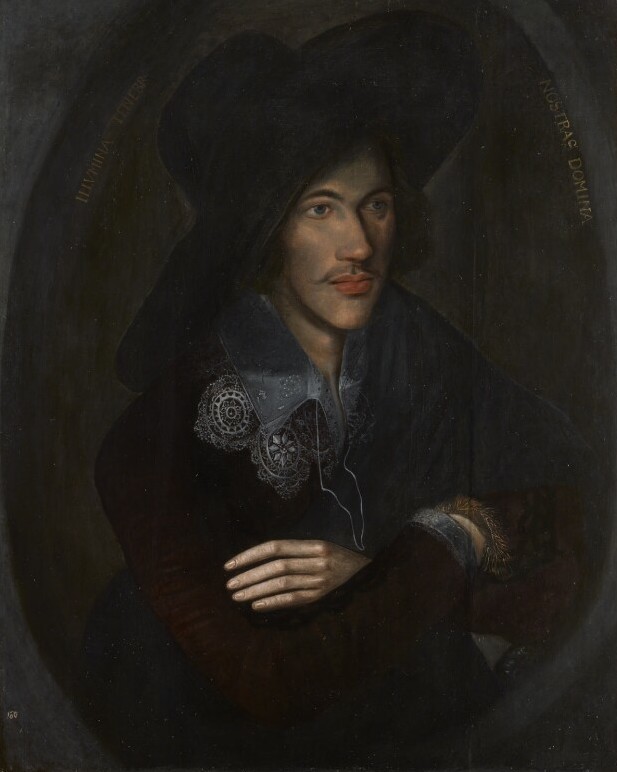
John Donne was an English poet, scholar, soldier and secretary born into a recusant family, who later became a cleric in the Church of England. Under royal patronage, he was made Dean of St Paul's Cathedral in London (1621–1631). He is considered the preeminent representative of the metaphysical poets. His poetical works are noted for their metaphorical and sensual style and include sonnets, love poems, religious poems, Latin translations, epigrams, elegies, songs and satires. He is also known for his sermons.
Source: Wikipedia (CC BY-SA). Portrait by Unknown authorUnknown author (Public domain) via Wikimedia Commons.
Life on the Timeline
Major Works
No works have been hung in this gallery yet — the acquisitions team is at work.
Exam Dossier
Most-asked topics
- Metaphysical poetry and the metaphysical conceit
- Songs and Sonnets: individual love poems (The Flea, The Canonization, A Valediction: Forbidding Mourning, The Sun Rising)
- Holy Sonnets and Donne's religious poetry
- Samuel Johnson's critique of metaphysical wit in Lives of the Poets
- T. S. Eliot's revaluation of Donne and 'dissociation of sensibility'
- Donne's sermons and Devotions upon Emergent Occasions ('No man is an island')
- The Anniversaries (An Anatomy of the World, Of the Progress of the Soul)
- Donne's Satires and Elegies
- Donne as Dean of St Paul's and his conversion from Catholicism to Anglicanism
- Dryden's remark that Donne 'affects the metaphysics'
Previous-year themes
- Identifying poems from famous opening lines (e.g. 'Death, be not proud', 'Go and catch a falling star', 'Busy old fool, unruly Sun')
- The metaphysical conceit, especially the compass image in A Valediction: Forbidding Mourning
- Samuel Johnson's phrase 'heterogeneous ideas yoked by violence together' and its source
- T. S. Eliot's essay 'The Metaphysical Poets' and dissociation of sensibility
- Matching metaphysical poets with their works (Donne, Herbert, Marvell, Vaughan, Crashaw)
- Devotions upon Emergent Occasions as source of 'for whom the bell tolls' and 'No man is an island'
- Chronology and posthumous publication of Donne's Poems (1633)
- Donne's Anniversaries written for Elizabeth Drury
Common confusions
- Dryden vs Johnson: Dryden said Donne 'affects the metaphysics'; Johnson coined the group label 'metaphysical poets' and the 'yoked by violence' phrase — students swap the two.
- 'No man is an island' is from the prose Devotions upon Emergent Occasions (Meditation XVII), not from any poem or sermon collection.
- A Valediction: Forbidding Mourning vs A Valediction: Of Weeping — the compass conceit belongs to Forbidding Mourning.
- The Anniversaries commemorate Elizabeth Drury (patron's daughter), not Donne's wife Anne More or Queen Elizabeth.
- Poems published 1633 (posthumous) vs death 1631 — dates often confused; nothing like a collected Poems appeared in his lifetime.
- Holy Sonnet X ('Death, be not proud') vs Holy Sonnet XIV ('Batter my heart') — numbers and openings are frequently mismatched.
- Donne's 'Metempsychosis' (Infinitati Sacrum, 1601) vs the Second Anniversary 'Of the Progress of the Soul' — two different works with confusingly similar titles.
Memory tricks
D-O-N-N-E dates: born 1572 (Armada minus 16), died 1631, Poems 1633 — 'dead two years before his verse was born in print'.
DEAN 1621: Donne = Dean of St Paul's from 1621 to 1631 — exactly the last decade of his life.
Compass = Constancy: 'Compasses' in a 'Valediction Forbidding Mourning' — both start hard consonants; the fixed foot stays like the faithful beloved.
Critic chain on Donne: Drummond/Jonson (hanging for accent) → Dryden (affects the metaphysics) → Johnson (yoked by violence) → Eliot (unified sensibility) — J-D-J-E in rough chronological order.
Drury = Anniversaries: 'Drury' rhymes with 'jury' — the two Anniversaries are Donne's verdict on the dead world after Elizabeth Drury's death (1611, 1612).
Devotions 1624 = illness of 1623 + 1: he fell ill in 1623, published the Devotions in 1624.