Jacobean
Andrew Marvell
1621 – 1678
English poet and politician (1621–1678)
- Kingdom of England · United Kingdom · England
- British
- Metaphysical Poets
About
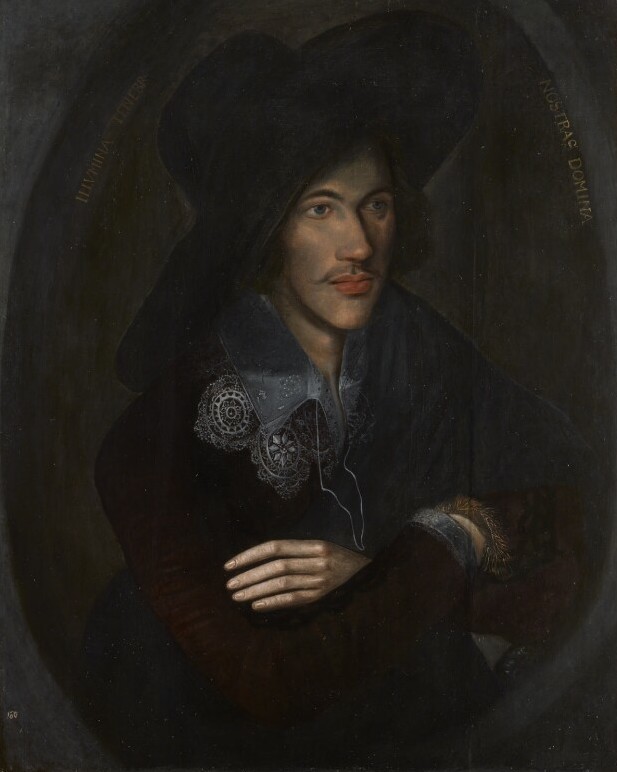
Andrew Marvell was an English poet, satirist and politician who sat in the House of Commons at various times between 1659 and 1678. During the Commonwealth period he was a colleague and friend of John Milton. A metaphysical poet, his poems range from the love-song "To His Coy Mistress", to evocations of an aristocratic country house and garden in "Upon Appleton House" and "The Garden", the political address "An Horatian Ode upon Cromwell's Return from Ireland", and the later personal and political satires "Flecknoe" and "The Character of Holland".
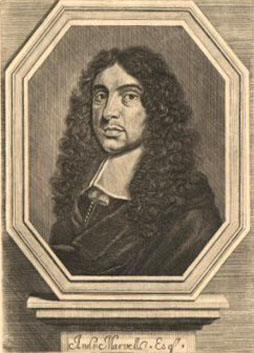
Source: Wikipedia (CC BY-SA). Portrait by Unknown authorUnknown author (Public domain) via Wikimedia Commons.
Life on the Timeline
Major Works
Exam Dossier
Most-asked topics
- Metaphysical conceit and wit in Marvell's poetry
- Carpe diem theme in "To His Coy Mistress"
- Political ambivalence in "An Horatian Ode upon Cromwell's Return from Ireland"
- "The Garden" — retreat, contemplation, and nature imagery
- "Upon Appleton House" as a country-house poem
- Marvell's dual career as poet and MP for Hull
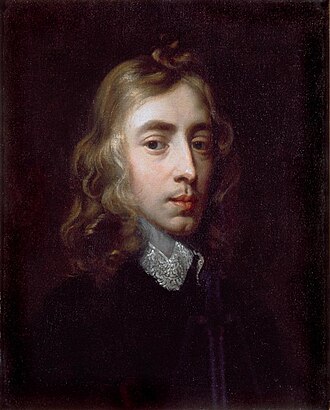
- Marvell's friendship with John Milton and role as Latin Secretary
- Marvell as prose satirist ("The Rehearsal Transpros'd")
- Mower poems and the pastoral tradition
Previous-year themes
- Identification of famous opening/closing lines from "To His Coy Mistress" and "The Garden"
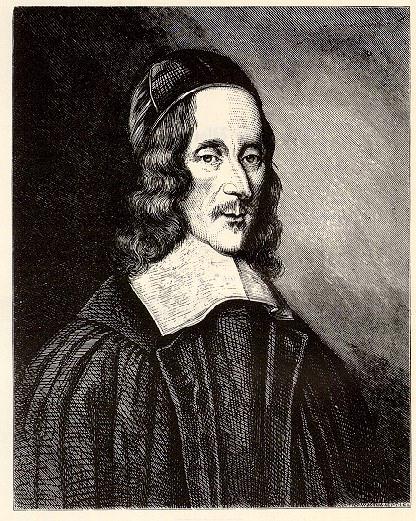
- Marvell's place among the metaphysical poets alongside Donne and Herbert
- Analysis of the carpe diem motif and its treatment compared to other poets
- The political ambivalence of the "Horatian Ode" toward Cromwell and Charles I
- T.S. Eliot's critical revaluation of Marvell and the metaphysical poets
- Chronology and posthumous publication history of Marvell's works
- Marvell's biography — Cambridge, tutorship at Nun Appleton, parliamentary career, Milton connection
Common confusions
- Assuming Marvell originated the metaphysical conceit — that distinction belongs to the earlier John Donne; Marvell represents a later phase of the tradition.
- Confusing Marvell's carpe diem poem "To His Coy Mistress" with Robert Herrick's "To the Virgins, to Make Much of Time" — both share the theme but are by different poets.
- Assuming Marvell was a straightforward Royalist or a straightforward Parliamentarian — his "Horatian Ode" shows genuinely divided, ambivalent sympathies.
- Mixing up "The Garden" (a self-contained meditative lyric) with "Upon Appleton House" (a longer country-house poem also set at Nun Appleton).
- Treating the 1681 publication date of Marvell's "Miscellaneous Poems" as the composition date — most lyrics were actually written decades earlier, in the 1650s.
- Assuming Marvell was Milton's student — in fact he was Milton's younger colleague and assistant as Latin Secretary, and later his political protector.
Memory tricks
"Coy Mistress" = Carpe diem + Chariot: remember 'Time's wingèd Chariot' Chasing the Coy lady.
"Garden" = Green-Green: 'a green thought in a green shade' — double Green cues The Garden.
Horatian Ode = 'Historically Ambivalent Ode' — praises Cromwell yet honours Charles I's dignity.
Marvell and Milton = 'M&M', Commonwealth colleagues in the Latin Secretariat.
Death before Dissemination: Marvell Died in 1678, poems Distributed (published) in 1681.
MP for Hull = 'Marvell's Politics from Hull' — anchors his parliamentary career (1659–1678).