Jacobean
John Milton
1608 – 1674
English poet and civil servant (1608–1674)
- Kingdom of England
- British
About
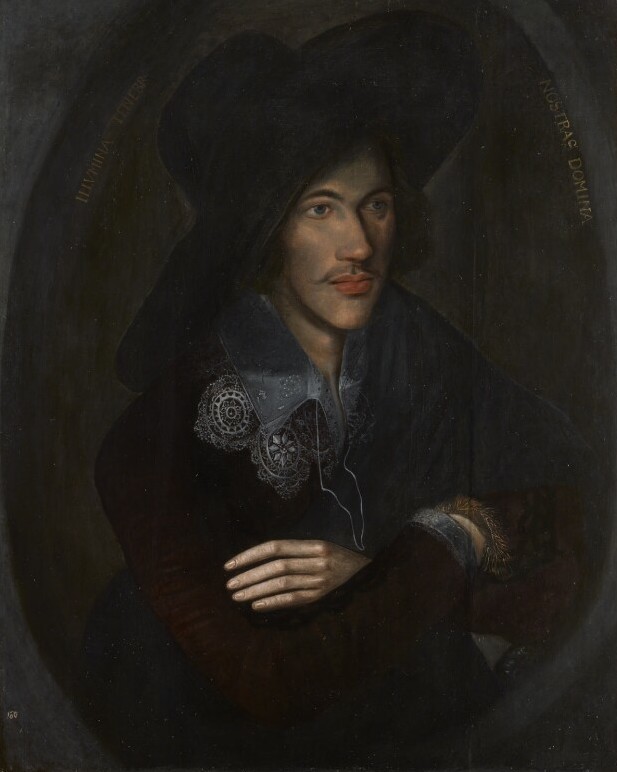
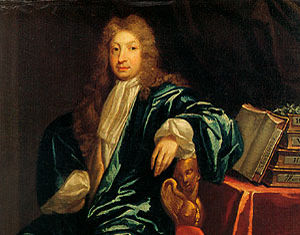
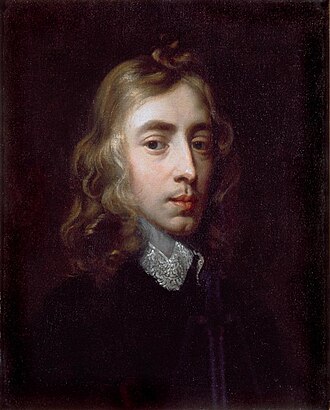
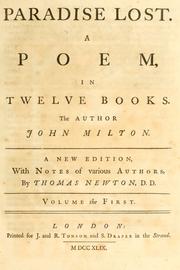
John Milton was an English poet, polemicist, and civil servant. His 1667 epic poem Paradise Lost was written in blank verse and included 12 books, written in a time of immense religious flux and political upheaval. It addressed the fall of man, including the temptation of Adam and Eve by the fallen angel Satan, and God's expulsion of them from the Garden of Eden. Paradise Lost elevated Milton's reputation as one of history's greatest poets. He also served as a civil servant for the Commonwealth of England under its Council of State and later under Oliver Cromwell.
Source: Wikipedia (CC BY-SA). Portrait by anonymous (Public domain) via Wikimedia Commons.
Life on the Timeline
Major Works
Exam Dossier
Most-asked topics
- Paradise Lost: structure, invocations, and the character of Satan
- Areopagitica and the argument for unlicensed printing
- Lycidas as pastoral elegy (Edward King)
- Comus and the Caroline court masque
- Paradise Regained and Samson Agonistes (1671 volume)
- Milton's blank verse and the note on 'The Verse'
- Milton's political prose and the Commonwealth (Latin Secretary)
- Milton's sonnets (On His Blindness, Piedmont massacre)
- Critical reception: Dryden, Johnson, Blake, Eliot, Leavis, C.S. Lewis
- Milton's blindness and its poetic treatment
Previous-year themes
- Number of books in the 1667 vs 1674 editions of Paradise Lost
- Identifying the subject and occasion of Lycidas
- Areopagitica: its occasion, classical allusion, and argument
- Matching famous lines/quotations to Paradise Lost and the sonnets
- The 1671 joint publication of Paradise Regained and Samson Agonistes
- Critics' verdicts on Milton (Blake's 'Devil's party', Johnson, Eliot's 'dissociation of sensibility')
- Chronological ordering of Milton's works
- Samson Agonistes as classical tragedy / closet drama
Common confusions
- Paradise Lost first edition (1667) had TEN books; the twelve-book version is the 1674 second edition — students routinely reverse this.
- Lycidas mourns Edward King — not Hallam (Tennyson's In Memoriam), not Keats (Shelley's Adonais), and not Clough (Arnold's Thyrsis).
- Paradise Regained (1671) is a 'brief epic' in FOUR books on Christ's temptation in the wilderness — not a sequel narrating the Crucifixion or restoration of Eden.
- Areopagitica opposes PRE-publication licensing of books, not all punishment for published libel or blasphemy; it is a written speech never delivered orally, its title echoing Isocrates' Areopagiticus.
- Comus is the editors' title — Milton called it 'A Maske Presented at Ludlow Castle'; it is a masque, not a play or pastoral elegy.
- Samson Agonistes is a closet drama on the Greek model, expressly 'never intended' for the stage — do not classify it with Restoration heroic tragedy; and Blake's 'Devil's party' remark comes from The Marriage of Heaven and Hell, not from a preface to Paradise Lost.
Memory tricks
Ten grew to Twelve: PL 1667 = 10 books; 1674 (death year) = 12 books, Virgil-style — 'he died leaving a perfect dozen'.
NCLA ladder for early works: Nativity Ode (1629) → Comus (1634) → Lycidas (1637) → Areopagitica (1644).
1671 = the 'twin volume' year: Paradise Regained + Samson Agonistes (PR + SA = 'PRaiSA').
Elegy triangle: Lycidas–King, Adonais–Keats, In Memoriam–Hallam, Thyrsis–Clough — Milton's is the earliest.
Mood pair: L'Allegro = the cheerful man (Mirth), Il Penseroso = the pensive man (Melancholy) — 'A for happy (Allegro), P for pensive'.
Blindness timeline: totally blind by 1652 — 'lost his sight but wrote his Light' (invocation to Light opens Book III).