Restoration
John Dryden
1631 – 1700
17th-century English poet and playwright (1631–1700)
- Kingdom of England
- British
- Neoclassicism
- Literary Theory
About
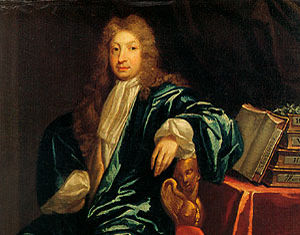
John Dryden was an English poet, literary critic, translator, and playwright who in 1668 was appointed England's first Poet Laureate. He is seen as dominating the literary life of Restoration England to such a point that the period came to be known in literary circles as the Age of Dryden. Romantic writer Sir Walter Scott called him "Glorious John".
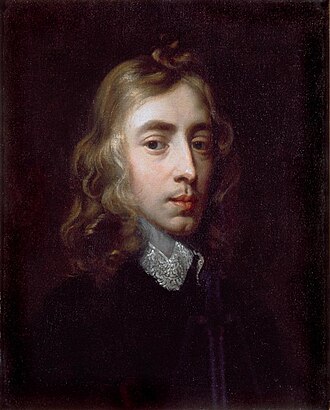
Source: Wikipedia (CC BY-SA). Portrait by Unknown authorUnknown author (Public domain) via Wikimedia Commons.
Life on the Timeline
Major Works
Exam Dossier
Most-asked topics
- Absalom and Achitophel as political allegory of the Exclusion Crisis
- Mac Flecknoe and the mock-heroic tradition
- An Essay of Dramatick Poesie: the four speakers and their positions
- All for Love and the rewriting of Shakespeare's Antony and Cleopatra
- Dryden as the first official Poet Laureate (1668)
- Heroic tragedy and the heroic couplet on the Restoration stage
- Religio Laici and The Hind and the Panther: religious poems and conversion
- Dryden as 'the father of English criticism' (Dr. Johnson)
- Dryden's translations: Virgil's Aeneid and Fables Ancient and Modern
- Odes: A Song for St. Cecilia's Day and Alexander's Feast
Previous-year themes
- Identification of satirical targets and their allegorical names in Absalom and Achitophel (Achitophel, Zimri, Corah)
- The subject and target of Mac Flecknoe (Thomas Shadwell) and its mock-heroic form
- Speakers of An Essay of Dramatick Poesie and whose views Neander represents
- All for Love: its subtitle 'The World Well Lost', blank verse, and Shakespearean source
- Chronological ordering of Dryden's major works
- Dryden's shift from Religio Laici (Anglican) to The Hind and the Panther (Catholic)
- Samuel Johnson's and Walter Scott's critical remarks on Dryden
- Dryden's appointment as Poet Laureate and loss of the office in 1688
Common confusions
- Mac Flecknoe vs Pope's The Dunciad: Dryden's poem is the earlier mock-heroic attack on dullness (target: Shadwell) that directly inspired Pope's Dunciad (target: Theobald, later Cibber).
- Absalom and Achitophel Part II (1682) was written mainly by Nahum Tate; Dryden contributed only about 200 lines, including the portraits of Og (Shadwell) and Doeg (Settle).
- Religio Laici (1682) defends the Church of England, while The Hind and the Panther (1687) defends the Roman Catholic Church after Dryden's conversion — students often swap the two.
- Annus Mirabilis was published in 1667 but commemorates the 'wonders' of 1666 (the Dutch War and the Great Fire of London).
- All for Love is in blank verse, unlike Dryden's own rhymed heroic plays such as The Conquest of Granada and Aureng-Zebe — Aureng-Zebe (1675) was his last rhymed heroic play.
- The mock-king in Mac Flecknoe: Richard Flecknoe is the abdicating monarch of Dullness, Shadwell the successor being crowned — the satire targets Shadwell, not Flecknoe primarily.
Memory tricks
CELN for the Essay's speakers: Crites-Classics (ancients), Eugenius-Emerging moderns, Lisideius-Louvre (French), Neander-New man = Dryden (English).
DAZAC for Absalom and Achitophel: David=Charles II, Absalom=Monmouth (illegitimate son), Zimri=Buckingham, Achitophel=Shaftesbury, Corah=Oates.
'1668 double': Laureate + Essay of Dramatick Poesie — Dryden's annus of criticism and office both fall in 1668.
Religio LAici = AngLican; Hind and Panther = Papist (H-P: Hind = Holy (Roman) church, Panther = Protestant/Anglican church).
Life-dates rhyme: 'Born 31, died 1700 even' — 1631–1700, spanning Civil War, Restoration and Revolution.
'Shadwell never deviates into sense' — remember Mac Flecknoe's target by the S-alliteration: Satire on Shadwell's Senselessness.