Victorian
Matthew Arnold
1822 – 1888
British poet and cultural critic (1822–1888)
- United Kingdom of Great Britain and Ireland
- British
- Literary Theory
About
Matthew Arnold was an English poet and cultural critic. He was the son of Thomas Arnold, the headmaster of Rugby School, and brother of both Tom Arnold, literary professor, and William Delafield Arnold, novelist and colonial administrator. He has been characterised as a sage writer, a type of writer who chastises and instructs the reader on contemporary social issues. He was also an inspector of schools for thirty-five years, and supported the concept of state-regulated secondary education.
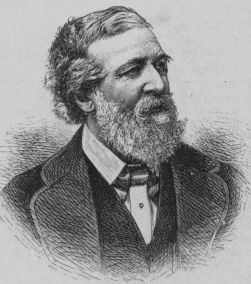
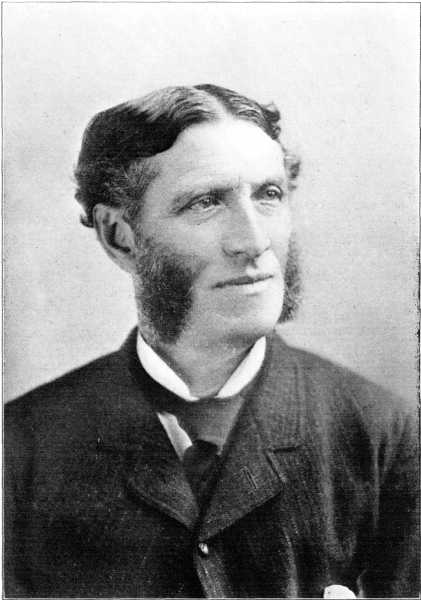
Source: Wikipedia (CC BY-SA). Portrait (Public domain) via Wikimedia Commons.
Life on the Timeline
Major Works
Exam Dossier
Most-asked topics
- Touchstone method in 'The Study of Poetry'
- Culture and Anarchy: Barbarians, Philistines, Populace
- Hebraism and Hellenism
- Dover Beach as the representative Victorian poem of doubt
- Thyrsis and the pastoral elegy tradition
- The Function of Criticism at the Present Time: disinterestedness
- Preface to Poems (1853) and the withdrawal of Empedocles on Etna
- Poetry as 'criticism of life' and 'high seriousness'
- On Translating Homer and the 'grand style'
- Arnold as inspector of schools and sage writer
Previous-year themes
- Identifying the elegy Thyrsis with its subject Arthur Hugh Clough
- Matching Arnoldian critical terms (touchstone, sweetness and light, disinterestedness) to their source texts
- The three classes of English society in Culture and Anarchy
- Famous lines from Dover Beach and The Scholar-Gipsy
- Chronology of Essays in Criticism First and Second Series
- Arnold's definition of criticism and of poetry as criticism of life
- Sources of Arnold's narrative poems (Sohrab and Rustum, The Scholar-Gipsy)
- Arnold's judgements on Chaucer, Dryden, Pope and Shelley
Common confusions
- Elegy subjects: Thyrsis mourns Clough; Lycidas mourns Edward King; Adonais mourns Keats; In Memoriam mourns Hallam — NET loves swapping these.
- 'Sweetness and light' is borrowed from Swift's The Battle of the Books; Arnold popularised it in Culture and Anarchy but did not coin it.
- Essays in Criticism, First Series (1865, contains 'The Function of Criticism at the Present Time') vs Second Series (1888, contains 'The Study of Poetry') — the touchstone method is in the Second Series.
- Dover Beach was composed around 1851 but published only in New Poems (1867) — questions may test either date.
- Barbarians = aristocracy, Philistines = middle class, Populace = working class; students routinely attach 'Philistines' to the wrong class.
- Matthew Arnold the poet-critic is distinct from his father Thomas Arnold, the famous headmaster of Rugby School (commemorated in 'Rugby Chapel').
Memory tricks
BPP top-to-bottom: Barbarians (Blue-blooded), Philistines (Prosperous middle), Populace (Poor) — alphabetical order matches the social ladder downward.
SCHOLAR before THYRSIS: S comes before T, and The Scholar-Gipsy (1853) precedes its companion elegy Thyrsis (1865).
Two Essays, two ends of a career: First Series 1865 (Function of Criticism), Second Series 1888 (Study of Poetry) — the touchstone comes at the terminus, the year of his death.
HOMER = GRAND: On Translating Homer (1861) is where the 'grand style' lives; Homer, Dante, Milton are its exemplars.
Narrative trio in alphabetical-chronological step: Tristram (1852), Sohrab (1853), Balder (1855) — 2, 3, 5.
Hebraism = 'doing' (strictness of conscience), Hellenism = 'knowing' (spontaneity of consciousness) — H-D and H-K: Hebrew Duty, Hellenic Knowledge.