Modernism
I. A. Richards
1893 – 1979
English literary critic and rhetorician (1893–1979)
- United Kingdom · United Kingdom of Great Britain and Ireland
- British
- New Criticism
- Practical Criticism / Scrutiny
- Literary Theory
About
Ivor Armstrong Richards CH, known as I. A. Richards, was an English educator, literary critic, poet, and rhetorician. His work contributed to the foundations of New Criticism, a formalist movement in literary theory which emphasized the close reading of a literary text, especially poetry, in an effort to discover how a work of literature functions as a self-contained and self-referential æsthetic object.
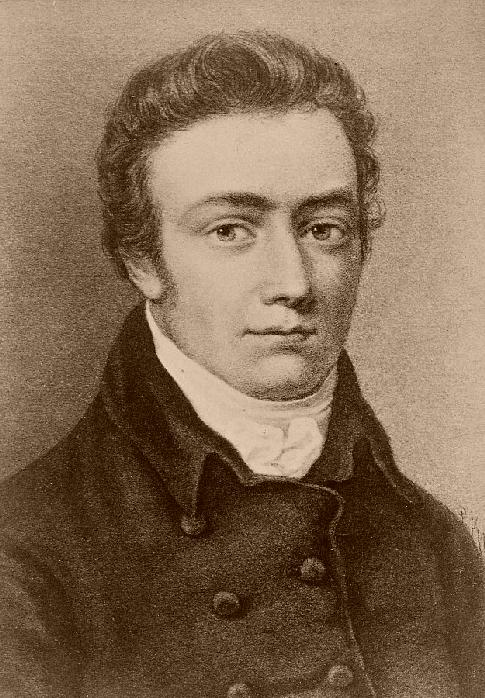
Source: Wikipedia (CC BY-SA). Portrait by © Richards family archive (CC BY-SA 4.0) via Wikimedia Commons.
Life on the Timeline
Major Works
No works have been hung in this gallery yet — the acquisitions team is at work.
Exam Dossier
Most-asked topics
- Practical Criticism and the protocol experiment
- Principles of Literary Criticism and the theory of value
- Four kinds of meaning (Sense, Feeling, Tone, Intention)
- Theory of metaphor: tenor and vehicle (Philosophy of Rhetoric)
- Emotive vs referential language
- Stock responses and the ten obstacles to reading poetry
- Richards as founder of New Criticism / close reading
- The Meaning of Meaning (with C. K. Ogden) and Basic English
Previous-year themes
- Richards's contribution to practical criticism and close reading pedagogy
- The four kinds of meaning and their exam-application to poetry analysis
- Tenor-vehicle theory of metaphor from The Philosophy of Rhetoric
- Richards's theory of value / impulses in Principles of Literary Criticism
- Distinction between emotive and referential (scientific) language
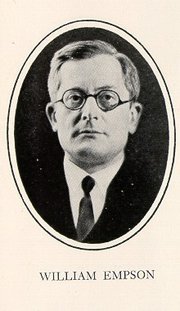
- Richards's influence on William Empson and New Criticism
- Ogden and Richards's semantic triangle in The Meaning of Meaning
Common confusions
- Confusing I. A. Richards with F. R. Leavis — both were Cambridge-based critics emphasizing close reading, but Richards founded practical criticism as a psychological/pedagogical method while Leavis (via Scrutiny) built a moralistic canon-forming criticism.
- Confusing 'tenor' and 'vehicle' — tenor is the underlying subject/idea, vehicle is the image or figure that conveys it; students often swap the two.
- Attributing New Criticism's American development (Cleanth Brooks, Robert Penn Warren) directly to Richards, when Richards is more accurately its British precursor and foundational influence rather than a member of the American New Critical school.
- Confusing The Meaning of Meaning (with C. K. Ogden, on semantics) with Principles of Literary Criticism (Richards's solo theory of literary value).
- Mixing up William Empson's Seven Types of Ambiguity with Richards's own Practical Criticism — Empson was Richards's student who extended, not authored, Richards's initial method.
- Assuming Richards coined the term 'intentional fallacy' — that term belongs to W. K. Wimsatt and Monroe Beardsley, not Richards.
- Wrongly attributing the line 'A poem should not mean but be' to Richards — it is from Archibald MacLeish's poem 'Ars Poetica,' not from any Richards text.
Memory tricks
TVSFT: Tenor, Vehicle — the metaphor pair; Sense, Feeling, Tone, Intention — the four kinds of meaning.
'Practical' = Poems stripped bare — remember Practical Criticism as the 'blind tasting' of poems.
Richards + Ogden = 'Meaning' duo — The Meaning of Meaning, 1923.
Empson = Empire built on Richards — his student who expanded practical criticism into ambiguity theory.
Order mnemonic: 'My Poor Science Practices Clear Philosophy' for Meaning of Meaning, Principles, Science and Poetry, Practical Criticism, Coleridge, Philosophy of Rhetoric (1923-1936).