Modernism
William Empson
1906 – 1984
English literary critic and poet (1906–1984)
- United Kingdom
- British
- New Criticism
- Literary Theory
About
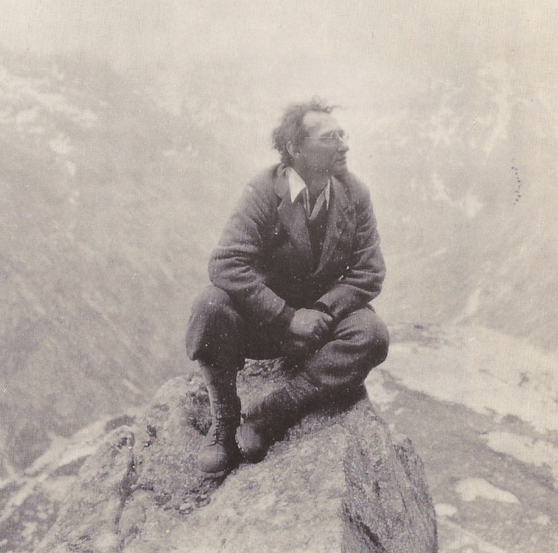
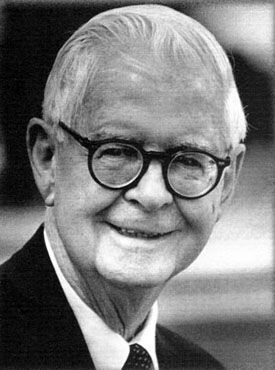
Sir William Empson was an English literary critic and poet, widely influential for his practice of closely reading literary works, a practice fundamental to New Criticism. His best-known work is his first, Seven Types of Ambiguity, published in 1930.
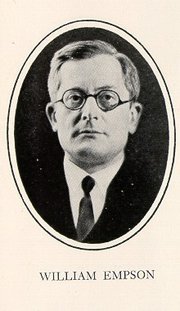
Source: Wikipedia (CC BY-SA). Portrait by Unknown authorUnknown author (Public domain) via Wikimedia Commons.
Life on the Timeline
Major Works
No works have been hung in this gallery yet — the acquisitions team is at work.
Exam Dossier
Most-asked topics
- Seven Types of Ambiguity and the theory of ambiguity
- Empson's concept of pastoral in Some Versions of Pastoral
- Empson and the New Criticism / close reading method
- The Structure of Complex Words and semantic analysis
- Empson's relationship with I. A. Richards and Cambridge English
- Empson's poetry (Poems, The Gathering Storm) and its intellectual, metaphysical style
- Milton's God and Empson's anti-Christian reading of Paradise Lost
- Empson's teaching in Japan and China and its influence on his criticism
Previous-year themes
- Empson's seven types/kinds of ambiguity and their definitions
- Empson as a bridge between I. A. Richards' Practical Criticism and American New Criticism
- The double plot and 'complex words' theory
- Empson's redefinition of pastoral as a literary mode ('putting the complex into the simple')
- Empson's poetic style: wit, irony, and use of scientific/mathematical imagery
- Distinguishing Empson's ambiguity from Richards' 'practical criticism' and Leavis's moral criticism
Common confusions
- Confusing Empson's 'ambiguity' with mere vagueness or careless writing; for Empson ambiguity signals deliberate richness of meaning, not confusion.
- Mixing up Empson with I. A. Richards: Richards founded Practical Criticism as a pedagogical method, while Empson (his student) extended it into detailed verbal/semantic analysis.
- Treating Empson as a card-carrying American New Critic (like Brooks or Ransom); he was British, independent, and predates the formal American movement.
- Assuming Some Versions of Pastoral is only about literal shepherd poetry, when Empson applies 'pastoral' broadly to proletarian literature, children's books, and more.
- Confusing The Structure of Complex Words (semantic/linguistic analysis of key words) with Seven Types of Ambiguity (analysis of multiple meanings in specific lines).
- Forgetting that Empson was also a practicing poet (Poems, The Gathering Storm), not only a critic.
Memory tricks
'Seven Types' = Seven Sins of meaning — remember SEVEN kinds of AMBIGUITY, published in 1930 (Empson's debut).
'Pastoral = complex into simple' — think of Empson squeezing a big idea into a small shepherd's song, then stretching that trick to any text (even Alice in Wonderland).
'Complex Words = Complex sums' — Empson treats a word almost like a mathematical equation with multiple senses adding up at once.
'Milton's God = Moral Grudge' — little mnemonic: Empson finds Milton's God morally troubling, yet the poem gains power from that very tension.
Empson taught in 'Japan and China' — remember 'J and C' for his years abroad shaping a comparative, cross-cultural critical eye.
Richards taught Empson; Empson taught 'close reading' to the world — a teacher-to-critic chain: Richards to Empson to New Criticism's practice.