Romantic
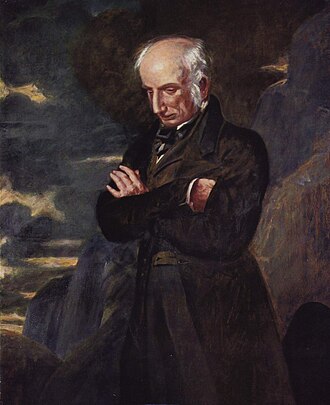
William Wordsworth
1770 – 1850
English Romantic poet (1770–1850)
- United Kingdom of Great Britain and Ireland · Kingdom of Great Britain
- British
- Romanticism
- Lake Poets
- Literary Theory
About
William Wordsworth was an English Romantic poet who, with Samuel Taylor Coleridge, helped to launch the Romantic Age in English literature with their joint publication Lyrical Ballads (1798).
Source: Wikipedia (CC BY-SA). Portrait by Benjamin Haydon (Public domain) via Wikimedia Commons.
Life on the Timeline
Major Works
Exam Dossier
Most-asked topics
- Lyrical Ballads (1798) and the Preface (1800/1802) as the manifesto of English Romanticism
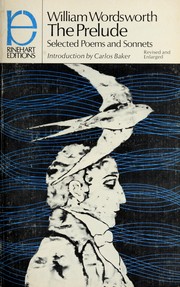
- The Prelude: subtitle, composition history, posthumous publication (1850)
- Theory of poetic diction and the definition of poetry ('spontaneous overflow of powerful feelings')
- Coleridge–Wordsworth collaboration and division of labour in Lyrical Ballads
- The Lucy poems and the Matthew poems
- Ode: Intimations of Immortality and the doctrine of pre-existence/childhood
- Tintern Abbey: memory, nature and the 'spots of time' idea
- Wordsworth as Poet Laureate (1843) and the Lake Poets grouping
- Coleridge's critique of Wordsworth in Biographia Literaria
- Sonnets: 'London, 1802', 'The world is too much with us', 'Composed upon Westminster Bridge'
Previous-year themes
- Identifying the source and exact phrasing of definitions from the Preface to Lyrical Ballads
- Matching Wordsworth's poems with their years or with famous lines
- The Prelude: its subtitle 'Growth of a Poet's Mind' and 1850 posthumous publication
- Which poem is/is not a Lucy poem
- Critics' remarks on Wordsworth: Keats's 'egotistical sublime', Arnold's estimate, Coleridge's objections
- Chronological ordering of Romantic-period publications
- The Recluse scheme and the place of The Excursion within it
- Poet Laureateship succession: Southey → Wordsworth → Tennyson
Common confusions
- 'The Child is father of the Man' belongs to 'My Heart Leaps Up' — it is only the epigraph of the Immortality Ode, not a line within it.
- The Prelude vs The Excursion vs The Recluse: The Prelude (pub. 1850) was the autobiographical 'ante-chapel'; The Excursion (1814) is the only completed part of the projected Recluse, which was never finished.
- Lyrical Ballads 1798 has no Preface — only a brief Advertisement; the famous Preface appeared with the 1800 second edition and was expanded in 1802 (with the Appendix on poetic diction).
- 'The Solitary Reaper' is often wrongly listed among the Lucy poems; the Lucy poems include 'Strange fits of passion', 'She dwelt among the untrodden ways', 'A slumber did my spirit seal', 'Three years she grew', and 'I travelled among unknown men'.
- Laureate succession: Southey → Wordsworth (1843) → Tennyson (1850); students reverse Wordsworth and Tennyson.
- 'Egotistical sublime' is Keats's phrase, not Coleridge's or Hazlitt's; Coleridge's critique is the Biographia Literaria discussion of poetic diction.
Memory tricks
LB-1798 = 'Ballads Begin Romanticism': 1798 launches the Romantic Age; Preface arrives with the 2nd edition, 1800.
PRELUDE = Posthumous, 1850, titled by his widow Mary; think 'Prelude published Post-mortem'.
Recluse plan: 'P-E-R' — Prelude (porch/ante-chapel), Excursion (part completed, 1814), Recluse (the cathedral never built).
Laureate chain 'SWT' — Southey, Wordsworth, Tennyson — in alphabetical-sounding order of succession.
1807 'Two Volumes, Two Treasures': the Immortality Ode and the Daffodils both appear in Poems, in Two Volumes.
Lucy poems checklist 'S-S-A-T-I': Strange fits / She dwelt / A slumber / Three years she grew / I travelled among unknown men.