Victorian
Alfred, Lord Tennyson
1809 – 1892
British Poet Laureate (1809–1892)
- United Kingdom of Great Britain and Ireland
- British
About
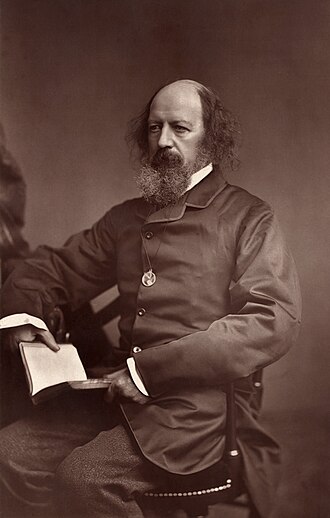
Alfred Tennyson, 1st Baron Tennyson was an English poet. He was Poet Laureate of the United Kingdom during much of Queen Victoria's reign. In 1829 he was awarded the Chancellor's Gold Medal at Cambridge for one of his first pieces, "Timbuktu". He published his first solo collection of poems, Poems, Chiefly Lyrical, in 1830. "Claribel" and "Mariana", which remain some of Tennyson's most celebrated poems, were included in this volume. Some critics described Tennyson as overly sentimental. However, his poems proved popular and brought Tennyson to the attention of well-known writers of the day, including Samuel Taylor Coleridge. Tennyson's early poetry, with its medievalism and powerful visual imagery, was a major influence on the Pre-Raphaelite Brotherhood.
Source: Wikipedia (CC BY-SA). Portrait by Julia Margaret Cameron / Adam Cuerden (Public domain) via Wikimedia Commons.
Life on the Timeline
Major Works
Exam Dossier
Most-asked topics
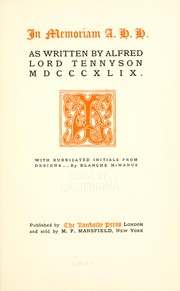
- In Memoriam A.H.H. as Victorian elegy and crisis of faith
- Dramatic monologues: Ulysses, Tithonus, St Simeon Stylites
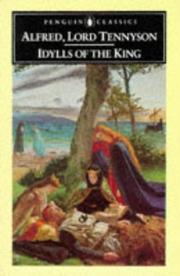
- Idylls of the King and Victorian medievalism / Arthurian revival
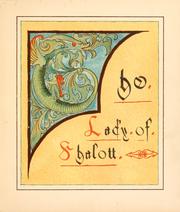
- The Lady of Shalott: art vs life, Pre-Raphaelite influence
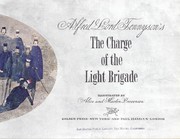
- Tennyson as Poet Laureate and public poet (The Charge of the Light Brigade, Ode on the Death of the Duke of Wellington)
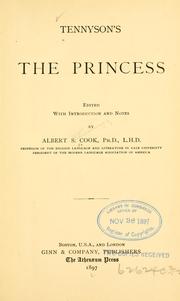
- The Princess and the Victorian 'Woman Question'
- In Memoriam stanza (abba iambic tetrameter)
- Science, evolution and doubt in Tennyson's poetry
- Maud as a 'monodrama'
- Tennyson and the Cambridge Apostles / Arthur Henry Hallam
Previous-year themes
- Identifying the source work of famous Tennyson lines ('Tis better to have loved and lost; Nature, red in tooth and claw)
- Chronological ordering of Tennyson's major volumes
- The elegy tradition: In Memoriam alongside Lycidas, Adonais and Thyrsis
- Ulysses and the dramatic monologue form (often paired with Browning)
- Idylls of the King: sources in Malory and dedication to Prince Albert
- The Charge of the Light Brigade and the Crimean War context
- The Lady of Shalott and its relation to the Elaine story / Pre-Raphaelite painting
- Tennyson's laureateship succeeding Wordsworth in 1850
Common confusions
- In Memoriam A.H.H. vs other elegies: Lycidas (Milton, for Edward King), Adonais (Shelley, for Keats), Thyrsis (Arnold, for Clough) — In Memoriam is for Arthur Henry Hallam.
- Tennyson's poem 'Ulysses' vs Joyce's novel Ulysses vs Homer's Odysseus — Tennyson's is an 1842 dramatic monologue of the restless aged king.
- 'The Lady of Shalott' vs Elaine of Astolat in Idylls of the King ('Lancelot and Elaine') — related material, but the ballad is not part of the Idylls.
- Tennyson's 'Morte d'Arthur' (poem in the 1842 volumes, later expanded into 'The Passing of Arthur') vs Malory's prose Le Morte d'Arthur, his source.
- The two versions of 'The Lady of Shalott': the 1832 text (dated 1833) and the revised 1842 text with the altered ending.
- 'Locksley Hall' (1842) vs its sequel 'Locksley Hall Sixty Years After' (1886).
- The Princess (subtitled 'A Medley') vs Maud (called a 'monodrama') — students swap the subtitles.
Memory tricks
Laureate handover 1850: Wordsworth dies, Tennyson steps in — 'W to T' at mid-century; he remains laureate till 1892.
Mid-career ladder P-I-M-I: Princess (1847), In Memoriam (1849), Maud (1855), Idylls (1859) — every 4-5 years a landmark.
In Memoriam stanza = 'envelope hug': abba, the outer rhymes embrace the inner ones, tetrameter throughout.
Balaclava Brigade: Charge of the LIGHT Brigade = 1854, 'Half a league, half a league' — the 'six hundred' riders.
A.H.H. = Arthur Henry Hallam; the 'Arthur' link also points to Tennyson's lifelong Arthurian obsession (Morte d'Arthur, Idylls).
Shalott's four-part fate: island, loom/mirror, Lancelot, boat — 'I am half sick of shadows' is the turning point.