Romantic
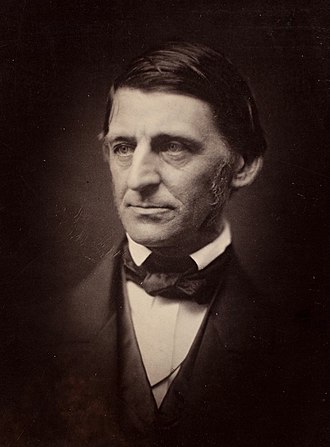
Ralph Waldo Emerson
1803 – 1882
American philosopher (1803–1882)
- United States
- American
- Transcendentalism
- western-philosophy
About
Ralph Waldo Emerson, who went by his middle name Waldo, was an American essayist, lecturer, philosopher, minister, abolitionist, and poet who led the Transcendentalist movement of the mid-19th century. He was seen as a champion of individualism and critical thinking, as well as a prescient critic of the countervailing pressures of society and conformity. The German philosopher Friedrich Nietzsche thought he was "the most gifted of the Americans", and Walt Whitman called Emerson his "master".
Source: Wikipedia (CC BY-SA). Portrait by User:Scewing derivative work: 2009 (Public domain) via Wikimedia Commons.
Life on the Timeline
Major Works
Exam Dossier
Most-asked topics
- Transcendentalism as a movement
- Self-Reliance and individualism
- Nature (1836) as founding manifesto
- The American Scholar as intellectual declaration of independence
- The Over-Soul and idealist philosophy
- Emerson's influence on Thoreau and Whitman
- Emerson as essayist-poet and public lecturer
- American Romanticism vs. European Romanticism
Previous-year themes
- Emerson's role as founder/leading voice of American Transcendentalism
- Concept of Self-Reliance and non-conformity in his essays
- Nature (1836) as the founding Transcendentalist text
- The American Scholar address and its call for American literary independence
- Emerson's influence on Walt Whitman and Henry David Thoreau
- Distinguishing Essays: First Series and Essays: Second Series
- Emerson's idea of the Over-Soul and its debt to Idealist philosophy
Common confusions
- Confusing Emerson, the essayist-philosopher, with his younger protege Henry David Thoreau, the author of Walden — both Transcendentalists of Concord but distinct in genre and works.
- Mixing up Essays: First Series (1841, containing "Self-Reliance" and "Compensation") with Essays: Second Series (1844, containing "The Poet" and "Experience").
- Misattributing the popular saying "Do not go where the path may lead, go instead where there is no path and leave a trail" to Emerson — it does not appear in his authenticated writings.
- Treating American Transcendentalism as identical to British Romanticism, rather than as a distinct movement influenced by it (via Wordsworth and Coleridge) but rooted in American individualism and Idealist philosophy.
- Confusing the prose treatise Nature (1836) with Emerson's shorter nature-themed poems such as "Waldeinsamkeit" or "The Humble-Bee."
- Forgetting that Emerson was a former Unitarian minister who resigned his pulpit before becoming the era's leading lecturer-essayist.
Memory tricks
"36-37-38": Nature (1836), The American Scholar (1837), Divinity School Address (1838) — Emerson's three foundational Harvard-period texts in consecutive years.
"First before Second": Essays: First Series (1841) precedes Essays: Second Series (1844) — logical numeric order matches chronological order.
Emerson = "Sage of Concord" — anchors him geographically with Thoreau, Hawthorne, and Alcott in the Concord Transcendentalist circle.
"Trust thyself" = Self-Reliance's core creed — one phrase to recall the essay's central argument on individualism.
"R-E-C" later works in ascending decades: Representative Men (1850), English Traits (1856), Conduct of Life (1860).