Victorian
Emily Dickinson
1830 – 1886
American poet (1830-1886)
- United States
- American
About
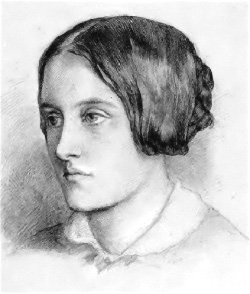
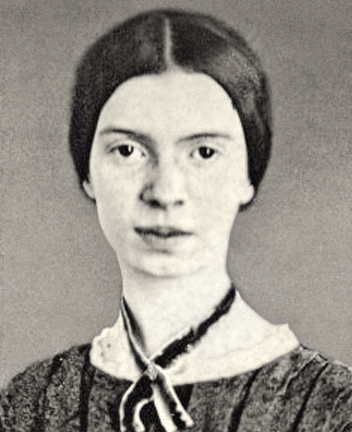
Emily Elizabeth Dickinson was an American poet. Largely unpublished and unknown during her lifetime, her work is now widely regarded as canonical. The Poetry Foundation describes her as having "created in her writing a distinctively elliptical language for expressing what was possible but not yet realized."
Source: Wikipedia (CC BY-SA). Portrait by Unknown authorUnknown author (Public domain) via Wikimedia Commons.
Life on the Timeline
Major Works
No works have been hung in this gallery yet — the acquisitions team is at work.
Exam Dossier
Most-asked topics
- Posthumous publication history (1890, 1891, 1896 volumes)
- Editorial history: Johnson (1955) vs Franklin (1998) editions
- Correspondence with Thomas Wentworth Higginson
- Slant rhyme, dashes, and unconventional capitalization
- Hymn/common meter and the influence of Isaac Watts's hymnody
- Death and immortality poems ('Because I could not stop for Death', 'I heard a Fly buzz')
- Dickinson's reclusiveness and the 'Myth of Amherst'
- The fascicles (hand-sewn manuscript booklets)
- Feminist reappraisals (Adrienne Rich, Gilbert and Gubar)
- Dickinson and Whitman as the twin founders of American poetry
Previous-year themes
- Identifying poems from famous first lines (her poems are untitled)
- Chronology and editors of the posthumous volumes of her poetry
- Her relationship with Higginson as 'Preceptor'
- Stylistic devices: dash, slant rhyme, elliptical syntax
- Treatment of death, immortality, and consciousness in her lyrics
- Comparison with Walt Whitman as pioneers of modern American poetry
- Feminist critical readings of Dickinson
- Poems published anonymously during her lifetime
Common confusions
- Emily Dickinson (American poet, Amherst) vs Emily Brontë (English novelist-poet, Wuthering Heights) — both reclusive 19th-century Emilys
- Dickinson vs Charles Dickens — similar surnames, entirely different writers
- Johnson numbering (J) vs Franklin numbering (Fr) of the poems — two different scholarly systems
- Mabel Loomis Todd (co-editor of the 1890 Poems) vs Helen Hunt Jackson (friend who urged her to publish in her lifetime)
- Her poems are untitled — exam questions cite first lines; editors' added titles (e.g. 'The Snake') are not Dickinson's
- Assuming she was a Transcendentalist or knew Whitman personally — she belonged to no movement and the two never met or read each other closely
Memory tricks
1890-91-96: the three Poems series arrive like decade bells — 0, 1, 6 after her death in 1886
T-H-J = Texts Honestly Justified: Thomas H. Johnson (1955) restored the honest original texts; Franklin (1998) Finalized them
HIGGINSON = Her Instructor; Guided Genius In Amherst — her self-chosen 'Preceptor' from the 1862 Atlantic letter
Snake in the Springfield paper: 'narrow Fellow' = newspaper Fellow (1866, Springfield Republican)
Lavinia the Lifesaver: sister Lavinia found and saved the fascicles
White dress + Amherst window = 'The Myth of Amherst' — image for her reclusive later life