Victorian
Henry David Thoreau
1817 – 1862
American essayist, poet, and philosopher (1817–1862)
- United States
- American
- Transcendentalism
- western-philosophy
About
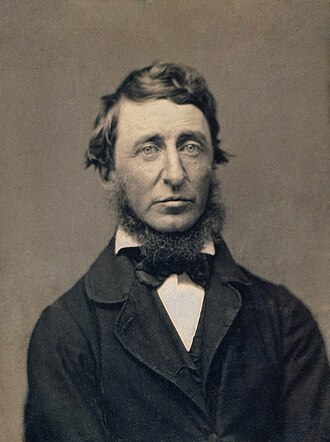
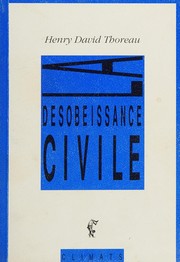
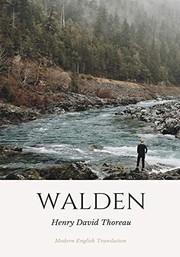
Henry David Thoreau was an American naturalist, essayist, poet, and philosopher. A leading transcendentalist, he is best known for his book Walden, a reflection upon simple living in natural surroundings, and his essay "Civil Disobedience", an argument in favor of citizen disobedience against an unjust state.
Source: Wikipedia (CC BY-SA). Portrait by B. D. Maxham (Public domain) via Wikimedia Commons.
Life on the Timeline
Major Works
Exam Dossier
Most-asked topics
- Transcendentalism and Thoreau's philosophy of self-reliance
- Walden: structure, themes of simplicity and nature
- Civil Disobedience: argument and political philosophy
- Thoreau's relationship with Ralph Waldo Emerson
- Thoreau's influence on Gandhi and Martin Luther King Jr.
- Nature writing and the American pastoral tradition
- Individual conscience versus the state
- Thoreau's place in 19th-century American literature
Previous-year themes
- Transcendentalist ideas in Thoreau's prose
- Walden as an account of simple living and self-sufficiency
- Civil Disobedience and the ethics of resisting unjust law
- Thoreau's influence on later movements of non-violent resistance
- Nature and individualism in American Romantic/Transcendentalist writing
- Thoreau's association with Emerson and the Concord circle
Common confusions
- Confusing Thoreau's role with Emerson's: Emerson was the elder theorist and mentor of Transcendentalism, Thoreau its practitioner who put its ideas into lived experiment at Walden.
- Assuming Thoreau lived at Walden Pond in total isolation for years, when in fact his stay lasted about two years, two months and two days, and he regularly visited Concord.
- Mixing up the chronology: 'Civil Disobedience' (1849) actually predates Walden (1854), though Walden is often assumed to be the earlier, more famous work.
- Forgetting that the essay is more accurately titled 'Resistance to Civil Government' in its original 1849 publication; 'Civil Disobedience' is the title used in later posthumous collections.
- Treating The Maine Woods and Cape Cod as works published during Thoreau's lifetime, when both appeared posthumously after his death in 1862.
- Conflating Transcendentalism with British Romanticism; while related in valuing nature and intuition, Transcendentalism is a distinct American philosophical and literary movement centred on Emerson, Thoreau, and the Concord circle.
Memory tricks
'2-2-2' — Thoreau spent two years, two months, and two days at Walden Pond.
'Walden = Water' — the pond retreat and the 1854 book share the same name; picture still water for a 'still, deliberate' life.
Emerson gave the land, Thoreau built the life: mentor (Emerson) provided the ground, pupil (Thoreau) provided the experiment.
'1849 before 1854' — Civil Disobedience (protest) comes before Walden (retreat) alphabetically and chronologically.
Posthumous trio 'M-C-L': Maine Woods, Cape Cod, Life Without Principle — all published after Thoreau's 1862 death.
Gandhi and King both 'borrowed' from Thoreau's jail night — link 'civil disobedience' directly to non-violent resistance movements.