Modernism
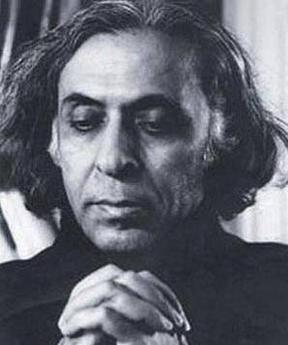
Raja Rao
1908 – 2006
Indian-born English writer (1908–2006)
- British Raj · Dominion of India · India
- Indian Writing in English
About
Raja Rao was an Indian-American writer of English-language novels and short stories, whose works are deeply rooted in metaphysics. Rao has been described as a powerful writer and a scholar well versed in the Hindu, Buddhist, and Christian philosophies. The Serpent and the Rope (1960), a semi-autobiographical novel recounting a search for spiritual truth in Europe and India, established him as one of the finest Indian prose stylists and won him the Sahitya Akademi Award in 1963. For the entire body of his work, Rao was awarded the Neustadt International Prize for Literature in 1988. Rao's wide-ranging body of work, spanning a number of genres, is seen as a varied and significant contribution to Indian English literature, as well as to World literature as a whole.
Source: Wikipedia (CC BY-SA).
Life on the Timeline
Major Works
Exam Dossier
Most-asked topics
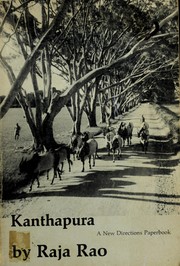
- Kanthapura (1938) as a Gandhian novel and its Puranic narrative technique
- The Foreword to Kanthapura as a manifesto for Indian English prose style
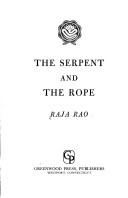
- The Serpent and the Rope (1960) as a metaphysical/philosophical novel
- Raja Rao's place among the 'Big Three' pioneers of Indian English fiction (with Mulk Raj Anand and R.K. Narayan)
- Advaita Vedanta and Hindu-Buddhist-Christian metaphysics in Rao's fiction
- Sahitya Akademi Award and Neustadt International Prize for Literature
- Narrative technique: sthala-purana, oral storytelling, the 'grandmother's tale'
- Rao's later fiction: The Cat and Shakespeare, Comrade Kirillov, The Chessmaster and His Moves
Previous-year themes
- Rao's theory of Indian English articulated in the Foreword to Kanthapura
- Kanthapura's use of the Puranic/sthala-purana narrative mode and its village-woman narrator
- The Gandhian freedom struggle as depicted in Kanthapura
- The Serpent and the Rope as an autobiographical-metaphysical novel of East-West encounter
- Raja Rao's grouping with Mulk Raj Anand and R.K. Narayan as founders of the Indian English novel
- Chronology and identification of Rao's major works
- Rao's philosophical/religious concerns (Vedanta) as a distinguishing feature of his fiction
Common confusions
- Students confuse the 'Big Three' of early Indian English fiction — mixing up which novel (Untouchable, Swami and Friends, Kanthapura) belongs to Mulk Raj Anand, R.K. Narayan, or Raja Rao respectively.
- Confusing Kanthapura's narrator Achakka (an old village woman) with its Gandhian protagonist Moorthy, who leads the freedom movement in the village.
- Treating The Serpent and the Rope as straightforward autobiography rather than a semi-autobiographical/philosophical novel narrated by the fictional Ramaswamy.
- Mixing up the Sahitya Akademi Award (1963, for The Serpent and the Rope) with the Neustadt International Prize for Literature (1988, for his entire body of work).
- Confusing Rao's Puranic/sthala-purana narrative technique in Kanthapura with the stream-of-consciousness technique of Western modernists like Joyce or Woolf.
- Assuming Kanthapura was Rao's only major novel, overlooking The Serpent and the Rope, The Cat and Shakespeare, Comrade Kirillov, and The Chessmaster and His Moves.
Memory tricks
'K for Kanthapura, K for '38' — remembers Kanthapura's publication year.
'Serpent won Sahitya in Sixty-Three' — The Serpent and the Rope (1960) won the Sahitya Akademi Award in 1963.
'Neustadt Eighty-Eight, for a lifetime, not one book' — recalls the Neustadt Prize (1988) honoured Rao's whole oeuvre.
'A-N-R': Anand, Narayan, Rao — the Big Three pioneers of the Indian English novel.
'Achakka tells it like a Purana' — links the narrator's name to Kanthapura's Puranic storytelling mode.