Victorian
Rabindranath Tagore
1861 – 1941
Bengali poet, philosopher and polymath (1861–1941)
- British Raj
- Indian Writing in English
- Bengali Renaissance
- ◆ Nobel 1913
About
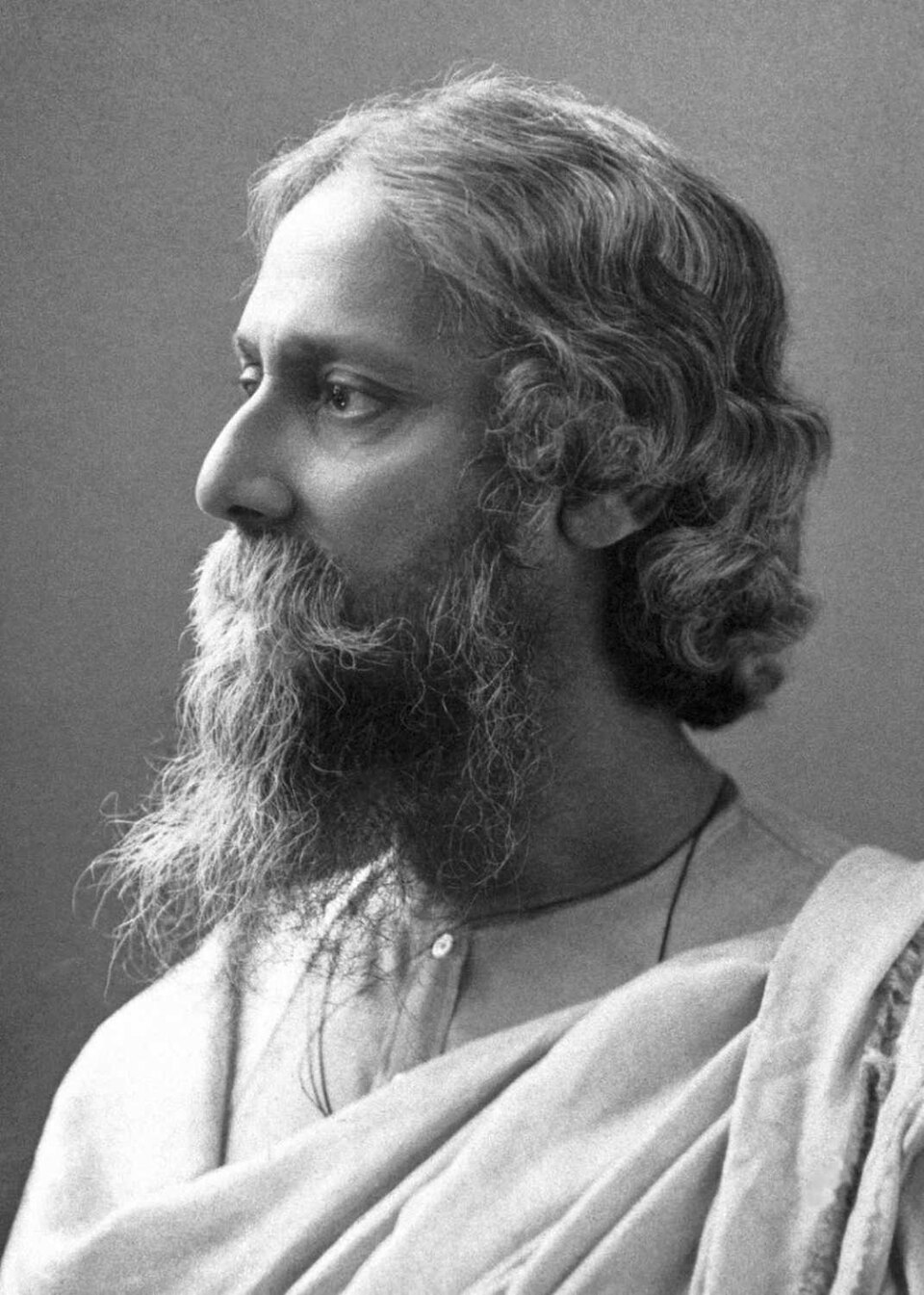
Rabindranath Tagore, was a Bengali poet, author, playwright, musician, composer, philosopher, social reformer, painter, and one of the foremost figures of the Bengal Renaissance. In 1913, Tagore became the first Asian to win a Nobel Prize in any category, and also the first lyricist and non-European to win the Nobel Prize in Literature. A significant moulder of culture within Bengal and the Indian subcontinent, he wrote and composed the national anthems of India and Bangladesh.
Source: Wikipedia (CC BY-SA). Portrait by Generalstabens litografiska anstalt (Public domain) via Wikimedia Commons.
Life on the Timeline
Major Works

Exam Dossier
Most-asked topics
- Gitanjali (Song Offerings) and the 1913 Nobel Prize in Literature
- W. B. Yeats's Introduction to the English Gitanjali (1912)
- Ghare-Baire (The Home and the World) and the Swadeshi movement
- Tagore's critique of nationalism (Nationalism lectures, 1917)
- Renunciation of knighthood after Jallianwala Bagh (1919)
- Santiniketan and the founding of Visva-Bharati
- Tagore's plays: Dak Ghar (The Post Office), Raja, Rakta Karabi
- Short stories: Kabuliwala, The Postmaster, Kshudhita Pashan, Nastanirh
- Tagore and the Bengal Renaissance
- Tagore as composer of the national anthems of India and Bangladesh
Previous-year themes
- Identifying the year and significance of Tagore's Nobel Prize (first non-European laureate)
- Matching English titles of Tagore's works with their Bengali originals
- Characters of Ghare-Baire (Nikhil, Bimala, Sandip) and its nationalism debate
- Famous lines from Gitanjali, especially 'Where the mind is without fear'
- Tagore's plays and their allegorical/symbolic method (The Post Office)
- Chronology of Tagore's novels and poetry collections
- Tagore's relationship with Yeats, Pound and the Western reception of Gitanjali
- Tagore in the context of Indian English literature and the Bengal Renaissance
Common confusions
- Gitanjali dates: the Bengali collection appeared in 1910; the English Gitanjali (Song Offerings), with Yeats's Introduction, in 1912 — the Nobel followed in 1913.
- Ghare-Baire (1916), Tagore's novel, vs The Home and the World (1984), Satyajit Ray's film adaptation of it.
- Nastanirh (novella, 1901) vs Charulata (Ray's 1964 film based on it) — exam options often mix the two titles.
- Sarojini Naidu is the 'Nightingale of India'; Tagore is 'Gurudev' / the 'Bard of Bengal' — sobriquets are frequently swapped.
- Jana Gana Mana (India) vs Amar Shonar Bangla (Bangladesh): both Tagore's, but candidates confuse which anthem belongs to which country.
- Tagore renounced his knighthood (1919), not his Nobel Prize; and the trigger was Jallianwala Bagh, not the 1905 Partition of Bengal.
- Shesher Kabita means 'The Last Poem' but is a novel, not a poetry collection — a classic trap.
- Yeats wrote the Introduction to Gitanjali; Ezra Pound promoted the poems in Poetry magazine — their roles are often conflated.
Memory tricks
Nobel ladder 10-12-13: Bengali Gitanjali 1910 → English Song Offerings 1912 → Nobel 1913.
Knighthood bracket 15-19: Won in 1915, Withdrawn in 1919 (Jallianwala Bagh) — the two ends of WWI.
Ghare-Baire trio N-B-S = 'Nation Between Spouses': Nikhil (husband), Bimala (wife), Sandip (nationalist intruder).
Dak Ghar = Post Office; A-MAL waits for 'a mail' (the King's letter).
Life dates mirror trick: 1861–1941 — the '61 flips to '41 plus a century turn; he lived to 80.
Ray double-bill: Charulata ← Nastanirh; The Home and the World ← Ghare-Baire (both Bengali originals begin with the film's 'home/nest' idea).
Anthem pair: JIB — Jana Gana Mana = India, Bangla in 'Amar Shonar Bangla' = Bangladesh.