Victorian
Henry Louis Vivian Derozio
1809 – 1831
Indian writer (1809-1831)
- Indian Writing in English
About
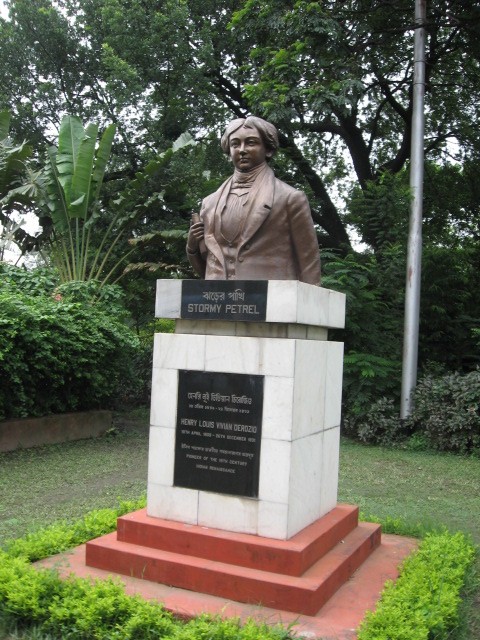
Henry Louis Vivian Derozio was an Indian poet and assistant headmaster of Hindu College, Kolkata. He was a radical thinker of his time and one of the first Indian educators to disseminate Western learning and science among the young men of Bengal.
Source: Wikipedia (CC BY-SA). Portrait by uploaded to Wikipedia by P.K.Niyogi (log); transferred to Commons by Jayantanth. (CC BY-SA 3.0) via Wikimedia Commons.
Life on the Timeline
Major Works
Exam Dossier
Most-asked topics
- Derozio as pioneer of Indo-Anglian (Indian English) poetry
- The Young Bengal Movement and the 'Derozians'
- Derozio's tenure and dismissal from Hindu College, Calcutta
- The Academic Association and free-thinking rationalism
- 'To India - My Native Land' as patriotic sonnet
- 'The Fakeer of Jungheera' and the theme of sati
- Derozio's Byronic/Romantic influences
- Derozio's early death and place in the Bengal Renaissance
Previous-year themes
- Identification of Derozio as teacher at Hindu College and leader of Young Bengal
- Opening/famous lines of 'To India - My Native Land'
- Distinguishing Derozio's works from those of Toru Dutt and other early Indian English poets
- Theme and setting of 'The Fakeer of Jungheera'
- Derozio's role in the Bengal Renaissance and colonial-era reform movements
- Chronology of Derozio's short career (1826-1831)
- Sonnet form in early Indian English poetry
Common confusions
- Assuming Derozio was born in England — he was born, raised, and educated in Calcutta, of Anglo-Indian (Indo-Portuguese/Eurasian) descent.
- Confusing 'Young Bengal' (Derozio's radical student followers) with the Brahmo Samaj (founded by Raja Ram Mohan Roy), a separate reform movement.
- Mixing up 'To India - My Native Land' (a patriotic sonnet) with 'The Fakeer of Jungheera' (a narrative poem on sati) as if they were the same work.
- Treating Derozio's dismissal from Hindu College as a voluntary retirement rather than a forced removal following controversy.
- Confusing Derozio, the pioneer of Indian English poetry (d. 1831), with the later poet Toru Dutt, who wrote decades afterward.
- Misremembering Derozio's age at death — he died at 22, not in old age, making his career unusually brief.
Memory tricks
'1826 to teach, 1831 to leave' — remembers Derozio's short Hindu College career bookended by appointment and dismissal/death.
'Young Bengal, young man' — links the Young Bengal Movement to Derozio's own youth (he died at just 22).
'Harp is silent, Country is fallen' — pairs his two most quoted sonnets: The Harp of India and To India - My Native Land.
'Fakeer saves the widow from the pyre' — recalls the sati-rescue plot of The Fakeer of Jungheera.
'Academic Association = Argue and Ask' — recalls that this 1828 body was a free-debate forum, not a political party.