Modernism
Jacques Lacan
1901 – 1981
French psychoanalyst and writer (1901–1981)
- France
- European Theory & Influence
- Psychoanalytic Criticism
- Poststructuralism
- Structuralism
- Literary Theory
About
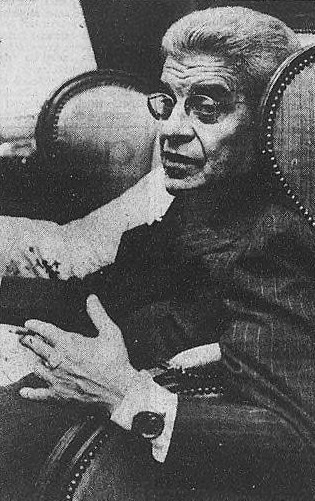
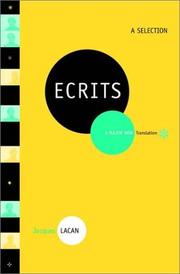
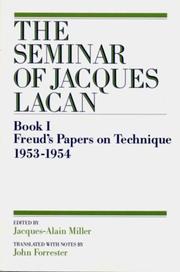
Jacques Marie Émile Lacan was a French psychoanalyst and psychiatrist. Described as "the most controversial psycho-analyst since Freud", Lacan gave annual seminars in Paris from 1952 to 1980 and published papers that were later collected in the book Écrits. Transcriptions of the seminars 1953–1980 were published. His work made a significant impact on continental philosophy and cultural theory in areas such as post-structuralism, critical theory, feminist theory and film theory, as well as on the practice of psychoanalysis itself.
Source: Wikipedia (CC BY-SA). Portrait by Foto Moisio (Public domain) via Wikimedia Commons.
Life on the Timeline
Major Works
Exam Dossier
Most-asked topics
- The Mirror Stage and the formation of the ego
- The three orders: Imaginary, Symbolic, Real
- 'The unconscious is structured like a language'
- The Name-of-the-Father and the phallus as signifier
- Objet petit a and desire
- Lacan's return to Freud
- Signifier/signified and the algorithm of the sign (bar)
- Lacan's influence on post-structuralism and feminist theory (Kristeva, Irigaray, Butler)
- Écrits and the Paris seminars (1952-1980)
- The Lacanian subject and the 'Other'
Previous-year themes
- Lacan's concept of the Mirror Stage and subject formation
- The unconscious structured like a language and its relation to Saussure
- The Symbolic, Imaginary and Real orders in literary/cultural analysis
- Lacan's revision/return to Freud
- Application of Lacanian psychoanalysis to literary and film theory
- Desire, lack, and the objet petit a in critical theory
- Lacan's influence on feminist and post-structuralist thought
Common confusions
- Confusing Lacan's 'mirror stage' with simple childhood vanity rather than the structural founding of the ego through alienating identification
- Conflating Lacan's Symbolic order with the Imaginary order — the Symbolic concerns language and law, the Imaginary concerns images and identification
- Mistaking Lacan's 'return to Freud' as a rejection of Freud rather than a reinterpretation of Freud through structural linguistics
- Confusing objet petit a with an actual, attainable object of desire rather than its structural cause
- Attributing 'the unconscious is structured like a language' to Freud instead of Lacan
- Confusing Lacan (psychoanalysis/structuralism) with Jacques Derrida (deconstruction) due to similar first names and shared French intellectual context
Memory tricks
'Lacan-guage': remember Lacan's thesis that the unconscious is structured LIKE A LANGUAGE by linking his name to 'language'
Mirror stage = 'Mirror Makes Me' — the infant's self is Made in the Mirror, an imaginary, alienated image
I-S-R for Imaginary, Symbolic, Real: think 'I See Reality' but always mediated
Écrits = 'écrit' means 'written' in French — remember it as Lacan's WRITTEN legacy from 1966
'Lacan Loves Language' — L-L-L to recall his linguistic turn in psychoanalysis
Objet petit a: the lowercase 'a' stands for 'autre' (other) — always small, always just out of reach, like desire itself