Postmodern
Judith Butler
b. 1956
American feminist gender studies philosopher (born 1956)
- United States
- American
- Queer Theory
- Feminist Criticism
- post-structuralism
- Literary Theory
About
Judith Butler is an American feminist, queer philosopher, and gender studies scholar whose work has influenced political philosophy, ethics, psychoanalysis, and the fields of feminist and queer theory, academic freedom, and literary theory.
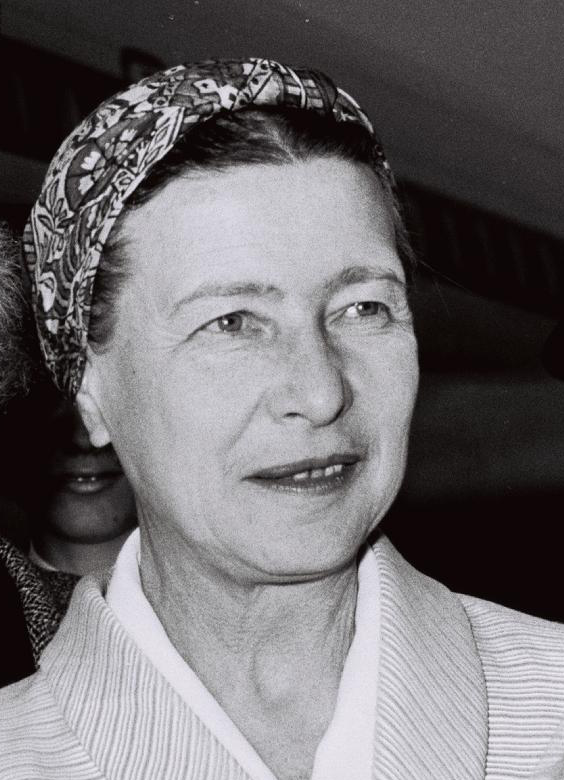
Source: Wikipedia (CC BY-SA). Portrait by University of California, Berkeley (CC0) via Wikimedia Commons.
Life on the Timeline
Major Works


Exam Dossier
Most-asked topics
- Gender performativity and the critique of the sex/gender distinction
- Gender Trouble (1990) as a foundational queer theory text
- Butler's reading of J. L. Austin's speech-act theory (performative utterances)
- Critique of compulsory heterosexuality and heteronormativity
- Butler's relation to Foucault, Derrida, and psychoanalysis (Freud, Lacan)
- Bodies That Matter and the 'materiality' of the sexed body
- Butler's influence on queer theory and third-wave/poststructuralist feminism
- Butler's later ethical-political turn (precarity, grievability, vulnerability)
Previous-year themes
- Butler's concept of gender performativity and its distinction from mere 'performance'
- Critique of the sex/gender binary in Gender Trouble
- Butler's relation to Beauvoir, Foucault, and Derrida
- Influence of J. L. Austin's speech-act theory on Butler's performativity
- Butler's place within queer theory and third-wave/poststructuralist feminism
- Bodies That Matter and the question of the materiality of the body
- Butler's contribution to the theorization of heteronormativity and compulsory heterosexuality
Common confusions
- Confusing Butler's 'gender performativity' with theatrical 'performance' — performativity is the compulsory, often unconscious repetition of norms, not a chosen role one puts on and takes off at will.
- Mixing up Gender Trouble (1990) with Bodies That Matter (1993) — students often misattribute the 'performative constitution of identity' formulation to the later book instead of the founding 1990 text.
- Confusing Butler with Simone de Beauvoir on sex/gender — Beauvoir separated biological sex from constructed gender ('one is not born, but rather becomes, a woman'); Butler goes further, arguing sex itself is discursively produced, not a pre-given biological ground.
- Treating Butler as simply a 'feminist critic' without noting her foundational role in queer theory and gender studies as a distinct field.
- Confusing performativity (Butler, linguistic/philosophical, drawing on J. L. Austin) with Erving Goffman's dramaturgical 'performance of self' in sociology — different disciplinary lineages.
- Assuming Butler denies the reality of bodies or suffering because she calls sex 'discursively constructed' — Bodies That Matter explicitly addresses this misreading and insists materiality still matters.
Memory tricks
'Gender Trouble' = Ten in '90 — 1990, the trouble that started it all.
'Bodies That Matter' follows the 'Trouble' by three years: 1990 → 1993, clarifying what the earlier book left unsettled.
Remember BUTLER = Being Undone Through Language, Enactment, Repetition — the core of performativity in one word.
Austin gives Butler her verbs: 'performative' speech acts (Austin) become 'performative' gender acts (Butler).
Beauvoir says 'becomes' a woman; Butler says there's no 'being' behind the 'becoming' at all — Beauvoir cracks the door, Butler removes it.
'Precarious' and 'Frames' (later Butler) both circle the same P-word: Politics of who counts as grievably human.