Modernism
Simone de Beauvoir
1908 – 1986
French philosopher, social theorist and activist (1908–1986)
- France
- European Theory & Influence
- Feminist Criticism
- Existentialism
- existentialism
- feminism
- Literary Theory
About
Simone Lucie Ernestine Marie Bertrand de Beauvoir was a French existentialist philosopher, writer, social theorist, and feminist activist. Though she did not consider herself a philosopher, nor was she considered one at the time of her death, she had a significant influence on both feminist existentialism and feminist theory.
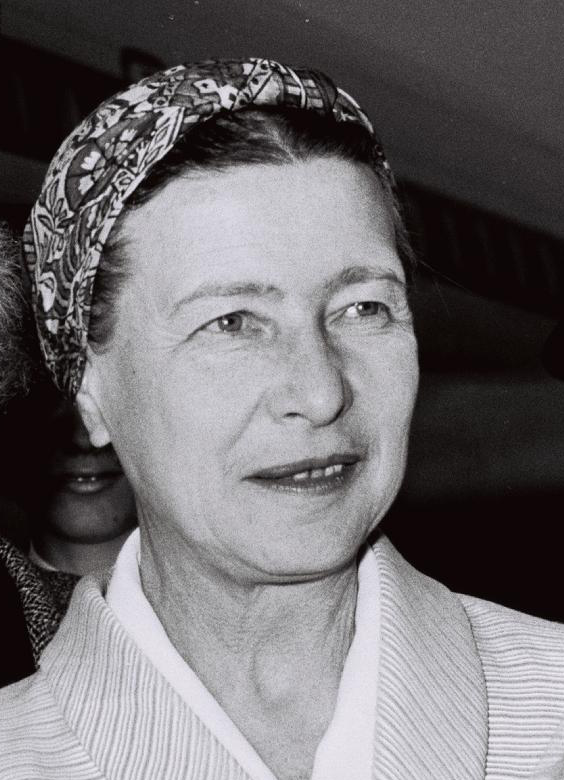
Source: Wikipedia (CC BY-SA). Portrait by Moshe Milner (CC BY-SA 3.0) via Wikimedia Commons.
Life on the Timeline
Major Works

Exam Dossier
Most-asked topics
- Existentialist feminism and the concept of the Other
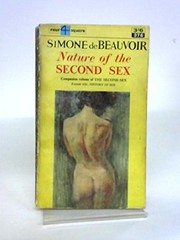
- The Second Sex: 'One is not born, but becomes, a woman'
- Beauvoir's relationship to Sartrean existentialism
- The Mandarins as a roman à clef of postwar French intellectuals
- She Came to Stay and the ethics of the self-Other triangle
- Pyrrhus and Cineas and existentialist ethics of freedom and action
- Beauvoir as founder of second-wave feminism
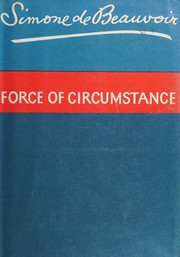
- Autobiography/memoir writing in Force of Circumstance
Previous-year themes
- Beauvoir's definition and critique of 'Woman as Other'
- Existentialism and freedom in Beauvoir's philosophical essays
- The Second Sex as a foundational feminist text
- Chronology and identification of Beauvoir's major works
- Beauvoir's association with Jean-Paul Sartre and French existentialism
- Feminist theory: Beauvoir compared with later theorists (Butler, Kristeva, Showalter)
- Autobiographical and fictional modes in Beauvoir's writing
Common confusions
- Confusing The Second Sex (Beauvoir, 1949) with Betty Friedan's The Feminine Mystique (1963), a later and distinct feminist text.
- Confusing She Came to Stay (1943) with The Mandarins (1954) — both involve fictionalized love triangles among intellectuals but are separate novels a decade apart.
- Assuming Beauvoir won the Nobel Prize; she did not receive a Nobel Prize.
- Attributing Being and Nothingness to Beauvoir; that is Jean-Paul Sartre's major philosophical work, not hers.
- Treating 'existentialist feminism' as identical to liberal or radical feminism, when it is a distinct philosophical strand rooted in freedom and situatedness.
- Assuming Beauvoir was always recognized as a philosopher in her lifetime, when in fact she resisted and was denied that label by many contemporaries.
Memory tricks
'SEX in '49' — The Second Sex published 1949.
'Stayed first' — She Came to Stay (1943) is Beauvoir's earliest listed novel.
'Mandarins Made the Goncourt' — The Mandarins (1954) won the Prix Goncourt.
Order the decades: 1940s (She Came to Stay, Pyrrhus and Cineas, The Second Sex) → 1950s (The Mandarins) → 1960s (Force of Circumstance).
'Pyrrhus asks: to act or not?' — Pyrrhus and Cineas (1944) is Beauvoir's essay on the ethics of action and freedom.
Beauvoir + Sartre = twin pillars of French existentialism, but remember Beauvoir forged an independent feminist philosophy in The Second Sex.