Postmodern
Julia Kristeva
b. 1941
Bulgarian philosopher, psychoanalyst & academic
- France · Bulgaria
- European Theory & Influence
- Poststructuralism
- Feminist Criticism
- Psychoanalytic Criticism
- post-structuralism
- western-philosophy
- Literary Theory
About
Julia Kristeva is a Bulgarian-French philosopher, literary critic, semiotician, psychoanalyst, feminist, and novelist who has lived in France since the mid-1960s. She has taught at Columbia University, and is now a professor emerita at Université Paris Cité. The author of more than 30 books, including Powers of Horror, Tales of Love, Black Sun: Depression and Melancholia, Proust and the Sense of Time, and the trilogy Female Genius, she has been awarded Commander of the Legion of Honor, Commander of the Order of Merit, the Holberg International Memorial Prize, the Hannah Arendt Prize, and the Vision 97 Foundation Prize, awarded by the Havel Foundation.
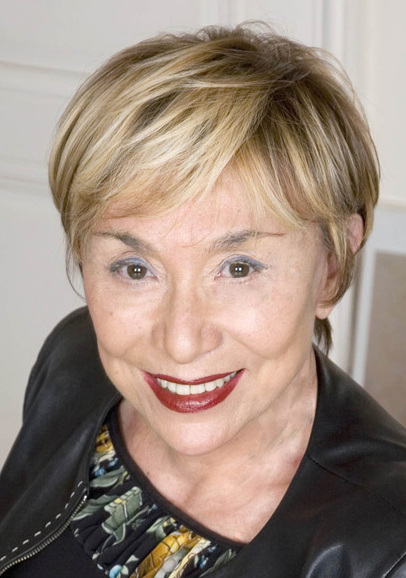
Source: Wikipedia (CC BY-SA). Portrait by photo2008 (Public domain) via Wikimedia Commons.
Life on the Timeline
Major Works
Exam Dossier
Most-asked topics
- Intertextuality (concept and coinage)
- Semiotic vs Symbolic (Revolution in Poetic Language)
- Theory of Abjection (Powers of Horror)
- The chora and pre-Oedipal maternal space
- "Women's Time" and the three generations of feminism
- Kristeva's relation to Tel Quel and French poststructuralism
- Psychoanalysis in Kristeva's criticism (Freud, Lacan)
- Kristeva's place among French feminist theorists (vs Cixous, Irigaray)
Previous-year themes
- Origin and meaning of the term 'intertextuality' and its debt to Bakhtin
- The semiotic/symbolic distinction and its implications for reading avant-garde poetic language
- Theory of abjection and the abject object (corpse, filth, boundary)
- Kristeva's model of feminism as generations rather than linear waves
- The chora as a pre-linguistic, maternal, rhythmic space
- Kristeva's position within French poststructuralism and psychoanalytic theory
- Distinguishing Kristeva's feminist theory from Anglo-American and other French feminisms
Common confusions
- Confusing Kristeva's specialized term 'the semiotic' (pre-linguistic drives) with the general linguistic discipline of semiotics/semiology.
- Attributing the coinage of 'intertextuality' to Roland Barthes, who popularized and applied the term, rather than to Kristeva, who introduced it.
- Treating 'abjection' as a synonym for simple disgust, rather than as a specific collapse of the boundary between subject and object/self and other.
- Conflating Kristeva's 'three generations' of feminism (from 'Women's Time') with the standard historical framework of 'three waves' of feminism.
- Grouping Kristeva, Helene Cixous, and Luce Irigaray uniformly as 'French feminists' as though they hold identical theoretical positions.
- Confusing Kristeva's 'chora' (a maternal, pre-Oedipal, rhythmic space) with Lacan's 'mirror stage' (a later, image-based stage of subject formation).
Memory tricks
Semiotic vs Symbolic: 'S for Sound/rhythm/mothers' (semiotic) vs 'S for Syntax/law/fathers' (symbolic).
Abjection: think 'AB-JECT' = cast off/thrown away — corpse, filth, boundary breakdown.
Chora = 'Cradle': Plato's receptacle-space, repurposed by Kristeva as the maternal rhythmic space before language.
Intertextuality: remember 'Kristeva before Barthes' — she coined it via Bakhtin's dialogism, Barthes later popularized it.
Women's Time = Generations, not Waves — Kristeva's framework is about differing relations to time and identity, not chronological feminist 'waves'.
Kristeva's triad of major concepts: Semiotic/Symbolic (language), Abjection (horror), Chora (maternal space) — 'S-A-C' as a quick recall peg.