Modernism
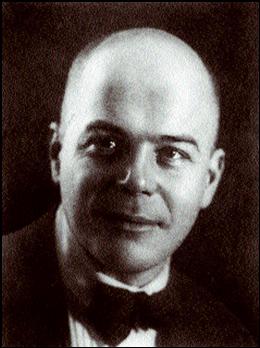
Mikhail Bakhtin
1895 – 1975
Russian intellectual and philosopher (1895–1975)
- Russian Empire · Russian Soviet Federative Socialist Republic · Soviet Union
- European Theory & Influence
- Russian Formalism
- western-philosophy
- Literary Theory
About
Mikhail Mikhailovich Bakhtin was a Russian philosopher and literary critic who worked on the philosophy of language, ethics, and literary theory. His writings, on a variety of subjects, inspired scholars working in a number of different traditions and in disciplines as diverse as literary criticism, history, philosophy, sociology, anthropology, and psychology. Although Bakhtin was active in the debates on aesthetics and literature that took place in the Soviet Union in the 1920s, his distinctive position did not become well known until he was rediscovered by Russian scholars in the 1960s.
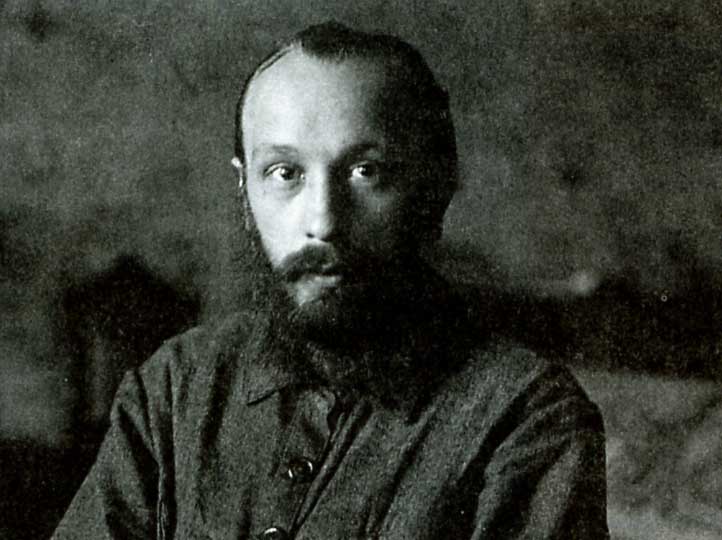
Source: Wikipedia (CC BY-SA). Portrait by Unknown authorUnknown author (Public domain) via Wikimedia Commons.
Life on the Timeline
Major Works
Exam Dossier
Most-asked topics
- Dialogism and the dialogic novel
- Heteroglossia and polyphony
- The Dostoevsky book (polyphonic novel)
- Carnivalesque and Rabelais and His World
- Chronotope
- Double-voiced discourse and speech genres
- Bakhtin vs Russian Formalism
- Unfinalizability and the self-other relation
Previous-year themes
- Bakhtin's concept of dialogism versus monologism
- Polyphony in the Dostoevsky study
- Heteroglossia and the novel as genre
- Carnival, grotesque body, and Rabelais and His World
- The chronotope as a category of literary analysis
- Bakhtin's relation to Russian Formalism and the Bakhtin Circle
- Key terms: double-voiced discourse, unfinalizability, addressivity
Common confusions
- Confusing 'polyphony' (multiple independent voices, from the Dostoevsky study) with 'heteroglossia' (diversity of social languages, from The Dialogic Imagination) — they are related but distinct concepts.
- Attributing Bakhtin's ideas to Russian Formalism proper; Bakhtin and his Circle were largely critical of Formalism's ahistorical emphasis on device.
- Confusing Bakhtin with Viktor Shklovsky: Shklovsky is associated with defamiliarization/ostranenie, Bakhtin with dialogism and polyphony.
- Mixing up 'chronotope' (time-space fusion) with 'carnivalesque' (folk humour and grotesque suspension of hierarchy).
- Assuming Rabelais and His World and Problems of Dostoevsky's Poetics were written and published in the same period; the Rabelais study was completed decades before its Russian publication.
- Treating the 'Bakhtin Circle' texts (some attributed to Voloshinov and Medvedev) as if authorship is uncontested; scholars still debate attribution.
Memory tricks
POLYPHONY = 'poly' (many) + 'phony' sounds like 'phonic' (voice) → many voices, unmerged — think Dostoevsky's characters talking back to their author.
HETEROGLOSSIA = 'hetero' (different) + 'glossia' (tongue/language) → different social tongues within one language.
CHRONOTOPE = 'chrono' (time) + 'topos' (place) → time-space fused together in narrative.
CARNIVAL = world turned upside down — kings mocked, fools crowned — remember Rabelais's giants Gargantua and Pantagruel.
DIALOGISM vs MONOLOGISM: Dia- (two/across) = conversation between voices; Mono- (one) = single controlling voice.
Bakhtin was 'rediscovered' in the 1960s — link '1963' (revised Dostoevsky book) to his return to prominence in Soviet scholarship.