Postmodern
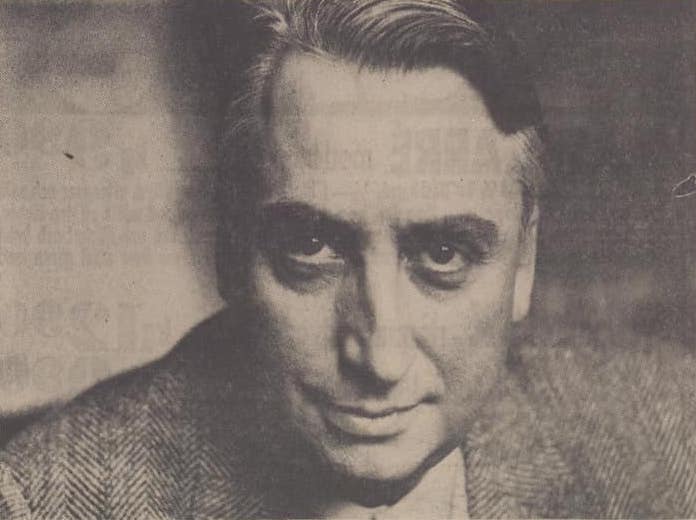
Roland Barthes
1915 – 1980
French philosopher and essayist
- France
- European Theory & Influence
- Structuralism
- Poststructuralism
- Literary Theory
About
Roland Gérard Barthes was a French literary theorist, essayist, philosopher, critic, and semiotician. His work engaged in the analysis of a variety of sign systems, mainly derived from Western popular culture. His ideas explored a diverse range of fields, including structuralism, anthropology, literary theory, and post-structuralism, and influenced the development of multiple schools of theory.
Source: Wikipedia (CC BY-SA). Portrait by Unknown (Public domain) via Wikimedia Commons.
Life on the Timeline
Major Works
Exam Dossier
Most-asked topics
- Mythologies and the concept of myth as depoliticized speech
- "The Death of the Author" and the birth of the reader
- Structuralism to poststructuralism shift in Barthes' career
- S/Z: writerly (scriptible) vs readerly (lisible) texts
- The Pleasure of the Text: plaisir vs jouissance
- Camera Lucida: studium and punctum
- Barthes' semiology and Saussurean linguistics
- Writing Degree Zero and the notion of "zero degree" writing
- Intertextuality and the connection to Julia Kristeva
- Barthes' place in French literary theory alongside Foucault, Derrida, Lacan
Previous-year themes
- Authorship, intention, and the reader's role in meaning-making
- Structuralist analysis of signs, myths, and popular culture
- The shift from structuralism to poststructuralism in Barthes' oeuvre
- Semiotic terminology: signifier, signified, denotation, connotation
- Textual pleasure and the erotics of reading
- Photography theory and the punctum/studium distinction
- Barthes' influence on subsequent theorists (Kristeva, Foucault, Derrida)
Common confusions
- Confusing Barthes' "Death of the Author" (1967) with Foucault's "What Is an Author?" (1969) — related but distinct essays by different theorists.
- Confusing Barthes' early structuralist phase (Mythologies, Elements of Semiology) with his later poststructuralist phase (S/Z, The Pleasure of the Text, Camera Lucida).
- Reversing "writerly" (scriptible, active/productive) and "readerly" (lisible, passive/consumable) texts from S/Z.
- Reversing "punctum" (the personal, piercing detail) and "studium" (the general cultural interest) from Camera Lucida.
- Treating Barthes' semiology as identical to Saussure's linguistics, rather than as Barthes' extension of Saussurean sign-theory to cultural myths.
- Confusing "plaisir" (comfortable, culturally sanctioned pleasure) with "jouissance" (disruptive, radical bliss) in The Pleasure of the Text.
Memory tricks
STUDIUM = STUDY (general, cultural, informational); PUNCTUM = PUNCTURE (personal, piercing detail) — Camera Lucida.
"Death of the Author" = "Birth of the Reader" — meaning shifts from writer to reader.
S/Z: think "Scriptible/Ztraightforward" — Scriptible (writerly, active) vs Lisible (readerly, passive).
Mythologies = MYTH + semiology of everyday bourgeois culture (wrestling, wine, soap powder).
Plaisir sounds like "pleasant" (comfortable pleasure); Jouissance is the jolt of "joy-issance" (radical bliss).
Barthes' career arc: Structuralism (1950s-60s, Mythologies) to Poststructuralism (1970s, S/Z onward).