Victorian
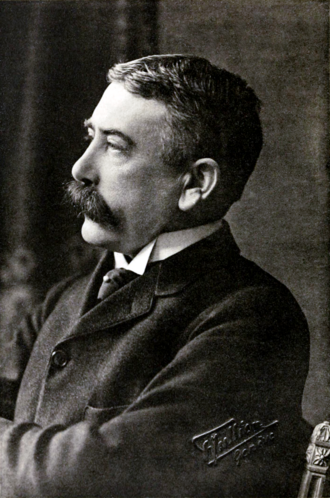
Ferdinand de Saussure
1857 – 1913
Swiss linguist and philosopher (1857–1913)
- Switzerland
- European Theory & Influence
- Structuralism
- Literary Theory
About
Ferdinand Mongin de Saussure was a Swiss linguist, semiotician and philosopher. His ideas laid a foundation for many significant developments in both linguistics and semiotics in the 20th century. He is widely considered one of the founders of 20th-century linguistics and one of two major founders of semiotics, or semiology, as Saussure called it.
Source: Wikipedia (CC BY-SA). Portrait by "F. Jullien Genève", maybe Frank-Henri Jullien (1882–1938) (CC BY-SA 4.0) via Wikimedia Commons.
Life on the Timeline
Major Works
Exam Dossier
Most-asked topics
- Langue vs parole
- The linguistic sign: signifier and signified
- Arbitrariness of the sign
- Synchronic vs diachronic linguistics
- Syntagmatic and paradigmatic (associative) relations
- Linguistic value (valeur) and the differential nature of language
- Saussure as founder of structuralism and semiology
- Course in General Linguistics: composition and posthumous publication
- Influence on structuralist and post-structuralist theory
Previous-year themes
- Saussure's key binary oppositions (langue/parole, synchronic/diachronic, syntagmatic/paradigmatic)
- The arbitrary nature of the linguistic sign
- Saussure's definition and structure of the sign (signifier/signified)
- Saussure as founder of modern/structural linguistics and semiology
- Circumstances of publication of Course in General Linguistics
- Saussure's influence on structuralism (Lévi-Strauss, Jakobson, Barthes) and on post-structuralism/deconstruction (Derrida)
- Distinguishing Saussurean semiology from Peircean semiotics
Common confusions
- Confusing 'langue' (the abstract social system of a language) with 'langage' (the general human faculty of language) and 'parole' (an individual speech act) — Saussure distinguishes all three.
- Mixing up which half of the sign is which: the signifier is the sound-image/form, the signified is the concept — not the real-world object (the referent).
- Treating Saussure's structuralism as the same project as Chomsky's generative grammar; they belong to different traditions and different eras of linguistics.
- Confusing synchronic linguistics (a language system at one point in time) with diachronic linguistics (the historical evolution of a language).
- Assuming Saussure personally authored the Course in General Linguistics as a finished book, when it was reconstructed posthumously by Bally and Sechehaye from students' lecture notes.
- Conflating Saussure's dyadic (signifier/signified) model of the sign with Charles Sanders Peirce's triadic semiotic model (sign/object/interpretant); the two founded related but distinct sign theories.
Memory tricks
'L before P': Langue is the Language system (abstract, social); Parole is the Particular act of speech (individual).
Picture the sign as a coin: one side is the Signifier (sound/form), the other the Signified (concept) — inseparable, but distinct.
'SYN is a snapshot, DIA is a documentary': Synchronic = a system frozen at one moment; Diachronic = its history over time.
'B & S built the Book': Bally and Sechehaye compiled the Course in General Linguistics after Saussure's death.
Chess analogy: a chess piece's value depends only on its position relative to other pieces — just as a sign's value is purely differential/relational, not intrinsic.
'Arbitrary = no natural glue': there is no inherent reason a given sound-image must attach to a given concept — only convention holds them together.