Postmodern
Michel Foucault
1926 – 1984
French philosopher (1926–1984)
- France
- European Theory & Influence
- Poststructuralism
- New Historicism
- continental philosophy
- post-structuralism
- continental-philosophy
- Literary Theory
About
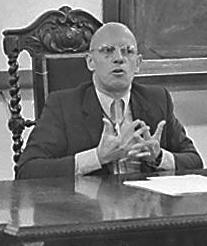
Paul-Michel Foucault was a French historian of ideas and philosopher, who was also an author, literary critic, political activist, and teacher. Foucault's theories primarily addressed the relationships between power, knowledge and liberty, and he analyzed how they are used as a form of social control through multiple institutions. Though often cited as a structuralist and postmodernist, Foucault rejected these labels and sought to critique authority without limits on himself. His thought has influenced academics within a large number of contrasting areas of study, with this especially including those working in anthropology, communication studies, criminology, cultural studies, feminism, literary theory, psychology, and sociology. His efforts against homophobia and racial prejudice as well as against other ideological doctrines have also shaped research into critical theory and Marxism–Leninism alongside other topics.
Source: Wikipedia (CC BY-SA). Portrait by Unknown authorUnknown author (Public domain) via Wikimedia Commons.
Life on the Timeline
Major Works

Exam Dossier
Most-asked topics
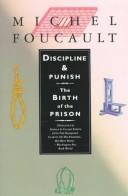
- Discipline and Punish and the Panopticon as a model of disciplinary power
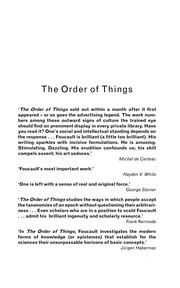
- The Order of Things and the concept of episteme
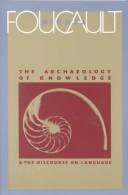
- Discourse, discursive formations and The Archaeology of Knowledge
- The History of Sexuality and the critique of the "repressive hypothesis"
- Power/knowledge as an inseparable pairing
- Biopower and biopolitics
- Foucault's relation to structuralism and poststructuralism
- Genealogy as a Nietzschean historical method
- Foucault's influence on New Historicism and literary theory
Previous-year themes
- Power as productive and diffuse rather than purely repressive
- The Panopticon as metaphor for modern disciplinary society
- Discourse, episteme and the historical construction of knowledge
- The History of Sexuality's challenge to the repressive hypothesis
- Foucault's ambivalent relationship to structuralism and postmodernism
- Genealogy versus traditional history of ideas
- Foucault's impact on New Historicism, postcolonial theory and gender studies
Common confusions
- Confusing Foucault with structuralists like Lévi-Strauss and Saussure — Foucault is a historian of ideas/poststructuralist who explicitly rejected the "structuralist" label though often grouped with the movement in the 1960s.
- Confusing Foucault's use of the Panopticon as a metaphor for disciplinary society with Bentham's original architectural prison design, which Foucault borrows and extends rather than invents.
- Confusing Foucauldian power/knowledge (diffuse, productive, exercised through institutions and discourse) with the Marxist base/superstructure model (power concentrated in class and state).
- Confusing Foucault with Derrida — both major French poststructuralist thinkers, but Derrida is associated with deconstruction and textuality while Foucault focuses on discourse, institutions, and history.
- Mixing up the sequence of The History of Sexuality volumes — Vol. 1 (1976) preceded Vol. 2, The Use of Pleasure (1984), by eight years, with the originally announced multi-volume plan differing from what was eventually published.
- Confusing Foucauldian "genealogy" (tracing descent and rupture, after Nietzsche) with conventional linear "history of ideas" or origin-seeking historiography, which Foucault's method explicitly critiques.
Memory tricks
"P" for Panopticon, Punish, and Power — Discipline and Punish is built around surveillance and disciplinary power.
"Order first, Archaeology after" — The Order of Things (1966) precedes The Archaeology of Knowledge (1969).
"1975 Discipline, 1976 Desire" — Discipline and Punish (1975) is followed a year later by The History of Sexuality, Vol. 1 (1976).
Remember the trio: Knowledge – Power – Discourse, as the three threads running through nearly all of Foucault's major works.
"Man drawn in sand" — recall The Order of Things by its closing death-of-man image, a reminder the book historicizes "Man" as a recent object of knowledge.
"Use of Pleasure, Foucault's last year" — The Use of Pleasure (Vol. 2) appeared in 1984, the year Foucault died.