Modernism
D. H. Lawrence
1885 – 1930
English writer and poet (1885–1930)
- United Kingdom
- British
- Modernism
- modernist-literature
About
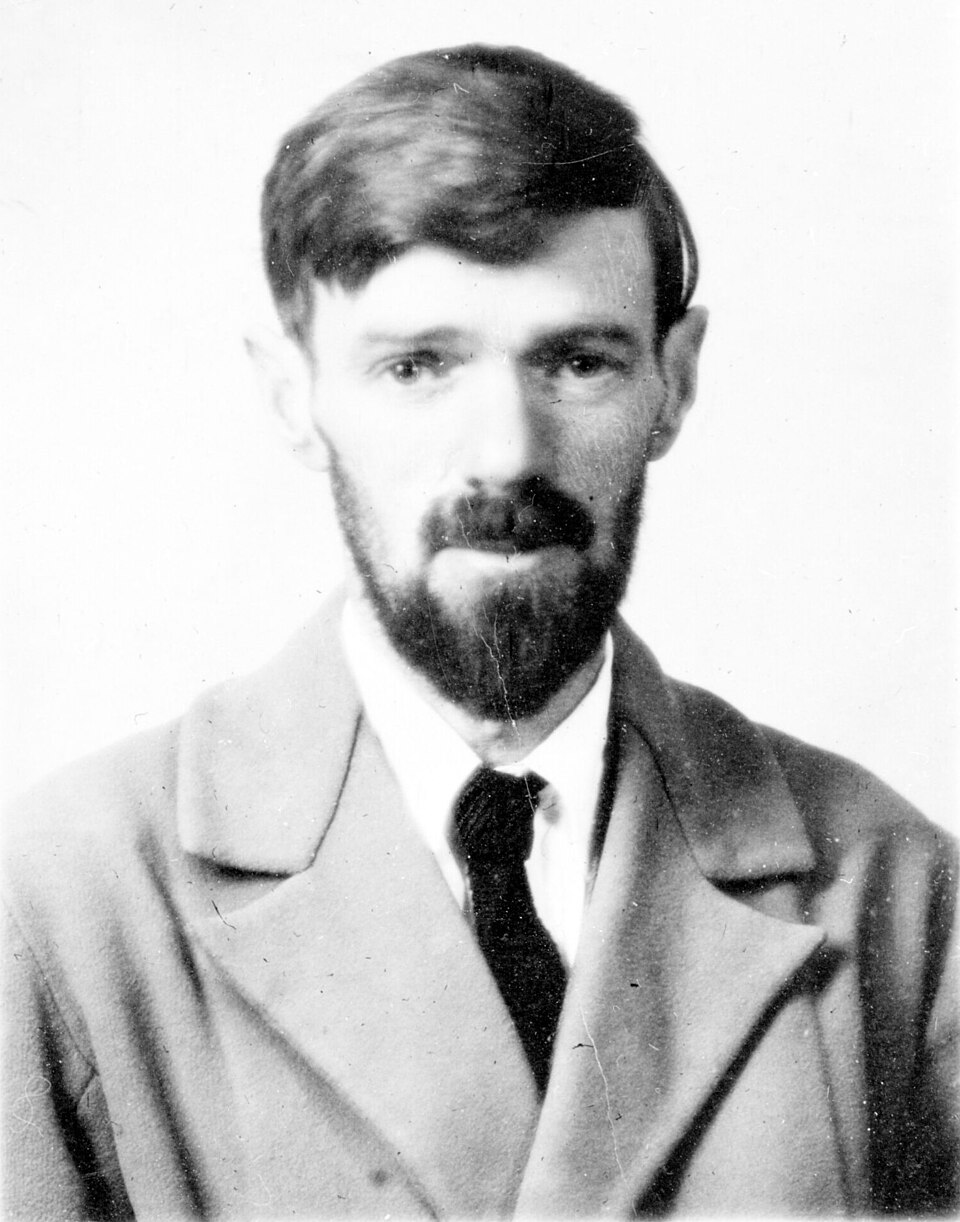
David Herbert Lawrence was an English novelist, short story writer, poet, playwright, literary critic, travel writer, essayist, and painter. His modernist works reflect on modernity, social alienation and industrialisation, while championing sexuality, vitality and instinct. Four of his most famous novels – Sons and Lovers
(1913), The Rainbow (1915), Women in Love (1920), and Lady Chatterley's Lover (1928) – were the subject of censorship trials for their radical portrayals of romance, sexuality, and use of explicit language.
Source: Wikipedia (CC BY-SA). Portrait by Unknown authorUnknown author (passport office) (Public domain) via Wikimedia Commons.
Life on the Timeline
Major Works

Exam Dossier
Most-asked topics
- Censorship trials of The Rainbow (1915) and Lady Chatterley's Lover (1960 Penguin trial)
- Oedipal reading of Sons and Lovers and psychoanalytic criticism
- The Brangwen saga: The Rainbow and Women in Love as linked novels
- Lawrence's doctrine of 'blood consciousness' and critique of industrial modernity
- Character pairs: Paul-Miriam-Clara; Birkin-Ursula; Gerald-Gudrun; Connie-Mellors
- Lawrence as critic: Studies in Classic American Literature
- Lawrence's poetry: Snake, Piano, Birds, Beasts and Flowers, Last Poems
- F. R. Leavis's championing of Lawrence vs Kate Millett's feminist attack
- The 'leadership novels': Aaron's Rod, Kangaroo, The Plumed Serpent
- Letter to Edward Garnett: 'the old stable ego of the character'
Previous-year themes
- Identifying the correct chronological order of Lawrence's four major novels
- The 1960 obscenity trial of Lady Chatterley's Lover and R v Penguin Books
- Matching characters (Paul Morel, Mellors, Gerald Crich, Ursula) to their novels
- Source attribution of 'Never trust the artist. Trust the tale.'
- Lawrence's place in F. R. Leavis's criticism and the 'great tradition' debate
- Kate Millett's critique of Lawrence in Sexual Politics
- The suppression of The Rainbow in 1915
- Lawrence's animal poems and the poem 'Snake'
Common confusions
- The Rainbow (1915) vs Women in Love (1920): both concern the Brangwen sisters — The Rainbow traces three generations ending with Ursula; Women in Love pairs Ursula with Birkin and Gudrun with Gerald.
- Two censorship dates for Lady Chatterley's Lover: privately printed in Florence in 1928, but the famous Penguin obscenity trial (R v Penguin Books) was in 1960, thirty years after Lawrence's death.
- Miriam Leivers vs Clara Dawes in Sons and Lovers: Miriam is the spiritual/intellectual love, Clara the physical/sensual one — options often swap them.
- Couples in Women in Love: Ursula-Birkin and Gudrun-Gerald; students routinely reverse the pairings (Gerald dies in the Alpine snow, not Birkin).
- Sons and Lovers is autobiographical (Paul Morel ≈ Lawrence; Eastwood mining background), but it is not a Künstlerroman modelled on Joyce's Portrait — the two are often conflated as 'autobiographical modernist novels'.
- It was The Rainbow, not Women in Love, that was banned in 1915; Women in Love had publication difficulties but was not the novel prosecuted that year.
Memory tricks
S-R-W-L in order of the four great novels: Sons (1913), Rainbow (1915), Women (1920), Lady (1928) — 'Some Rainbows Wear Lace', years 13-15-20-28.
Women in Love pairings: 'U-B and G-G' — Ursula with Birkin, Gudrun with Gerald; the double-G couple ends in Gerald's death in the snow.
Lady Chatterley triangle 'C-C-M': Connie Chatterley, Clifford (crippled baronet), Mellors (gamekeeper).
Sons and Lovers women: 'Mother, Miriam, and the Married one' — Gertrude, Miriam (soul), Clara (body).
Leadership novels A-K-P go east-to-west-ish: Aaron's Rod (1922), Kangaroo (1923, Australia), Plumed Serpent (1926, Mexico) — 'A Kangaroo's Plume'.
Trial dates: The Rainbow banned in WWI (1915); Lady Chatterley tried in the year of the 'swinging' decade's dawn (1960).