Victorian
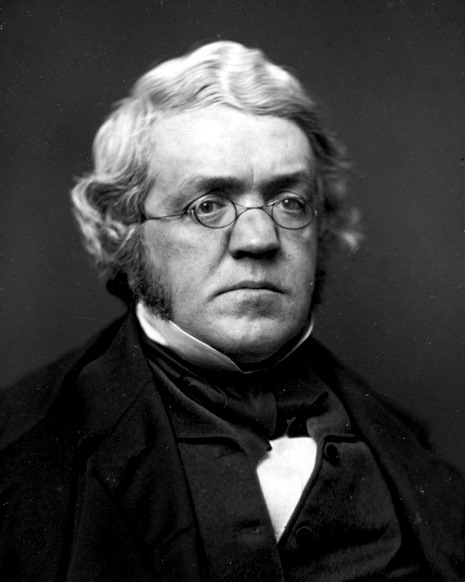
William Makepeace Thackeray
1811 – 1863
British novelist (1811–1863)
- United Kingdom of Great Britain and Ireland
- British
- Realism
About
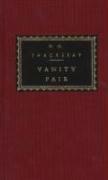
William Makepeace Thackeray was an English novelist and illustrator. He is known for his satirical works, particularly his 1847–1848 novel Vanity Fair, a panoramic portrait of British society, and the 1844 novel The Luck of Barry Lyndon, which was adapted for a 1975 film by Stanley Kubrick.
Source: Wikipedia (CC BY-SA). Portrait by Jesse Harrison Whitehurst (Public domain) via Wikimedia Commons.
Life on the Timeline
Major Works
Exam Dossier
Most-asked topics
- Vanity Fair: structure, subtitle, and narrative technique
- Becky Sharp as anti-heroine and social satire
- Thackeray's intrusive/ironic omniscient narrator
- The Luck of Barry Lyndon and the picaresque tradition
- The History of Henry Esmond and period pastiche
- Thackeray vs Dickens: contrasting modes of Victorian realism
- Thackeray's journalism: Punch, Fraser's Magazine, Cornhill Magazine
- Satire, the 'silver-fork novel', and critique of Victorian snobbery
Previous-year themes
- Identification of Vanity Fair's subtitle and its significance
- Becky Sharp's characterization as satirical anti-heroine
- Thackeray's narrative method (authorial intrusion, irony) versus Dickens's sentimentalism
- Chronological ordering of Thackeray's major novels
- Thackeray's pseudonyms and periodical writing (Punch, Fraser's, Cornhill)
- The allusive title 'Vanity Fair' and its debt to Bunyan's Pilgrim's Progress
- Thackeray's place within Victorian realism and social satire
Common confusions
- Students confuse Thackeray's Vanity Fair with the 'Vanity Fair' episode in Bunyan's The Pilgrim's Progress — Thackeray's title is a deliberate allusion to Bunyan, not an original coinage.
- Thackeray is often conflated with Dickens as interchangeable Victorian social novelists; Thackeray's mode is ironic, detached, and satirical, whereas Dickens leans toward sentiment, caricature, and reformist pathos.
- Becky Sharp is sometimes mistaken for a conventional Victorian heroine (like Jane Eyre); she is instead an anti-heroine whose moral ambiguity is central to the novel's satire.
- The Book of Snobs is sometimes assumed to be a novel; it is in fact a satirical sketch-sequence originally serialized in Punch (as 'The Snobs of England').
- Students confuse the chronology of Pendennis and Henry Esmond — Pendennis is a contemporary Victorian bildungsroman, while Esmond is a historical novel set in Queen Anne's reign.
- The narrator of Vanity Fair is sometimes assumed to be neutral; he is in fact a self-conscious, intrusive presence who calls himself the 'Manager of the Performance.'
- The Luck of Barry Lyndon is sometimes assumed to have been serialized under the title 'The Memoirs of Barry Lyndon, Esq.'; that title was in fact a later reissue, not the original 1844 serial title.
Memory tricks
'No Hero, No Heroine, just Vanity' — recall Vanity Fair's subtitle 'A Novel without a Hero.'
'Vanity Fair borrows from Bunyan's Fair' — links the title to The Pilgrim's Progress.
'Becky Sharp, sharp by name, sharp by nature' — her cunning social climbing.
'Esmond = Eighteenth-century Echo' — remember the archaic prose style tied to the Queen Anne setting.
'Titmarsh wears the mask' — Michael Angelo Titmarsh was Thackeray's chief pseudonym.
'Thackeray edits from the Cornhill' — links him to his 1860 editorship and the Roundabout Papers.