Romantic
William Hazlitt
1778 – 1830
English essayist and writer (1778–1830)
- United Kingdom of Great Britain and Ireland
- British
- Romanticism
- Literary Theory
About
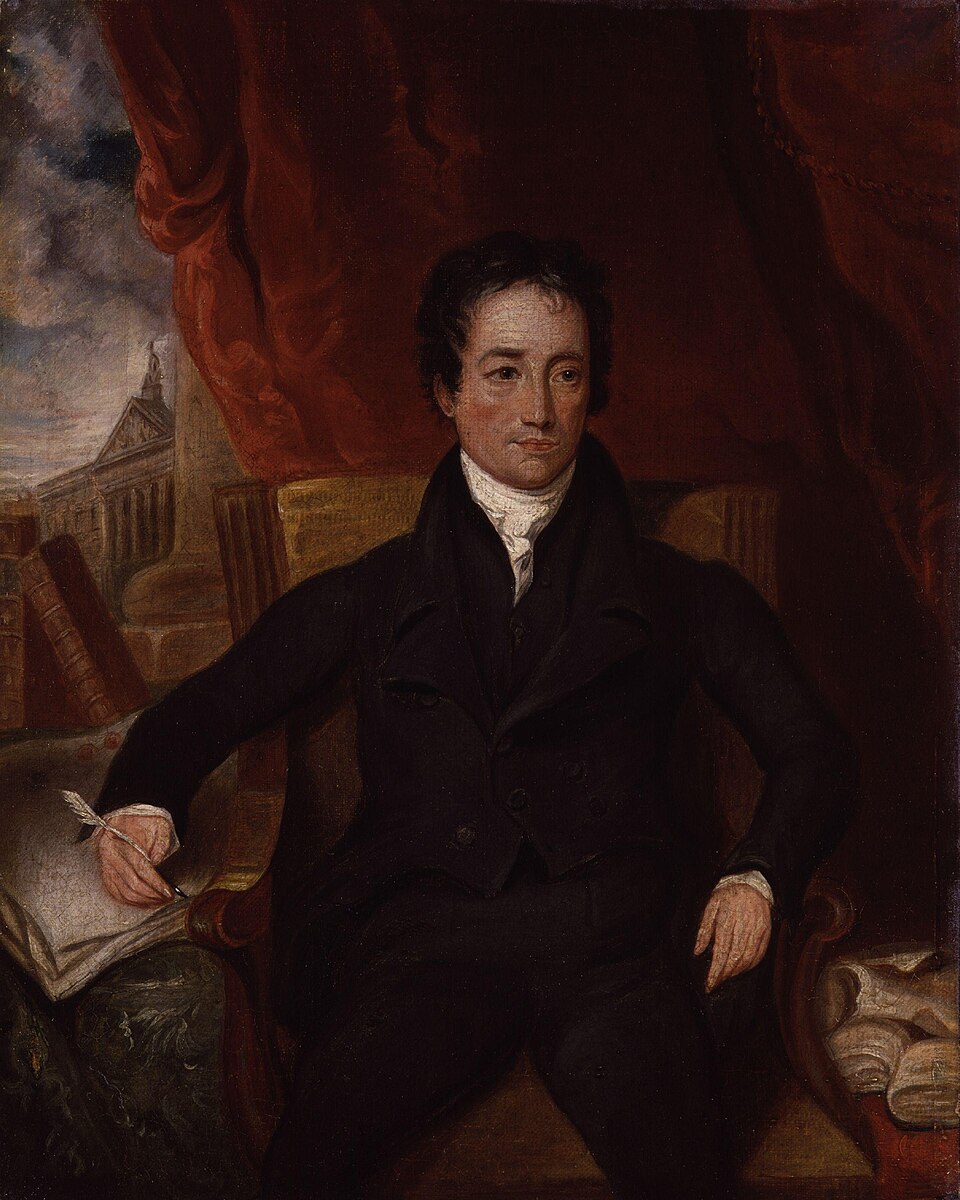
William Hazlitt was an English essayist, drama and literary critic, painter, social commentator, and philosopher. He is now considered one of the greatest critics and essayists in the history of the English language, placed in the company of Samuel Johnson and George Orwell. He is also acknowledged as the finest art critic of his age. Despite his high standing among historians of literature and art, his work is currently little read and mostly out of print.
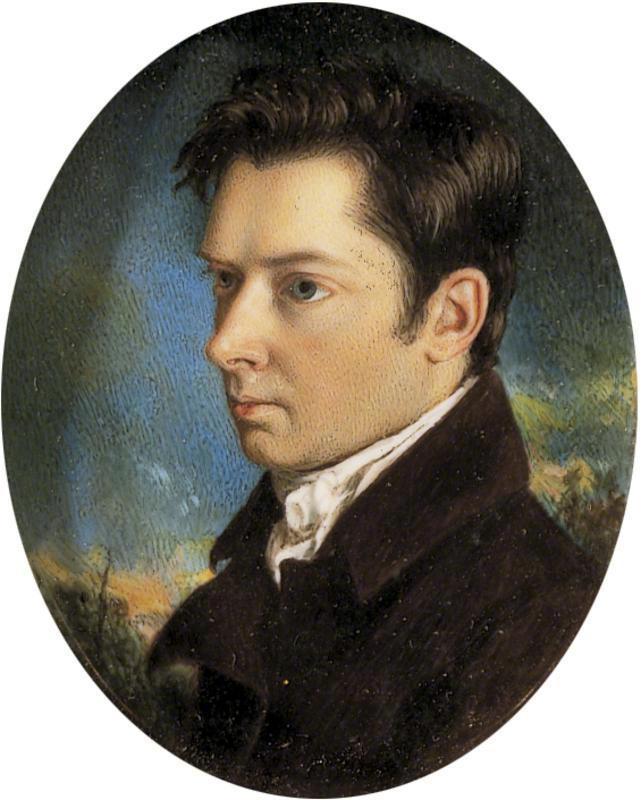
Source: Wikipedia (CC BY-SA). Portrait by John Hazlitt (Public domain) via Wikimedia Commons.
Life on the Timeline
Major Works
Exam Dossier
Most-asked topics
- Hazlitt as familiar essayist and Romantic prose critic
- Characters of Shakespear's Plays (1817) and character-based Shakespeare criticism
- The concept of 'gusto' in Hazlitt's art criticism
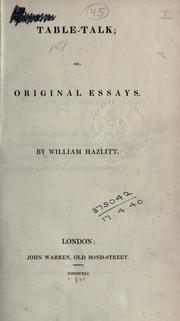
- Table-Talk (1821) and the personal/familiar essay form
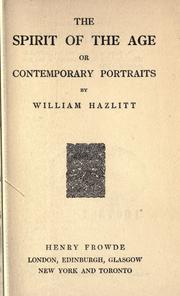
- The Spirit of the Age (1825) as literary portraiture of contemporaries
- Hazlitt's political radicalism and admiration for Napoleon/the French Revolution
- Hazlitt compared with Charles Lamb and the English essay tradition
- Lectures on the English Poets and Lectures on the English Comic Writers
Previous-year themes
- Hazlitt's place in the history of the English familiar essay (Bacon-Addison-Lamb-Hazlitt line)
- Hazlitt as Shakespeare critic and his method of character criticism
- Comparison of Hazlitt's essay style with Charles Lamb's
- Hazlitt's prose criticism versus Romantic poetic theory (Wordsworth/Coleridge)
- The Spirit of the Age as a gallery of contemporary literary and political portraits
- Hazlitt's political and social views expressed in his essays
- Hazlitt's critical vocabulary and concepts (gusto, disinterestedness)
Common confusions
- Confusing Hazlitt's argumentative, polemical familiar essay style with Charles Lamb's whimsical, nostalgic Elia essays -- both are 'familiar essayists' but with very different temperaments.
- Confusing Hazlitt's Characters of Shakespear's Plays (1817) with Samuel Johnson's Preface to Shakespeare or with later Shakespearean criticism such as A. C. Bradley's -- Hazlitt's is Romantic, character-centred criticism.
- Mixing up Table-Talk (1821, familiar personal essays) with The Spirit of the Age (1825, portrait-gallery sketches of contemporaries) -- the two collections serve different purposes.
- Forgetting that Hazlitt was a political radical who admired Napoleon and the French Revolution, unlike the later conservative turn of contemporaries such as Wordsworth and Southey.
- Assuming Liber Amoris is a poem or novel -- it is a confessional prose work recounting Hazlitt's infatuation.
- Confusing Lectures on the English Poets (1818, on major poets) with Lectures on the English Comic Writers (1819, on comic dramatists and prose writers) -- different subject matter and audience.
Memory tricks
Table-Talk = 'Twenty-one at the Table' (published 1821).
Spirit of the Age = 'Twenty-five portraits of the Age' (published 1825).
Characters of Shakespear's Plays = '(18)17 characters' (published 1817).
Gusto = 'Guts + Taste' -- Hazlitt's term for passionate energy and intensity in art.
Hazlitt is Heated (argumentative, polemical); Lamb is Light (whimsical, nostalgic) -- a way to distinguish the two familiar essayists.