Renaissance
Thomas More
1478 – 1535
English statesman, lawyer and philosopher (1478–1535)
- Kingdom of England
- British
- Renaissance Humanism
About
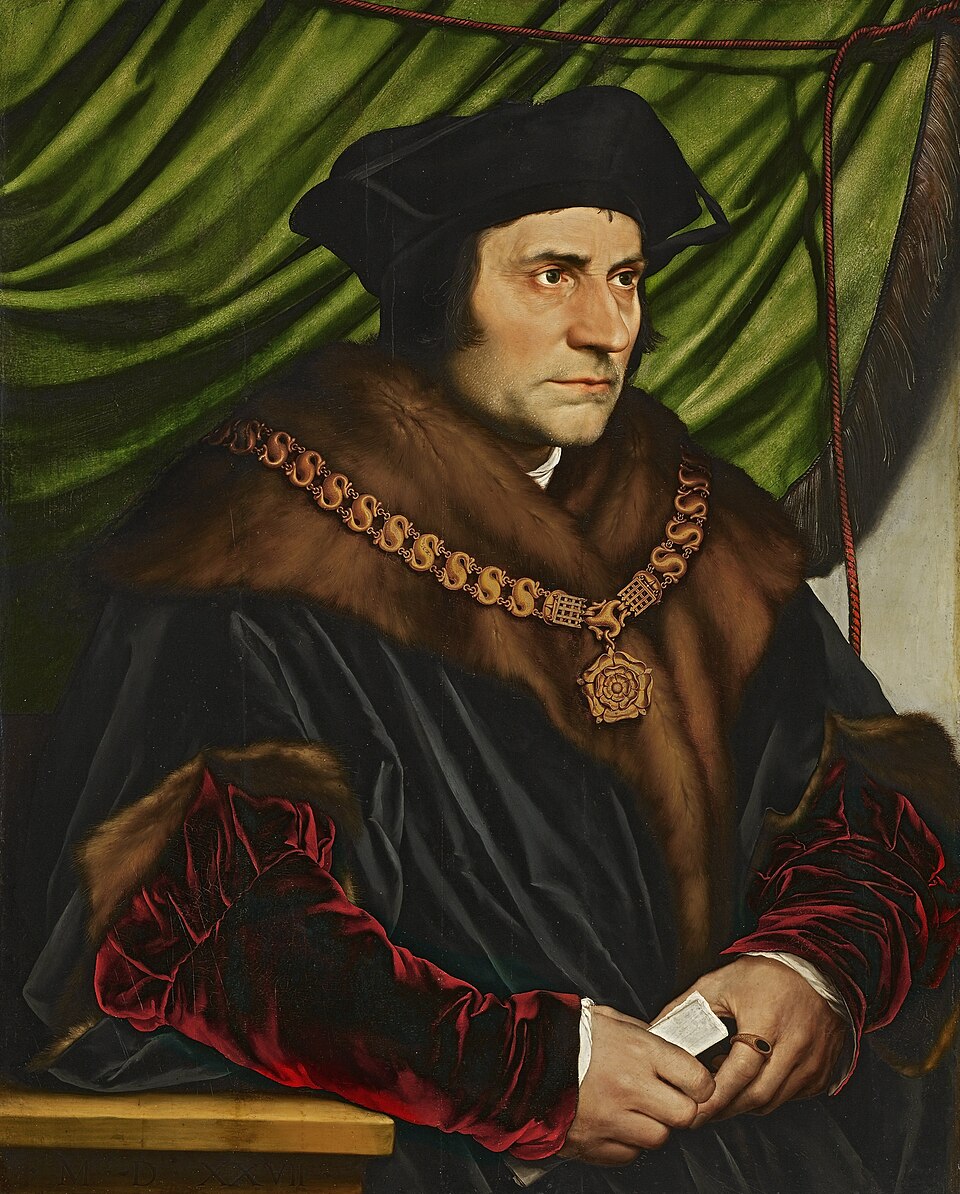
Sir Thomas More, venerated in the Catholic Church as a martyr and saint, was an English lawyer, judge, social philosopher, author, statesman, theologian and Renaissance humanist. He also served Henry VIII as Lord Chancellor from October 1529 to May 1532. He wrote Utopia, published in 1516, which describes the political system of an imaginary island state.
Source: Wikipedia (CC BY-SA). Portrait by Hans Holbein the Younger (Public domain) via Wikimedia Commons.
Life on the Timeline
Major Works
Exam Dossier
Most-asked topics
- Utopia (1516): structure, genre, and themes
- More as Renaissance/Christian humanist
- More's career and conflict with Henry VIII
- Martyrdom, trial, and canonization
- The History of King Richard III as a source for Shakespeare
- Etymology and legacy of the word 'utopia'
- Critique of enclosure and social injustice in Book I of Utopia
- More's Latin prose and place in Tudor literature
Previous-year themes
- Utopia as the founding text of the literary utopia/dystopia genre
- Book I of Utopia as social satire on enclosure, poverty, and capital punishment in Tudor England
- Ambiguity of authorial voice: is Raphael Hythloday's Utopia a blueprint or an irony?
- More's humanism and its continental European context
- More's conflict with Henry VIII over royal supremacy and his execution
- Etymology and dual meaning of 'Utopia' (no place / good place)
- The History of King Richard III as an early modern historiographical and literary text
- More's place in the tradition of English Renaissance prose
Common confusions
- Confusing More's Utopia (1516) with later utopian works such as Bacon's New Atlantis (1627).
- Assuming 'Utopia' simply means 'perfect place,' missing the pun between Greek 'ou-topos' (no place) and 'eu-topos' (good place).
- Attributing the fictional narrator Raphael Hythloday's radical views directly and unambiguously to More's own personal opinions.
- Mixing up the order and function of Utopia's two books: Book II (description of the island) was composed before Book I (the English social critique frame), though Book I appears first in the published text.
- Confusing More's prose work The History of King Richard III with Shakespeare's play Richard III, which drew on it as a source rather than being the same text.
- Confusing More the Catholic martyr executed by Henry VIII with Protestant Reformation writers active in the same period.
Memory tricks
'More = Martyr': remember he was executed for his faith and later canonized.
'U-topia = no place': Greek 'ou' (no) + 'topos' (place), punning on 'eu-topos' (good place).
'Chancellor then Chopped': rose to Lord Chancellor (1529), executed (1535) for defying the king.
Chronology ladder 'U-R-D': Utopia (1516) before Responsio (1523) before Dialogue of Comfort (1553, posthumous).
'Two Books, Two Moods': Book I critiques real England (satire), Book II imagines fictional Utopia (ideal).
'A Man for All Seasons' recalls Whittington's praise of More's adaptable virtue, later Bolt's play title.