Renaissance
Philip Sidney
1554 – 1586
English poet, courtier, diplomat (1554-1586)
- Kingdom of England · United Kingdom
- British
- Literary Theory
About
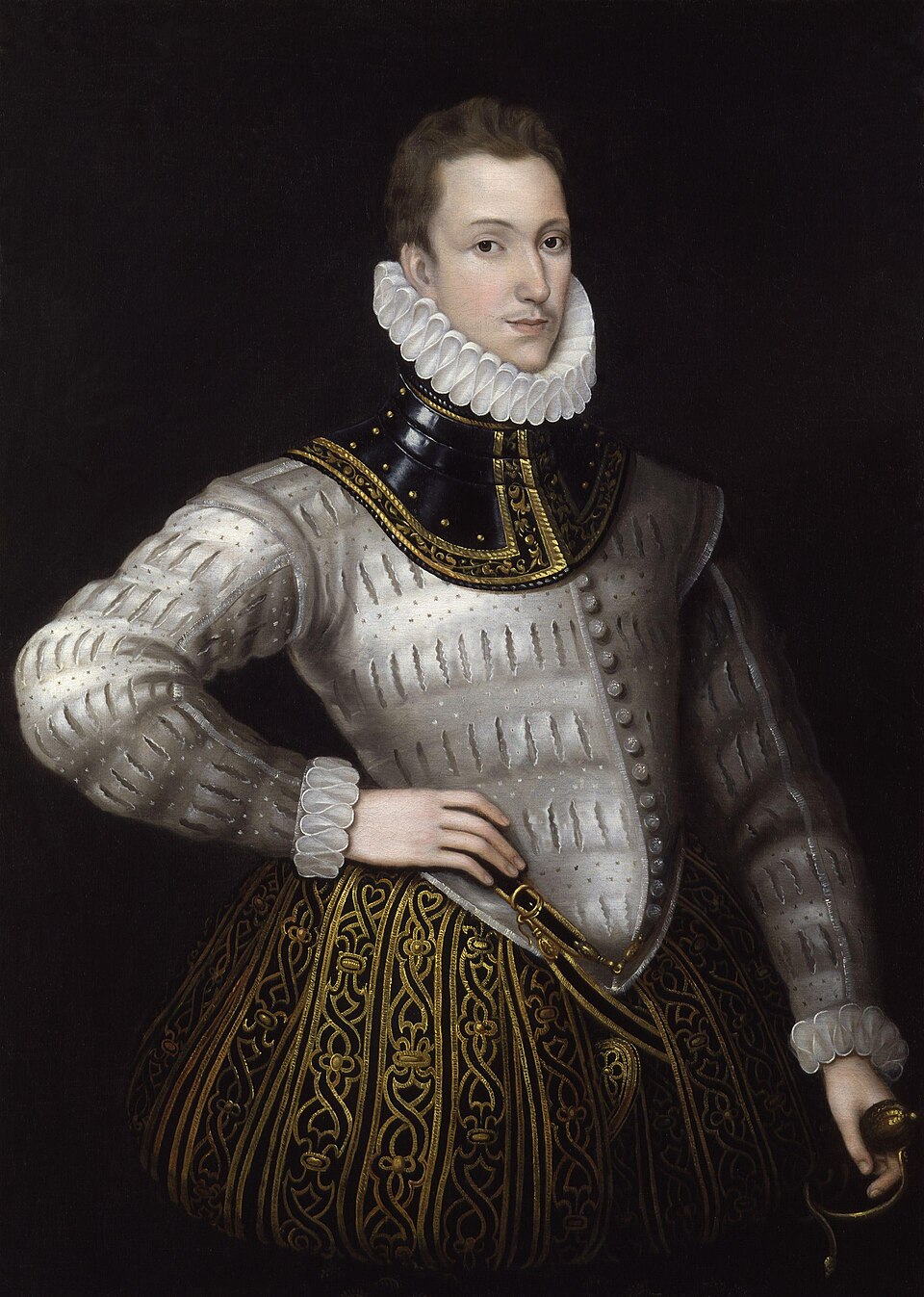
Sir Philip Sidney was an English poet, courtier, scholar and soldier who is remembered as one of the most prominent figures of the Elizabethan age.
Source: Wikipedia (CC BY-SA). Portrait by After Antonis Mor (Public domain) via Wikimedia Commons.
Life on the Timeline
Major Works
Exam Dossier
Most-asked topics
- An Apology for Poetry / The Defence of Poesy as the first major work of English literary criticism
- Astrophil and Stella as the first substantial English sonnet sequence
- The Arcadia: Old vs New versions, pastoral prose romance
- Sidney's reply to Stephen Gosson's The School of Abuse
- Sidney's classical sources: Aristotle's mimesis, Horace's teach-and-delight
- The 'golden world' of poetry vs the 'brazen world' of nature
- Sidney's criticism of contemporary English drama and the unities
- Stella's identity: Penelope Devereux, Lady Rich
- Sidney's death at Zutphen and the ideal-courtier legend
- The Sidney circle: Mary Sidney Herbert, Fulke Greville, Spenser and the Areopagus
Previous-year themes
- Identifying the occasion of the Defence: Gosson's School of Abuse dedicated to Sidney
- Famous lines from Astrophil and Stella (Sonnet 1 'look in thy heart, and write'; Sonnet 31 'With how sad steps, O Moon')
- Sidney's defence of poetry against the charge of lying: 'the poet nothing affirmeth'
- Poetry as 'speaking picture' whose end is 'to teach and delight'
- Number of sonnets and songs in Astrophil and Stella (108 sonnets, 11 songs)
- The dedication of the Arcadia to the Countess of Pembroke
- Sidney's objections to tragicomedy: 'mingling kings and clowns'
- Chronology of Elizabethan sonnet sequences beginning with Astrophil and Stella (1591)
Common confusions
- Astrophil and Stella (108 sonnets + 11 songs) vs Shakespeare's Sonnets (154) vs Spenser's Amoretti (89) — students swap the counts.
- The Old Arcadia (complete, five 'books or acts', recovered only in the 20th century) vs the New Arcadia (revised, unfinished, published 1590) vs the 1593 composite text edited by the Countess of Pembroke.
- 'Leave me, O Love' belongs to Certain Sonnets, not to Astrophil and Stella.
- The Defence answers Stephen Gosson's School of Abuse (1579), not Prynne's Histriomastix (1633) or Jeremy Collier's Short View (1698).
- Stella = Penelope Devereux (Lady Rich), not Mary Sidney; Spenser's Elizabeth Boyle and Donne's Anne More are separate 'muse' identifications.
- Titles: An Apology for Poetry and The Defence of Poesy are the SAME 1595 treatise issued by two different publishers (Olney and Ponsonby); Shelley's A Defence of Poetry (1821) is a different work that consciously echoes Sidney.
Memory tricks
ZUTPHEN 1586: 'Sidney's Sun set at Zutphen' — died 1586, aged 32, from a thigh wound; water-bottle legend: 'Thy necessity is yet greater than mine.'
108/11: 'One Star (Stella), 108 sighs and 11 songs' — Astrophil = 'star-lover', Stella = 'star.'
GOLD vs BRASS: Nature = brazen, Poet = golden — remember 'the poet upgrades Nature's brass to gold.'
Posthumous 90-91-95: Arcadia 1590, Astrophil 1591, Apology 1595 — 'A-A-A in 90, 91, 95.'
TEACH + DELIGHT = Sidney's Horatian formula; 'speaking picture' = poetry, per Simonides' idea that painting is mute poetry.
GAS attacked poetry: Gosson's Abuse → Sidney's Apology (G before S alphabetically and chronologically).