Modernism
Tennessee Williams
1911 – 1983
American playwright (1911–1983)
- United States
- American
- Southern Gothic
About
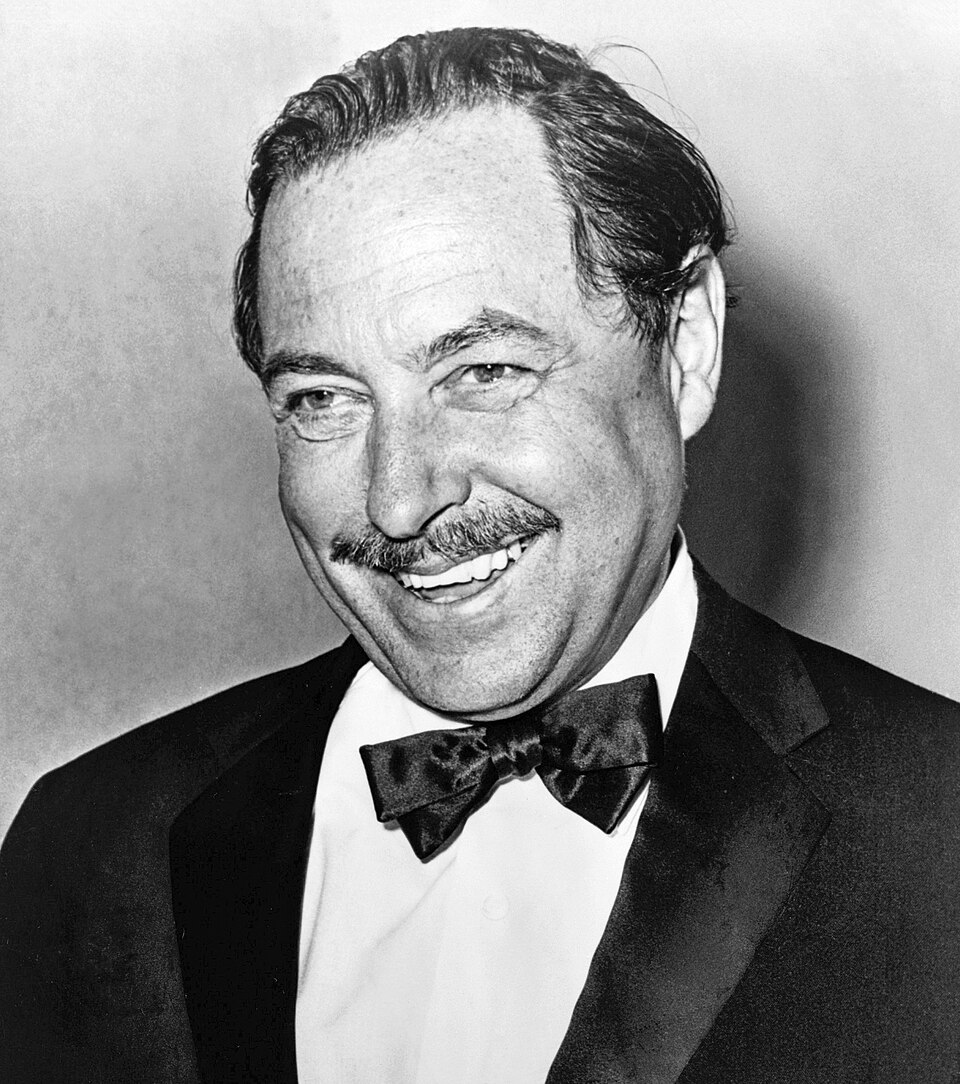
Thomas Lanier Williams III, known by his pen name Tennessee Williams, was an American playwright and screenwriter. Along with contemporaries Eugene O'Neill and Arthur Miller, he is considered among the three foremost playwrights of 20th-century American drama.
Source: Wikipedia (CC BY-SA). Portrait by Orlando Fernandez, World Telegram staff photographer (Public domain) via Wikimedia Commons.
Life on the Timeline
Major Works

Exam Dossier
Most-asked topics
- The Glass Menagerie as a memory play
- Symbolism in A Streetcar Named Desire (light, bathing, the streetcar itself)
- Blanche DuBois as a tragic/faded Southern belle
- Theme of mendacity and illusion vs reality in Cat on a Hot Tin Roof
- Williams's concept of 'plastic theatre'
- Southern Gothic elements in Williams's drama
- Repression, desire, and fragility of the outsider figure
- Comparison of Williams with Eugene O'Neill and Arthur Miller
Previous-year themes
- Characteristics of the memory play with reference to The Glass Menagerie
- Symbolism and stagecraft (plastic theatre) in Williams's dramaturgy
- Blanche DuBois as a study in psychological disintegration
- Southern Gothic sensibility and the decayed Southern aristocracy in Williams
- Theme of illusion versus reality across Williams's major plays
- Williams's place among 20th-century American dramatists (O'Neill, Williams, Miller)
- Gender, desire, and repression in A Streetcar Named Desire
Common confusions
- Confusing Tennessee Williams's poetic, Southern Gothic sensibility with Arthur Miller's socially and politically driven realism (Death of a Salesman, The Crucible).
- Confusing narrator-protagonist Tom Wingfield with the 'gentleman caller' Jim O'Connor in The Glass Menagerie.
- Treating Big Daddy (Cat on a Hot Tin Roof) and Stanley Kowalski (A Streetcar Named Desire) as interchangeable 'brutal patriarch' figures from different plays.
- Mixing up Blanche DuBois's fate (removed to an asylum) with Laura Wingfield's fate (withdrawal into her glass menagerie) — both fragile women but from different plays with different endings.
- Assuming all of Williams's plays are set in New Orleans; only A Streetcar Named Desire is, while The Glass Menagerie is set in St. Louis and Cat on a Hot Tin Roof in the Mississippi Delta.
- Confusing the term 'memory play' (specific to The Glass Menagerie) with ordinary realistic or naturalistic drama.
Memory tricks
'STELLA!' for Streetcar — Stanley's famous cry helps recall A Streetcar Named Desire's New Orleans setting and central conflict.
GLASS = fragile memory — the glass animals in The Glass Menagerie symbolize Laura's fragility and the play's status as a memory play.
'Big Daddy, Big Lie' — Cat on a Hot Tin Roof turns on the theme of mendacity exposed at Big Daddy's birthday.
Chronology mnemonic 'Glass–Street–Rose–Cat' (1945–1947–1950–1955) for the order of the four major plays.
Three titans in order: O'Neill (founder of American drama), Williams (poetic Southern Gothic), Miller (social realist) — helps distinguish their styles.
'Tennessee = South' — a reminder that Williams's drama is steeped in Southern Gothic settings and decayed gentility.