Romantic
Mary Shelley
1797 – 1851
English writer (1797–1851)
- United Kingdom of Great Britain and Ireland · Kingdom of Great Britain · United Kingdom
- British
- Romanticism
- Gothic
- british-romanticism
About
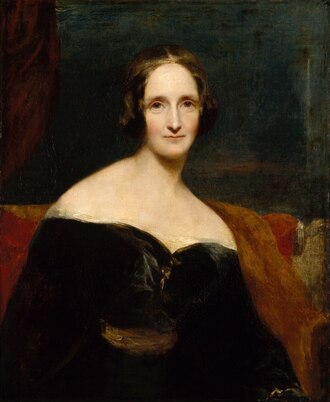
Mary Wollstonecraft Shelley was an English novelist who wrote the Gothic novel Frankenstein; or, The Modern Prometheus (1818), which is considered an early example of science fiction. She also edited and promoted the works of her husband, the Romantic poet and philosopher Percy Bysshe Shelley. Her father was the political philosopher William Godwin and her mother was the philosopher and women's rights advocate Mary Wollstonecraft.
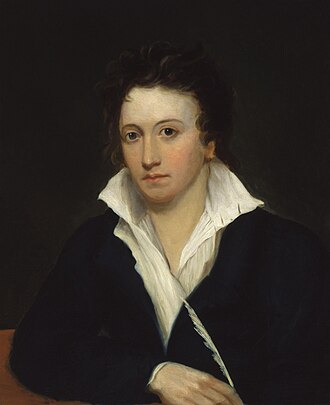
Source: Wikipedia (CC BY-SA). Portrait by Richard Rothwell (Public domain) via Wikimedia Commons.
Life on the Timeline
Major Works
Exam Dossier
Most-asked topics
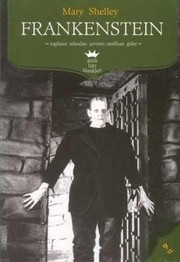
- Frankenstein: structure, themes, and narrative technique
- The Modern Prometheus: mythic subtitle and its meaning
- Frame narrative / epistolary form (Walton–Victor–Creature)
- Frankenstein as origin of science fiction
- The 1816 Villa Diodati ghost-story contest
- Mary Shelley's biography: Godwin, Wollstonecraft, Percy Shelley
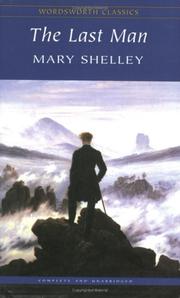
- The Last Man and post-apocalyptic/dystopian fiction
- Gothic and Romantic elements in Shelley's fiction
- The 1818 vs 1831 editions of Frankenstein
- Feminist and psychoanalytic readings of Frankenstein
Previous-year themes
- Frankenstein's narrative structure and multiple narrators
- Frankenstein as the 'first science fiction novel'
- The Creature as Other / questions of monstrosity and humanity
- Mary Shelley's place within second-generation Romanticism
- Biographical context: Godwin, Wollstonecraft, and the Shelley circle
- Themes of creation, responsibility, and scientific hubris
- The Last Man and apocalyptic/futuristic fiction
- Gothic conventions adapted in Shelley's fiction
Common confusions
- Thinking 'Frankenstein' is the monster's name — it is the surname of the creator, Victor Frankenstein; the Creature remains unnamed throughout the novel.
- Confusing Mary Shelley with her mother, Mary Wollstonecraft, author of A Vindication of the Rights of Woman.
- Treating the 1818 first edition and the 1831 revised edition of Frankenstein as identical, when the 1831 text adds a new introduction and alters key details.
- Mistaking Robert Walton, the frame narrator of the opening letters, for the novel's central narrator or protagonist.
- Attributing The Last Man's future-plague premise to a later writer (e.g., H. G. Wells) rather than to Mary Shelley (1826).
- Assuming 'The Modern Prometheus' subtitle refers to the Creature rather than to Victor Frankenstein, the creator/overreacher figure.
Memory tricks
'Frankenstein is the Doctor, not the Monster' — remember the maker's name, not the made.
'Villa Diodati, 1816' — the ghost-story night with Byron and the Shelleys that birthed Frankenstein.
'Godwin + Wollstonecraft = Mary Shelley' — philosopher father, pioneering feminist mother.
'1818 first, 1831 revised' — two distinct editions of the same novel.
'The Last Man, the Last Plague' — The Last Man (1826) imagines a future wiped out by disease.
'Prometheus stole fire, Victor stole life' — the mythic subtitle mirrors Victor's act of creation.