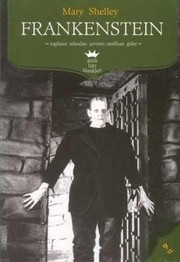
epistolary novel · 1818
Frankenstein; or, The Modern Prometheus
by Mary Shelley
1818 novel by Mary Shelley
- 1818
- epistolary novel
- body horror literature
- Gothic fiction
- science fiction
- fantasy
- epic
Summary
Frankenstein; or, The Modern Prometheus is an 1818 Gothic novel written by English author Mary Shelley. Frankenstein tells the story of Victor Frankenstein, a young scientist who creates a sapient creature from different body parts in an unorthodox scientific experiment. Shelley started writing the story when she was 18 and staying in Bath, and the first edition was published anonymously in London on 1 January 1818, when she was 20. Her name first appeared in a French translation published in Paris in 1821.
Source: Wikipedia (CC BY-SA).
Historical Background
Mary Shelley began Frankenstein in the summer of 1816 near Geneva, when she, Percy Bysshe Shelley, Lord Byron, and John Polidori amused themselves with German ghost stories and Byron proposed each write a tale of the supernatural. Shelley, then eighteen, conceived the idea in a waking dream and developed it into a full novel, published anonymously in London on 1 January 1818. Her name first appeared publicly in a French translation published in Paris in 1821; in England her authorship was later reaffirmed with the revised 1831 edition, for which she wrote a new introduction. The novel fuses Gothic terror with emerging scientific speculation (galvanism, vitalism) and Romantic concerns about creation, nature, and the limits of human ambition. Its subtitle, "The Modern Prometheus," invokes the Greek myth of the titan who stole fire from the gods and was eternally punished, framing Victor Frankenstein's transgression as a modern parallel. Written in the shadow of her mother Mary Wollstonecraft's death, her own recent losses, and debates within her circle about political radicalism and scientific progress, the novel is often read as an early landmark of science fiction as well as a Gothic masterpiece. Shelley's use of nested narrators (Walton, Victor, the Creature) situates the story within a frame of exploration and testimony, complicating any single authoritative moral voice.
The Story
Arctic explorer Robert Walton, writing letters to his sister, rescues the exhausted Victor Frankenstein from the ice and hears his story. As a young student in Ingolstadt, Victor becomes obsessed with the secret of life and, working in isolation, assembles and animates a creature from scavenged body parts. Horrified by its appearance the moment it wakes, he abandons it. The nameless Creature, initially gentle and curious, is repeatedly shunned and attacked because of its monstrous form. Living secretly near a cottage family, it teaches itself language and learns of human society and injustice, but every attempt at connection ends in violence and rejection, including by the family it has watched and helped. Embittered, it confronts Victor, demanding he create a female companion so it need not be alone. Victor initially agrees but, fearing a race of monsters, destroys the unfinished female creation. Enraged, the Creature vows revenge and murders Victor's younger brother, his friend Clerval, and, on Victor's wedding night, his bride Elizabeth. Victor pursues the Creature north into the Arctic wastes, seeking to destroy his creation, until he collapses and is found by Walton. After recounting his tale, Victor dies. The Creature appears at last beside Victor's body, expresses anguish and remorse, and vows to end his own life on a funeral pyre, vanishing into the darkness.
Themes
- The dangers of unchecked scientific ambition
- Creation, responsibility, and parental abandonment
- Isolation and the longing for companionship
- Nature versus artificial creation
- The monstrous made by society, not born
- Knowledge and its moral limits
- Revenge and its destructive cycle
- The sublime and the natural world
Literary Devices
- Frame narrative - Walton's letters enclose Victor's account, which encloses the Creature's own story
- Epistolary structure - the outer novel is told through Walton's letters to his sister
- Doppelganger motif - Victor and the Creature mirror and pursue one another as dark reflections
- Gothic setting - remote mountains, ice, and laboratories evoke terror and the sublime
- Foreshadowing - Victor's dreams and warnings anticipate later catastrophe
- Allusion - the Prometheus myth and Milton's Paradise Lost frame the Creature's fall
- Multiple narrators - shifting perspectives complicate sympathy and moral judgment
Symbolism
- Fire/light - knowledge and creation, echoing Prometheus's theft from the gods
- The Arctic ice - isolation, moral emptiness, and the limits of ambition
- The Creature's body - the horror of unnatural creation and society's rejection of difference
- Light and darkness - reason and ignorance, discovery and horror
Critical Interpretation
Frankenstein has attracted a wide range of critical approaches. Early Gothic and moral readings emphasized Victor's transgression against nature and the perils of playing God. Feminist critics, notably Ellen Moers and Sandra Gilbert and Susan Gubar in The Madwoman in the Attic, read the novel through Shelley's experience of childbirth, loss, and motherhood, and as a woman writer's response to a male-dominated Romantic and scientific culture. Critics have also examined the novel as a foundational text of science fiction, anticipating anxieties about technology later associated with genetic engineering and artificial intelligence. Psychoanalytic readings treat the Creature as Victor's repressed double, while postcolonial and disability-studies critics have explored the politics of monstrosity, otherness, and the body. The novel's narrative structure, its ambiguous sympathies toward both creator and creation, and its engagement with contemporary science (galvanism) and philosophy (Godwinian and Rousseauian ideas about education and society) continue to generate scholarly debate about who, ultimately, is the true "monster" of the story.
Quotations
Beware; for I am fearless, and therefore powerful.
The Creature to Victor, asserting the power his suffering and isolation have given him.
I ought to be thy Adam, but I am rather the fallen angel.
The Creature invokes Milton's Paradise Lost to describe his fall from innocence to malice.
Nothing is so painful to the human mind as a great and sudden change.
Victor reflecting after the creation, anticipating the horror to come.
Influence
Frankenstein is widely regarded as a foundational text of science fiction and a lasting pillar of Gothic literature. Its central figure has become a cultural shorthand, endlessly reinterpreted across theatre, film, and popular imagination since the nineteenth century, often blurring the identity of creator and creature. The novel shaped later fiction and film exploring artificial life, genetic manipulation, and the ethics of scientific creation, and "Frankenstein" itself entered common usage as a term for a dangerous, uncontrollable creation. Its interrogation of scientific responsibility continues to inform contemporary debates on biotechnology and artificial intelligence, cementing the novel's place as a touchstone of speculative and ethical fiction.
Adaptations
- Presumption; or, The Fate of Frankenstein (1823 stage play by Richard Brinsley Peake)
- Frankenstein (1931 Universal film directed by James Whale, starring Boris Karloff)
- Bride of Frankenstein (1935 Universal film directed by James Whale)
- Mary Shelley's Frankenstein (1994 film directed by Kenneth Branagh)
Related Works
- Paradise Lost by John Milton
- The Strange Case of Dr Jekyll and Mr Hyde by Robert Louis Stevenson
- Prometheus Bound attributed to Aeschylus
- The Last Man by Mary Shelley
- Dracula by Bram Stoker
Curator's Notes
- 1Mary Shelley conceived the novel's idea during the famous 'Year Without a Summer' ghost-story contest at Villa Diodati in Geneva in 1816.
- 2The novel was first published anonymously in 1818; Shelley's name first appeared publicly in a French translation published in Paris in 1821.
- 3She was only eighteen when she began writing the novel and twenty when it was first published.
- 4In the novel, the Creature is never given a proper name; 'Frankenstein' properly refers to Victor, his creator, though popular culture often applies it to the Creature.
For the Exam
UGC NET English frequently tests Frankenstein under Romantic prose fiction and early science fiction/Gothic paper units. Expect questions on the frame-narrative structure (Walton-Victor-Creature), the novel's subtitle and its Promethean allusion, its status as a founding science fiction text, feminist criticism (Gilbert and Gubar, Ellen Moers), the theme of the "modern Prometheus" and scientific hubris, the Creature's education and its debt to Paradise Lost and Rousseau, and comparative questions linking it with other Gothic or Romantic-era works.