Victorian
Karl Marx
1818 – 1883
German-born philosopher (1818–1883)
- Kingdom of Prussia · statelessness · United Kingdom of Great Britain and Ireland
- European Theory & Influence
- Marxist Criticism
- Literary Theory
About
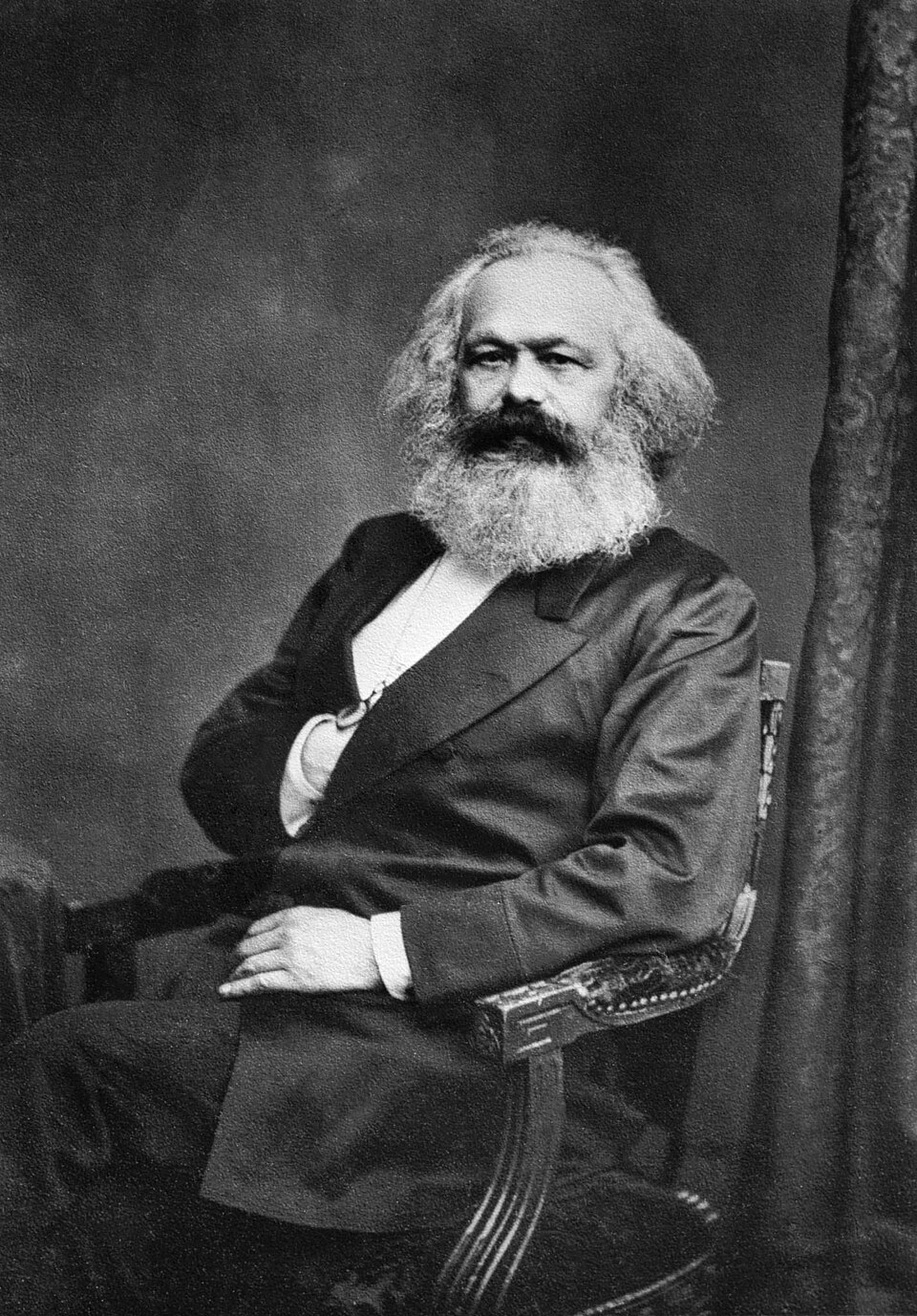
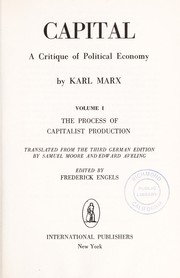
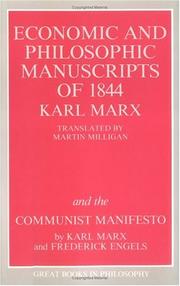
Karl Marx was a German philosopher, social and political theorist, economist, journalist, and revolutionary socialist. He developed the theory of historical materialism, analyzing class struggle under capitalism and predicting the system's overthrow by the proletariat in favour of communism. Marx co-authored The Communist Manifesto (1848) with his lifelong friend Friedrich Engels, and undertook a critique of classical political economy in his magnum opus, Das Kapital (1867–1894). Marx's ideas and their subsequent development, collectively known as Marxism, have had enormous influence and have influenced revolutions and uprisings in many countries.
Source: Wikipedia (CC BY-SA). Portrait by John Jabez Edwin Mayall (Public domain) via Wikimedia Commons.
Life on the Timeline
Major Works

Exam Dossier
Most-asked topics
- Historical materialism and base-superstructure model
- Das Kapital and the critique of political economy
- The Communist Manifesto and class struggle
- Marxist literary criticism as a critical approach
- Ideology, alienation, and commodity fetishism
- Marx and Engels's collaborative works
- Ideology in The German Ideology
- Influence of Marxism on later critical theory (Althusser, Eagleton, Raymond Williams)
Previous-year themes
- Basic tenets of Marxist literary theory and criticism
- Base and superstructure as applied to literature
- Key Marxist critical terms: ideology, hegemony, false consciousness, class struggle
- Distinguishing Marxist criticism from other approaches (New Historicism, Formalism, Feminism)
- Marx and Engels's joint authorship and their major texts
- Influence of Marxist thought on twentieth-century critics and cultural theory
- Alienation and commodity fetishism as literary-critical concepts
Common confusions
- Confusing Karl Marx (theorist/philosopher, b.1818) with Friedrich Engels (his co-author and financial patron) — the Manifesto and German Ideology are joint works, not Marx's alone.
- Mixing up publication year with composition year: Economic and Philosophic Manuscripts (written 1844, published 1932) and The German Ideology (written 1846, published 1932) were published posthumously, decades after being written.
- Treating 'Marxism' and 'Marxist literary criticism' as identical — Marxism is the broader political-economic theory; Marxist criticism is its later application to literature by critics such as Lukács, Williams, Eagleton, and Macherey.
- Confusing 'base and superstructure' with 'structure and agency' (a sociological distinction unrelated to Marx's economic-cultural model).
- Assuming Capital was completed and published entirely in Marx's lifetime — only Volume I appeared in 1867; later volumes were edited and published by Engels after Marx's death.
- Confusing historical materialism (Marx's theory of socio-economic development) with dialectical materialism (a later systematization associated more with Engels and subsequent Marxist thinkers).
Memory tricks
'CGEM' for chronology: Communist Manifesto (1848) came before the posthumous publications of German Ideology and Economic Manuscripts (both 1932), while Capital (1867) sits between.
Remember 'Engels edited the rest': Engels co-wrote the Manifesto and German Ideology, and posthumously edited later volumes of Capital.
'Base holds up Superstructure' — economic base (production) supports superstructure (culture, literature, ideology, law).
Manuscripts of 1844 = year in the title tells you when it was WRITTEN, not published (it appeared in 1932).
'Spectre... Struggle... Unite' — recall the Manifesto's three famous lines in sequence: opening spectre line, class-struggle opening of Ch.1, and closing 'unite' call.
Marx = Materialism; think 'M for Marx, M for Materialism, M for Manifesto' to anchor his core theoretical identity.