Postmodern
Raymond Williams
1921 – 1988
Welsh scholar, author, and Marxist literary critic (1921–1988)
- United Kingdom · United Kingdom of Great Britain and Ireland
- British
- Marxist Criticism
- Cultural Materialism
- western-marxism
- Literary Theory
About
Raymond Henry Williams was a Welsh socialist writer, academic, novelist and critic influential within the New Left and in wider culture. His writings on politics, culture, the media and literature contributed to the Marxist critique of culture and the arts. Some 750,000 copies of his books were sold in UK editions alone, and there are many translations available. His work laid foundations for the field of cultural studies and cultural materialism.
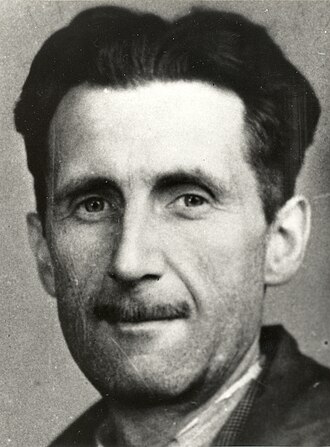
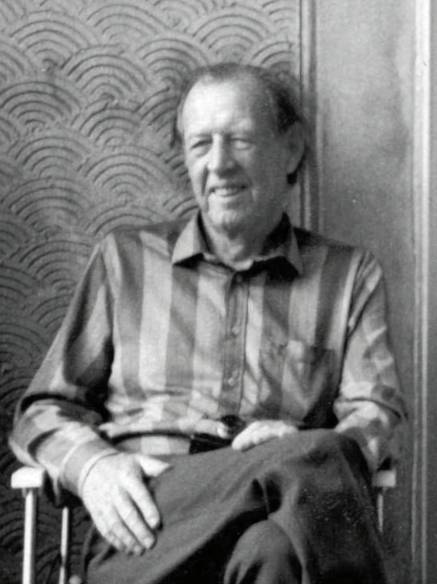
Source: Wikipedia (CC BY-SA). Portrait by GwydionM (Public domain) via Wikimedia Commons.
Life on the Timeline
Major Works
Exam Dossier
Most-asked topics
- Culture and Society 1780-1950 and the culture-and-society tradition
- The Long Revolution and the definition of culture as "a whole way of life"
- Keywords: A Vocabulary of Culture and Society
- Marxism and Literature and cultural materialism
- Residual, dominant and emergent culture
- Structures of feeling
- Williams and the founding of British Cultural Studies (with Hoggart and Hall)
- Border Country and Williams's fiction rooted in Welsh border life
Previous-year themes
- Williams's definition(s) of "culture" and their significance for cultural studies
- Key concept: structures of feeling
- The residual-dominant-emergent model of cultural change
- Cultural materialism as a critical method, distinguished from New Historicism
- Williams's place in the New Left and Marxist literary theory
- Keywords as a study of the vocabulary of culture and society
- Williams's fiction (Border Country) in relation to his criticism
- Williams's role in founding British Cultural Studies
Common confusions
- Confusing Raymond Williams with Richard Hoggart: both are founders of British Cultural Studies, but The Uses of Literacy (1957) is Hoggart's, not Williams's.
- Confusing Williams's "structures of feeling" with Bourdieu's "habitus" or Jauss's "horizon of expectations" — all describe shared/lived orientations but belong to different theorists and frameworks.
- Confusing Culture and Society 1780-1950 (1958) with Culture (1981) — two separate books with overlapping titles and subject matter.
- Confusing Williams's Border Country (1960) with Loyalties (1985) — both are novels rooted in his political and Welsh concerns but are distinct works.
- Assuming Williams was simply a disciple of F. R. Leavis because both valued serious cultural criticism at Cambridge; in fact Williams critiqued Leavis's elitist, narrowly literary conception of culture.
- Using "cultural materialism" in the general sense of 'materialist analysis of culture' without noting Williams's specific coinage of the term as a named critical method in the 1980s.
Memory tricks
Keywords = key + words: remember it is literally a glossary tracing the changing meanings of cultural vocabulary (1976).
RDE = Residual, Dominant, Emergent: think of three waves — one receding, one breaking now, one forming further out at sea.
CS-LR-K-ML: Culture and Society ('58) to Long Revolution ('61) to Keywords ('76) to Marxism and Literature ('77) traces Williams's widening theory of culture.
Williams wrote Wales: Border Country and People of the Black Mountains both grow out of his Welsh border upbringing.
New Left trio: Williams, (E. P.) Thompson, (Stuart) Hall — the founding names of British Cultural Studies and the New Left.