Postmodern
Harold Pinter
1930 – 2008
British playwright (1930–2008)
- United Kingdom
- British
- Theatre of the Absurd
- ◆ Nobel 2005
About
Harold Pinter was an English playwright, screenwriter, director and actor. A Nobel Prize winner, Pinter was one of the most influential modern British dramatists with a writing career that spanned more than 50 years. His best-known plays include The Birthday Party (1957), The Homecoming (1964) and Betrayal (1978), each of which he adapted for the screen. His screenplay adaptations of others' works include The Servant (1963), The Go-Between (1971), The French Lieutenant's Woman (1981), The Trial (1993) and Sleuth (2007). He also directed or acted in radio, stage, television and film productions of his own and others' works.
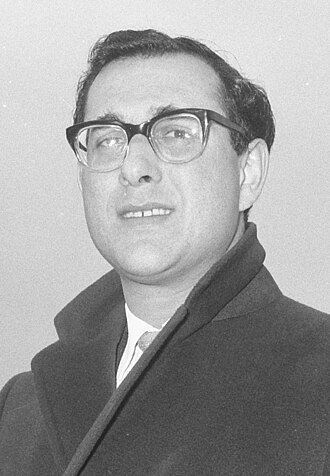
Source: Wikipedia (CC BY-SA). Portrait by Jack de Nijs for Anefo (CC0) via Wikimedia Commons.
Life on the Timeline
Major Works
Exam Dossier
Most-asked topics
- Comedy of menace and Pinter's departure from realism
- The 'Pinter pause' — silence and evasive dialogue as dramatic technique
- Theatre of the Absurd and Pinter's distinct position within it
- Power, dominance and territorial struggle between characters
- Verification, memory and the instability of truth
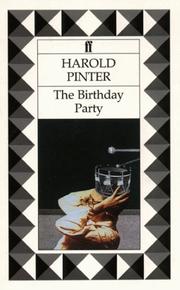
- The Birthday Party as menace drama and its initial critical failure
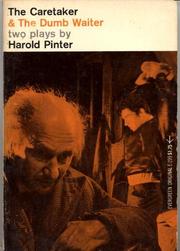
- The Caretaker — identity, homelessness and manipulation
- The Homecoming — family, sexuality and shifting power
- Betrayal and its reverse-chronology structure
- Pinter's Nobel Prize (2005) and his political theatre/essays
Previous-year themes
- Pinter as a leading figure of the Theatre of the Absurd/comedy of menace
- Function of pause, silence and non-sequitur in Pinter's dialogue
- Theme of identity, verification and uncertainty in The Caretaker
- Power politics and territorial imperative in The Birthday Party
- Non-linear/reverse chronology as narrative technique in Betrayal
- Pinter's Nobel Prize and his engagement with political theatre
- Language as a weapon and failure of communication in Pinter's drama
- Pinter's place among post-war British dramatists (compared with Osborne, Beckett, Stoppard)
Common confusions
- Confusing Pinter's 'comedy of menace' with Beckett's Theatre of the Absurd proper — related but critically distinct labels.
- Mixing up the years of The Birthday Party (1958) and The Caretaker (1960).
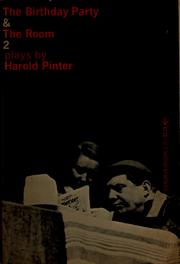
- Confusing The Room and The Dumb Waiter — both early one-act plays but with different casts and settings (Rose's flat vs. two hitmen in a basement).
- Attributing the reverse-chronology device of Betrayal to Tom Stoppard rather than to Pinter himself.
- Forgetting that Pinter the playwright and the author of the Nobel lecture 'Art, Truth and Politics' (2005) are the same figure, and treating his political prose as separate from his dramatic career.
- Confusing the 'Pinter pause' with Beckettian silence — Pinter's pauses typically signal unspoken threat/power play, while Beckett's silences often gesture toward existential emptiness.
Memory tricks
'Pinter Pause = Power Pause' — silence in his plays signals dominance or threat, not absence of meaning.
Chronology mnemonic: 'Birthday brings a Caretaker Room with a Dumb waiter Home for Betrayal' (Birthday Party, Caretaker, Room, Dumb Waiter, Homecoming, Betrayal — in that year order).
'Comedy of Menace' = ordinary talk + underlying threat — remember the pairing of banality with danger.
Nobel triple-P: 'P'inter won the 'P'rize for 'P'olitics-infused truth-telling in 2005.
'Betrayal goes Backward' — alliteration to recall its reverse chronological structure.
'Caretaker cares for nobody' — ironic title, since Davies exploits both Aston and Mick rather than caring for anyone.