Victorian
George Bernard Shaw
1856 – 1950
Irish playwright, critic, and polemicist (1856–1950)
- United Kingdom of Great Britain and Ireland · United Kingdom · Ireland
- Irish
- Realism
- ◆ Nobel 1925
About
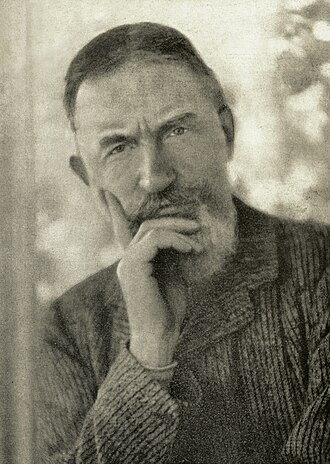
George Bernard Shaw, known at his insistence as Bernard Shaw, was an Irish playwright, critic, polemicist and political activist. His influence on Western theatre, culture and politics extended from the 1880s to his death and beyond. He wrote more than sixty plays, including major works such as Man and Superman (1902), Pygmalion (1913) and Saint Joan (1923). With a range incorporating both contemporary satire and historical allegory, Shaw became the leading dramatist of his generation, and in 1925 was awarded the Nobel Prize in Literature.
Source: Wikipedia (CC BY-SA). Portrait by Unknown authorUnknown author (Public domain) via Wikimedia Commons.
Life on the Timeline
Major Works
Exam Dossier
Most-asked topics
- Shaw as founder of the modern English 'problem play' and drama of ideas
- Pygmalion — Eliza Doolittle, Higgins, language and class
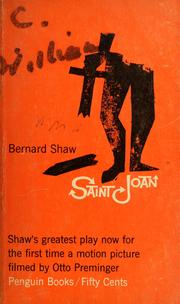
- Saint Joan — historical allegory and Shaw's treatment of Joan of Arc
- Fabian socialism and Shaw's political-social criticism in drama
- The concept of the 'Life Force' and Creative Evolution (Man and Superman)
- Shaw's lengthy prefaces as critical/discursive prose
- 'Shavian' wit, paradox, and the comedy of ideas
- Shaw's debt to and departure from Ibsen (The Quintessence of Ibsenism)
Previous-year themes
- Shaw's contribution to the 'problem play'/drama of ideas in English theatre
- Pygmalion: characters, themes of language, class and transformation
- Saint Joan as historical/allegorical drama and Shaw's view of the heroic
- Fabian socialism and social criticism in Shaw's plays
- The 'Life Force' and Shaw's philosophy of Creative Evolution
- Shaw's prefaces as a form of dramatic criticism
- Shaw's place in the history of modern (Ibsenite) English drama
- Nobel Prize and Shaw's standing among twentieth-century dramatists
Common confusions
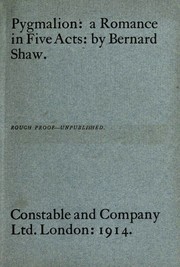
- Confusing Shaw's Pygmalion with the myth of Pygmalion and Galatea it borrows its title from — Shaw's play is a social comedy of speech and class, not a romance of a statue coming to life.
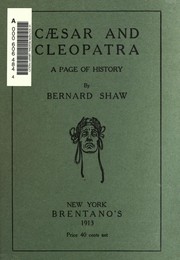
- Confusing Shaw's Caesar and Cleopatra with Shakespeare's Antony and Cleopatra — Shaw's Caesar is a rational mentor-figure, deliberately un-romantic, unlike Shakespeare's tragic lovers.
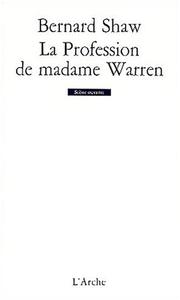
- Mixing up 'Plays Unpleasant' (Widowers' Houses, Mrs Warren's Profession) with 'Plays Pleasant' (Arms and the Man, Candida) — the grouping reflects tone and subject, not chronology alone.
- Assuming Shaw was English — he was Irish-born (Dublin, 1856) though he made his career in London.
- Confusing the 'Life Force' (Shaw's Bergsonian/Lamarckian evolutionary idea in Man and Superman and Back to Methuselah) with Darwinian natural selection, which Shaw explicitly rejected as insufficiently purposive.
- Forgetting that My Fair Lady (the musical) is an adaptation of Pygmalion, not a work by Shaw himself.
Memory tricks
Order these four dated works by year: Caesar and Cleopatra (1899) -> Mrs Warren's Profession (1905) -> Pygmalion (1913) -> Saint Joan (1924, with the Nobel Prize following in 1925).
'Shaw = Show of Ideas' — his plays are debates staged as drama.
'Fabian Shaw, Socialist Flaw-finder' — links Shaw to Fabian socialism and his habit of exposing social 'flaws' (slums, prostitution, war) in his plays.
'Joan's Epilogue asks the Lord How Long' — recall the famous closing line of Saint Joan.
'Higgins teaches manners, not just grammar' — remember Pygmalion is about social equality of treatment, not merely phonetics.
Nobel in '25, quarter-century mark of the new century — helps fix 1925 as Shaw's Nobel year.