Postmodern
Homi K. Bhabha
b. 1949
Indian critical theorist (born 1949)
- India
- Indian Writing in English
- Postcolonial Theory
- Literary Theory
About
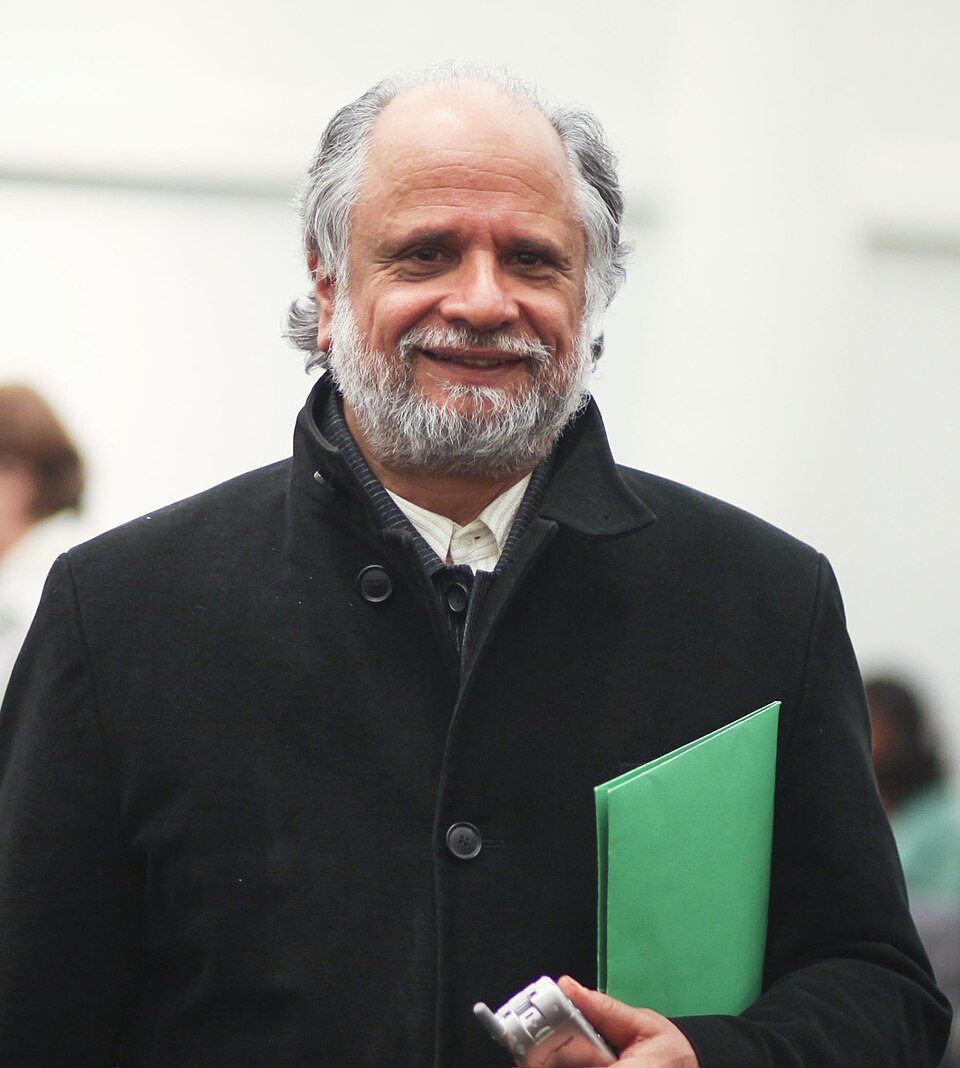
Homi Kharshedji Bhabha is an Indian scholar and critical theorist. He is the Anne F. Rothenberg Professor of the Humanities at Harvard University. He is one of the most important figures in contemporary postcolonial studies, and has developed a number of the field's neologisms and key concepts, such as hybridity, mimicry, difference, and ambivalence. Such terms describe ways in which colonised people have resisted the power of the coloniser, according to Bhabha's theory. In 2012, he received the Padma Bhushan award in the field of literature and education from the Indian government. He is married to attorney and Harvard lecturer Jacqueline Bhabha, and they have three children.
Source: Wikipedia (CC BY-SA). Portrait by Homi_K._Bhabha.jpg: jeanbaptisteparis derivative work: Hidro (CC BY-SA 2.0) via Wikimedia Commons.
Life on the Timeline
Major Works
No works have been hung in this gallery yet — the acquisitions team is at work.
Exam Dossier
Most-asked topics
- Concept of hybridity
- Concept of mimicry
- Ambivalence in colonial discourse
- The Third Space / interstitial space of enunciation
- Unhomeliness (the postcolonial uncanny)
- The Location of Culture (1994)
- Bhabha's place among Said, Spivak, and Fanon
- Sly civility and colonial authority
Previous-year themes
- Definition and significance of Bhabha's key neologisms (hybridity, mimicry, ambivalence)
- Distinguishing Bhabha's approach from Edward Said's Orientalism
- Distinguishing Bhabha's approach from Gayatri Spivak's subaltern studies
- Psychoanalytic (Freud/Lacan) roots of Bhabha's theoretical vocabulary
- Bhabha's reading of colonial texts and the destabilization of colonial authority
- Bhabha as a founding figure of postcolonial theory alongside Said and Spivak
- The Third Space and cultural identity/nationhood
Common confusions
- Treating 'hybridity' as simple cultural mixing or multiculturalism, when Bhabha's hybridity specifically names an ambivalent effect that destabilizes colonial authority from within.
- Mistaking the 'Third Space' for a literal geographic or diasporic location rather than a discursive, enunciative space of negotiation.
- Confusing Bhabha's psychoanalytic-deconstructive approach with Edward Said's discourse-analytic Orientalism (Said examines Western representational discourse; Bhabha examines ambivalence within the colonial relation itself).
- Confusing Bhabha's concepts with Gayatri Spivak's (Spivak: 'subaltern', 'strategic essentialism', 'can the subaltern speak'; Bhabha: 'hybridity', 'mimicry', 'Third Space').
- Attributing the term 'contact zone' to Bhabha; it is Mary Louise Pratt's term, not Bhabha's.
- Equating Bhabha's 'ambivalence' (the colonizer's simultaneous desire for and repulsion by the colonized) with plain semantic 'ambiguity' in the New Critical sense.
Memory tricks
'HoMi Bhabha' -> Hybridity and Mimicry, his two signature terms, start with the same sounds as his initials.
Third Space = Between, not a Base: remember it is not a literal place but a space of enunciation.
Mimicry mnemonic: keep the phrase itself, 'almost the same, but not quite,' as the exact recall cue.
Unhomely = un-Heimlich: the Freudian 'home' (Heimlich) turned uncanny and strange.
'LOC' = Location of Culture = his landmark 1994 book collecting the key essays.
The postcolonial 'trinity': Said, Spivak, Bhabha — remember by initials S-S-B.