Modernism
Carl Jung
1875 – 1961
Swiss psychiatrist and psychotherapist (1875–1961)
- Switzerland
- European Theory & Influence
- Psychoanalytic Criticism
- Archetypal / Myth Criticism
- Literary Theory
About
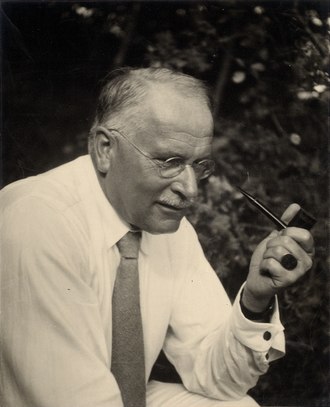
Carl Gustav Jung was a Swiss psychiatrist, psychotherapist, and psychologist who founded the school of analytical psychology. He was a prolific author of over twenty books, illustrator, correspondent, and academic, best known for his concept of archetypes. Widely considered one of the most influential psychologists of all time, Jung's work has fostered not only scholarship, but also popular interest. His work has been influential in the fields of psychiatry, anthropology, archaeology, literature, philosophy, psychology, and religious studies.
Source: Wikipedia (CC BY-SA). Portrait by Unbekannt (Public domain) via Wikimedia Commons.
Life on the Timeline
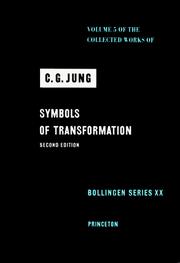
Major Works
Exam Dossier
Most-asked topics
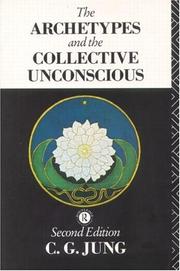
- The theory of the collective unconscious
- Archetypes: Shadow, Persona, Anima/Animus, Self, Wise Old Man, Great Mother, Trickster
- The process of individuation
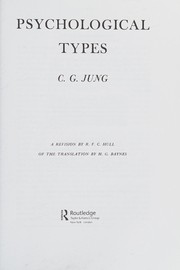
- Psychological Types: introversion and extraversion
- Jung's break from Freud over the nature of libido and the unconscious
- Archetypal/myth criticism and Jung's influence on Northrop Frye
- Dream and symbol interpretation
- Synchronicity (the acausal connecting principle)
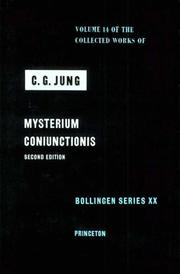
- Jung and alchemy (Psychology and Alchemy, Mysterium Coniunctionis)
- Jung's influence on literary theory and criticism generally
Previous-year themes
- Jung versus Freud: divergent theories of the unconscious
- Archetypal criticism as a school of literary theory
- The collective unconscious as a tool for literary interpretation
- Jungian archetypes applied to characters and narrative patterns
- Individuation and its relevance to Bildungsroman/quest narratives
- Anima/animus and the representation of gender in literature
- Jung's influence on Northrop Frye's myth criticism
- The shadow archetype in the analysis of literary villains and doubles
Common confusions
- Confusing Jung's 'collective unconscious' with Freud's 'personal unconscious' or id.
- Confusing 'archetype' (a universal, structural pattern) with 'stereotype' (a fixed, culturally learned generalization).
- Confusing Jungian 'individuation' with Freudian 'sublimation'.
- Mixing up 'anima' (the unconscious feminine side in men) with 'animus' (the unconscious masculine side in women).
- Assuming Man and His Symbols was written solely by Jung, when it was completed with collaborators (von Franz, Henderson, Jaffé, Jacobi).
- Treating Jung's archetypal criticism and Northrop Frye's myth criticism as identical, rather than Frye building a systematic literary theory upon Jungian foundations.
Memory tricks
SPAS: Shadow, Persona, Anima/Animus, Self — the four key archetypal structures of the psyche.
Jung broke from Freud over 'sex vs psyche': Freud stressed sexual libido, Jung broadened it to general psychic energy.
Anima = 'A' woman-within-a-man; Animus = man-within-a-woman (spelling cue for the two terms).
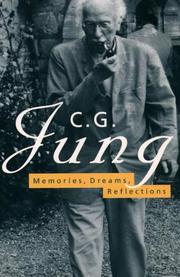
MDR = 'Memoir' — Memories, Dreams, Reflections is Jung's autobiography.
Synchronicity = 'sync' without a cause — meaningful coincidence, not causation.
Individuation: many parts becoming 'one' (individ-uation) — the psyche integrating into a whole Self.