Middle English
William Langland
1332 – 1386
English writer
- Kingdom of England · United Kingdom
- British
About
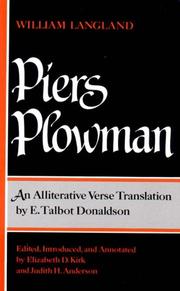
William Langland is the presumed author of a work of Middle English alliterative verse generally known as Piers Plowman, an allegory with a complex variety of religious themes. The poem translated the language and concepts of the cloister into symbols and images that could be understood by a layman.
Source: Wikipedia (CC BY-SA). Portrait by Lepidus Magnus (CC BY-SA 4.0) via Wikimedia Commons.
Life on the Timeline
Major Works
Exam Dossier
Most-asked topics
- Piers Plowman: authorship and the A, B, C textual versions
- The dream-vision form and the Prologue's 'field full of folk'
- Allegory and personification (Piers, Lady Meed, Holy Church, Conscience, Reason)
- Do-Well, Do-Bet, Do-Best and the poem's spiritual scheme
- The Alliterative Revival and unrhymed alliterative long-line verse
- Social/estates satire and anticlericalism in Piers Plowman
- Piers Plowman and the Peasants' Revolt of 1381 (John Ball)
- Langland compared with Chaucer as a contemporary 14th-century poet
Previous-year themes
- Identification of Piers Plowman's genre as dream-vision allegory
- The three versions (A-text, B-text, C-text) and their approximate dates
- Meaning and function of the 'field full of folk' in the Prologue
- The alliterative metre of Piers Plowman versus Chaucer's rhymed verse
- Allegorical characters and what they represent (Lady Meed, Holy Church, Piers)
- Do-Well/Do-Bet/Do-Best as stages of Christian perfection
- Langland's place in the 14th-century Alliterative Revival
- Piers Plowman's social criticism of church and society
Common confusions
- Confusing Piers Plowman, the allegorical character, with Will, the poem's dreamer-narrator often read as Langland's own persona - they are distinct figures within the poem.
- Confusing Langland's Piers Plowman with anonymous later imitations such as Pierce the Ploughman's Crede or The Plowman's Tale, which are separate, later works inspired by Langland's poem.
- Attributing the rhyme 'When Adam delved and Eve span' to Langland - it is John Ball's rallying couplet from the Peasants' Revolt, only associated with, not written by, Langland.
- Mixing up the order and relative dates of the A, B, and C texts - A is the earliest and shortest, B the major expansion most commonly studied, and C a later revision, not simply the longest.
- Assuming Piers Plowman is written in rhymed couplets like Chaucer's Canterbury Tales - it is actually in unrhymed alliterative verse.
- Confusing the order and meaning of Dowel, Dobet, and Dobest as a strict narrative sequence rather than an ascending scheme of moral/spiritual states.
Memory tricks
A-B-C = Ascending revision: A (earliest, shortest) leads to B (fullest, best-known) leads to C (final, calmer text).
Do-Well, Do-Bet, Do-Best: read them as a moral ladder - Well, Better, Best - each stage surpassing the last.
'Field full of Folk' - remember the triple F for the Prologue's panoramic vision of society.
Will dreams, Piers does: Will is the visionary narrator; Piers Plowman is the labouring, Christ-like doer he seeks.
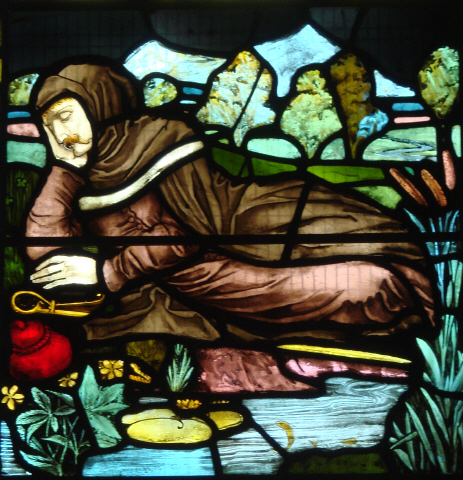
Malvern Hills = where the Vision begins - picture Will asleep on a hillside to recall the Prologue's setting.
Alliterative Revival = 'same sound, same century' - a 14th-century return to Old English alliterative metre, alongside Sir Gawain and the Green Knight.