Modernism
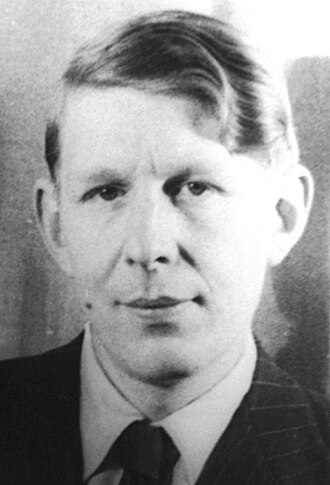
W. H. Auden
1907 – 1973
British-American poet (1907–1973)
- United Kingdom · United States
- British
- Modernism
- Thirties Poets
About
Wystan Hugh Auden was a British-American poet. Auden's poetry is noted for its stylistic and technical achievement, its engagement with politics, morals, love, and religion, and its variety in tone, form, and content. Some of his best known poems are about love, such as "Funeral Blues"; on political and social themes, such as "September 1, 1939" and "The Shield of Achilles"; on cultural and psychological themes, such as The Age of Anxiety; and on religious themes, such as "For the Time Being" and "Horae Canonicae".
Source: Wikipedia (CC BY-SA). Portrait by Carl Van Vechten (Public domain) via Wikimedia Commons.
Life on the Timeline
Major Works
Exam Dossier
Most-asked topics
- Auden's shift from British to American period (1939 move)
- The Auden Group / "MacSpaunday" and Thirties poets
- Political and social themes: "Spain", "September 1, 1939"
- Collaborations with Christopher Isherwood (plays) and Louis MacNeice (Letters from Iceland)
- "Funeral Blues" and the elegiac/love-poem mode
- The Age of Anxiety and its Pulitzer Prize
- Religious/Christian turn in later poetry (For the Time Being, Horae Canonicae)
- Auden's technical/formal virtuosity and variety of verse forms
Previous-year themes
- Auden's place among the Thirties poets and the 'Auden Group'
- Identification of famous opening/closing lines from Auden's poems
- Chronological ordering of Auden's major volumes
- Auden's transatlantic career: England to America, citizenship
- Themes of politics, love, and religion in Auden's poetry
- Auden's collaborative work with Isherwood and MacNeice
- Auden's critical remarks on poetry (e.g., 'poetry makes nothing happen')
Common confusions
- Confusing Auden's 1930s political poetry with T. S. Eliot's earlier High Modernism (The Waste Land, 1922) — Auden is a younger, distinct modernist voice tied to the socially engaged 'Thirties poets'.
- Mixing up the 'Auden Group'/'MacSpaunday' (Auden, MacNeice, Spender, Day-Lewis) with the earlier Georgian poets or the Bloomsbury Group, which are unrelated circles.
- Misquoting 'September 1, 1939' as ending 'We must love one another AND die' — that is Auden's later revision; the original, more famous line reads 'OR die'.
- Confusing The Age of Anxiety (a long narrative poem, Pulitzer Prize 1948) with Auden's prose essay collection The Dyer's Hand (1962).
- Assuming Auden renounced British nationality when he became a US citizen in 1946 — he retained ties to English literary life (e.g., Oxford Professor of Poetry, 1956-61).
- Attributing Letters from Iceland (1937) to Christopher Isherwood — it was co-written with Louis MacNeice; Isherwood's collaborations with Auden were the stage plays (The Dog Beneath the Skin, The Ascent of F6, On the Frontier).
Memory tricks
'MacSpaunday' = MacNeice + Spender + Auden + Day-Lewis — the four leading Thirties poets.
'OR die, not AND die' — remember the original vs. revised line of 'September 1, 1939'.
Isherwood = the three plays (Dog, F6, Frontier); MacNeice = the Iceland letters — split Auden's two main 1930s collaborators by genre.
'Anxiety wins the prize' — The Age of Anxiety took the Pulitzer Prize in 1948.
Life arc mnemonic: York (born) -> Oxford -> 1930s Europe/politics -> America 1939 (citizen 1946) -> Oxford Professor of Poetry (1956-61) -> died Vienna 1973.
'Funeral Blues stops the clocks' — links the poem's title to its unforgettable opening line.