Postmodern
Doris Lessing
1919 – 2013
British novelist, poet, playwright, librettist, biographer, and short story writer (1919–2013)
- United Kingdom · United Kingdom of Great Britain and Ireland
- British
- Postmodernism
- Feminist Writing
- literary-realism
- ◆ Nobel 2007
About
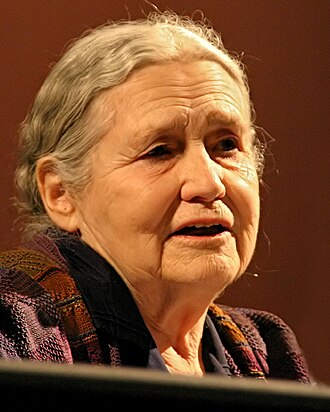
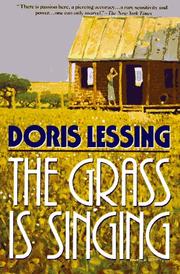
Doris May Lessing was a British novelist – sometimes identified as Rhodesian early in her career – and winner of the Nobel Prize in Literature in 2007. Lessing was born to British parents in Qajar Iran, where she lived until she was 6 in 1925. Her family then moved to Southern Rhodesia, where she remained until moving to London, England, in 1949. Her novels include The Grass Is Singing (1950), the sequence of five novels collectively called Children of Violence (1952–1969), The Golden Notebook (1962), The Good Terrorist (1985), and five novels collectively known as Canopus in Argos: Archives (1979–1983).
Source: Wikipedia (CC BY-SA). Portrait by Oskars Vizbulis (Public domain) via Wikimedia Commons.
Life on the Timeline
Major Works
Exam Dossier
Most-asked topics
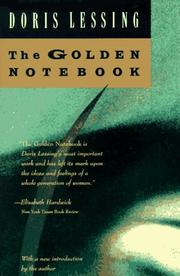
- The Golden Notebook: structure (Free Women frame + black/red/yellow/blue notebooks) and metafictional technique
- Children of Violence: the five-novel Martha Quest sequence as Bildungsroman
- Colonial Southern Rhodesia as setting and subject in early fiction (The Grass Is Singing)
- Lessing's ambivalent relationship to feminism and feminist criticism
- Political disillusionment with Communism reflected in her fiction
- Nobel Prize in Literature (2007) and Lessing's career trajectory
- Later turn to science fiction/space fiction: Canopus in Argos: Archives
- Themes of mental breakdown, fragmentation, and 'inner space' (influence of R. D. Laing)
Previous-year themes
- The Golden Notebook as a landmark of twentieth-century feminist fiction
- Narrative structure and fragmentation in The Golden Notebook
- Colonialism and race in Lessing's Rhodesian fiction
- Lessing's rejection of the narrow 'feminist writer' label
- Communism, political disillusionment, and the Cold War in Lessing's work
- The Nobel Prize in Literature 2007 and Lessing's place in postwar British fiction
- Genre experimentation: realism to science fiction in Canopus in Argos
- Psychology, madness, and society in Lessing's fiction
Common confusions
- Confusing The Golden Notebook (a single 1962 novel) with Children of Violence (the five-novel 1952-1969 sequence).
- Confusing Lessing's birthplace (Persia/Iran, 1919) with Southern Rhodesia, where she was raised from age six.
- Confusing Canopus in Argos: Archives (science-fiction quintet, 1979-1983) with the realist Children of Violence sequence.
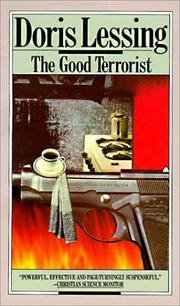
- Mixing up the early debut novel The Grass Is Singing (1950) with the later political novel The Good Terrorist (1985).
- Assuming Lessing embraced the 'feminist' label readily, when she in fact distanced herself from doctrinaire feminist readings of her work.
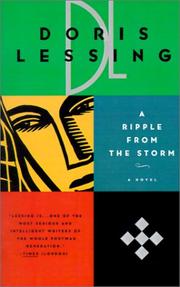
- Misordering the Children of Violence novels: Martha Quest, A Proper Marriage, A Ripple from the Storm, Landlocked, The Four-Gated City.
Memory tricks
Grass (1950, green/young debut) - Golden (1962, Notebook) - Good (1985, Terrorist) - Cleft (2007, Nobel year): four G-titles marking career milestones.
MARL-F for Children of Violence order: Martha Quest, A proper marriage, A Ripple from the storm, Landlocked, Four-gated city.
'Free frame, coloured core' — remember The Golden Notebook's structure: 'Free Women' frames the black/red/yellow/blue notebooks.
Lessing = Nobel '07 and The Cleft '07 — pair the double-07 to fix the year of her Nobel Prize and that novel's publication together.
Born Persia, raised Rhodesia, settled London — a three-place biographical chain for her early life.
Canopus in Argos = 'Cosmic Archives' — the C-A-A alliteration flags her science-fiction turn, distinct from her earlier realism.