Contemporary
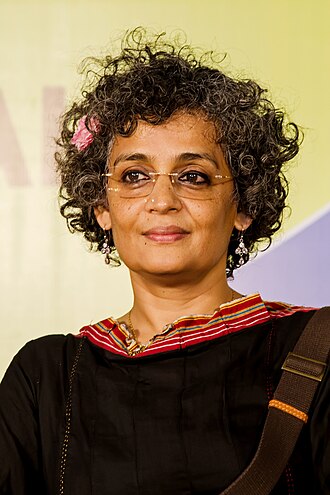
Arundhati Roy
b. 1961
Indian novelist, essayist, and activist
- India
- Indian Writing in English
- Postcolonial Literature
About
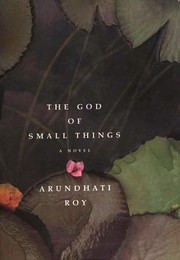
Suzanna Arundhati Roy is an Indian author best known for her novel The God of Small Things (1997), which won the Booker Prize for Fiction in 1997 and became the biggest-selling book by a non-expatriate Indian author. She is also a political activist involved in human rights and environmental causes. She was the winner of the 2024 PEN Pinter Prize, given by English PEN, and she named imprisoned British-Egyptian writer and activist Alaa Abd El-Fattah as the "Writer of Courage" with whom she chose to share the award.
Source: Wikipedia (CC BY-SA). Portrait by Augustus Binu/ facebook (CC BY-SA 3.0) via Wikimedia Commons.
Life on the Timeline
Major Works
Exam Dossier
Most-asked topics
- The God of Small Things: structure, themes, and narrative technique
- Caste, transgression and the 'Love Laws' in Roy's fiction
- Roy as the first Indian woman to win the Booker Prize (1997)
- Twin protagonists Estha and Rahel and the theme of childhood trauma
- Ayemenem, Kerala as literary setting and its autobiographical roots
- Roy's shift from fiction to political/activist nonfiction essays
- Postcolonial and subaltern concerns in Roy's work
- The Ministry of Utmost Happiness and Roy's return to the novel after twenty years
Previous-year themes
- Booker Prize winners among Indian English novelists
- Postcolonial themes and subaltern voices in Indian writing in English
- Nonlinear/fragmented narrative technique in the contemporary Indian novel
- Women writers in Indian English fiction
- Politically engaged/activist writing by contemporary Indian authors
- Caste and social critique in postcolonial Indian fiction
- Comparison of resident vs. diasporic Indian English novelists
Common confusions
- Assuming all of Roy's writing is fiction—her substantial and prize-relevant body of political/activist essays (nonfiction) is often overlooked.
- Confusing Roy with other Indian Booker Prize winners (e.g., Salman Rushdie for Midnight's Children, Kiran Desai, Aravind Adiga).
- Mixing up Roy's birthplace, Shillong, with Ayemenem, Kerala, which is the novel's setting and the site of her childhood, not her birth.
- Believing The Ministry of Utmost Happiness (2017) was Roy's debut novel, when it was in fact her second novel, following The God of Small Things by twenty years.
- Confusing the twins Estha and Rahel with each other, or misattributing which twin is sent away after the central tragedy.
- Treating Roy's activism (Narmada Bachao Andolan, anti-nuclear writing) as unrelated to her literary themes, when both consistently engage caste, power, and marginalization.
Memory tricks
'Small Things, Big Prize' — The God of Small Things won the (Big) Booker Prize in 1997.
'E and R are twins' — Estha and Rahel, the fraternal twin protagonists.
'Ayemenem = childhood home' — the Kerala village setting mirrors Roy's own upbringing.
'20 years between novels' — God of Small Things (1997) to Ministry of Utmost Happiness (2017).
'Architect turned Author' — recall that Roy trained in architecture before writing fiction.
'Booker before Ministry' — fixes the chronological order of her two novels.