modernist literature · 1922
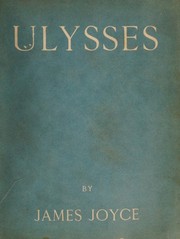
Ulysses
by James Joyce
1922 novel by James Joyce
- 1922
- modernist literature
- experimental literature
- high literature
- metafiction
- serialized fiction
- autobiography
- Bildungsroman
Summary
Ulysses is a modernist novel by the Irish writer James Joyce. Partially serialised in the American journal The Little Review from March 1918 to December 1920, the entire work was published in Paris by Sylvia Beach on 2 February 1922, Joyce's fortieth birthday. It is considered one of the most important works of modernist literature and a classic of the genre, having been called "a demonstration and summation of the entire movement".
Source: Wikipedia (CC BY-SA).
Historical Background
Ulysses grew out of a short story Joyce had planned for Dubliners and expanded into a novel-length reworking of Homer's Odyssey, transposed to a single day, 16 June 1904, in Dublin — the date now celebrated as "Bloomsday," chosen because it marks Joyce's first outing with Nora Barnacle, who became his lifelong partner. Joyce wrote the book over roughly seven years while living in Trieste, Zurich, and Paris, supported by patrons including Harriet Shaw Weaver. Individual episodes were serialized in the American journal The Little Review from 1918, but the "Nausicaa" episode's sexual content led to an obscenity prosecution in the United States, halting publication there. Sylvia Beach, proprietor of the Paris bookshop Shakespeare and Company, published the complete novel on 2 February 1922, Joyce's fortieth birthday. The book's frank treatment of bodily and sexual experience, combined with radical formal experimentation, made it both scandalous and enormously influential, and it remained banned in the United States and Britain for years afterward.
The Story
Ulysses follows three principal characters through Dublin on a single day, 16 June 1904, loosely paralleling episodes of Homer's Odyssey. Stephen Dedalus, a young intellectual and aspiring writer (last seen in A Portrait of the Artist as a Young Man), teaches at a school, broods on his mother's death and his estrangement from his family and Ireland, and wanders the city debating aesthetics and history. Leopold Bloom, an advertising canvasser of Jewish heritage, moves through the city attending to daily errands and a friend's funeral, all while aware that his wife, Molly, has arranged an assignation with her concert manager, Blazes Boylan, that afternoon. Bloom's wandering brings him into contact with Dublin's pubs, streets, a maternity hospital, and eventually a brothel district, where his path crosses Stephen's; Bloom, sensing the younger man's vulnerability, intervenes to protect him and brings him home for cocoa and conversation, offering a surrogate father-son bond that mirrors Odysseus and Telemachus. The novel closes with Molly Bloom's extended, unpunctuated interior monologue as she lies in bed beside the sleeping Leopold, reflecting on her marriage, past lovers, and her life, ending on her memory of accepting Leopold's proposal. Each episode is rendered in a distinct style — parody, catechism, dramatic script, stream of consciousness — mapping the day onto Homeric structure while remaining resolutely, comically, and tragically ordinary.
Themes
- The epic in the everyday
- Parallax and multiple perspectives
- Fatherhood and sonship
- Exile and Irish identity
- The body and sexuality
- Time and memory
- Jewishness and outsider status
- Marriage and infidelity
Literary Devices
- Stream of consciousness — renders characters' unfiltered inner thought as it occurs
- Interior monologue — especially Molly Bloom's unpunctuated closing soliloquy
- Homeric parallel structure — each episode maps loosely onto an episode of the Odyssey
- Stylistic parody — chapters mimic newspaper headlines, catechism, drama, and other genres
- Free indirect discourse — narration blends with a character's own idiom and thought
- Epiphany — Joyce's technique of a sudden moment of insight or revelation
Symbolism
- Leopold Bloom — the modern Odysseus/Ulysses, the wandering everyman
- Molly Bloom — a figure of Penelope, earth, and sexual vitality
- Stephen Dedalus — Telemachus, the son in search of a father figure
- The key — home, belonging, and the exile's return
- Water/the sea — flux, fertility, and Ireland's colonial situation
Critical Interpretation
Ulysses has been central to the development of Anglo-American modernist criticism since its publication. Early readers such as T. S. Eliot praised its "mythical method" of using the Odyssey to give shape to the chaos of modern experience, while Ezra Pound championed its formal innovation. The 1933 U.S. obscenity trial, resolved in Joyce's favor by Judge John M. Woolsey, became a landmark in literary censorship debates and helped establish the novel's canonical status. Later criticism has approached the novel through diverse lenses: narratological studies of its shifting styles, feminist readings that debate Molly Bloom's monologue as either liberating or objectifying, postcolonial criticism examining Stephen's and Bloom's positions as colonized/marginalized subjects within British-ruled Ireland, and genetic criticism drawing on Joyce's manuscripts and notebooks to trace the novel's composition. The book is also central to debates in textual scholarship because of the notoriously unstable state of its published text, leading to competing editions.
Quotations
History is a nightmare from which I am trying to awake.
Stephen Dedalus, in the 'Nestor' episode
Yes I said yes I will Yes.
The closing words of Molly Bloom's monologue in 'Penelope'
Influence
Ulysses reshaped what the novel could do with time, consciousness, and language, and stands as a touchstone for modernist and postmodernist fiction alike. Its stream-of-consciousness technique influenced writers such as Virginia Woolf, William Faulkner, and Samuel Beckett, and its encyclopedic, formally experimental ambition inspired later maximalist novelists. The book's use of a single day's structure and mythic patterning became a model widely imitated and adapted across twentieth-century literature, and its obscenity trial helped expand the legal latitude for literary treatment of sexuality in English-language publishing.
Adaptations
- Ulysses (1967 film, directed by Joseph Strick)
- Bloom (2003 film, directed by Sean Walsh)
Related Works
- A Portrait of the Artist as a Young Man by James Joyce
- Dubliners by James Joyce
- Finnegans Wake by James Joyce
- The Odyssey by Homer
- Mrs Dalloway by Virginia Woolf
- The Sound and the Fury by William Faulkner
Curator's Notes
- 1The novel is set entirely on 16 June 1904, a date now celebrated by Joyceans worldwide as 'Bloomsday.'
- 2It was published in Paris by Sylvia Beach's bookshop Shakespeare and Company on Joyce's fortieth birthday, 2 February 1922.
- 3The novel was the subject of a landmark U.S. obscenity trial, resolved in 1933 in Joyce's favor, which allowed its legal publication in the United States.
- 4Each of the novel's eighteen episodes is written in a markedly different literary style.
For the Exam
UGC NET English frequently tests Ulysses on: its status as a landmark modernist text and its publication history (Little Review serialization, 1922 Paris publication, obscenity trial); the Homeric parallel structure and episode titles; stream-of-consciousness and interior monologue as techniques, especially Molly Bloom's closing soliloquy; Stephen Dedalus as a continuation of A Portrait of the Artist as a Young Man; and T. S. Eliot's essay on Joyce's "mythical method." Candidates should be able to identify the novel's date-setting (16 June 1904/Bloomsday) and its significance for the development of the modernist novel.