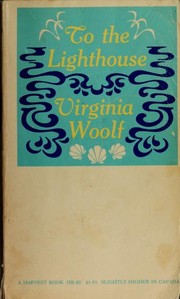
modernist literature · 1927
To the Lighthouse
1927 novel by Virginia Woolf
- 1927
- modernist literature
- psychological fiction
Summary
To the Lighthouse is a 1927 novel by Virginia Woolf. The novel centres on the Ramsay family and their visits to the Isle of Skye in Scotland between 1910 and 1920.
Source: Wikipedia (CC BY-SA).
Historical Background
To the Lighthouse (1927) is Virginia Woolf's fifth novel, widely regarded as a landmark of literary modernism and a high point of her experiments with stream-of-consciousness narration. Woolf began drafting it in 1925, drawing heavily on childhood memories of family summers at Talland House in St Ives, Cornwall, though the novel relocates the setting to the Isle of Skye. The book is often read as an elegy for her parents, Leslie and Julia Stephen, refracted through the characters of Mr and Mrs Ramsay. Structurally it abandons conventional plot in favour of interior consciousness, shifting fluidly between characters' perceptions via free indirect discourse. Published by Woolf's own Hogarth Press, it consolidated her reputation alongside Mrs Dalloway as a pioneer of the modernist novel, concerned with subjective time, memory, loss, and the nature of art. The novel is divided into three unequal parts - "The Window," "Time Passes," and "The Lighthouse" - with the middle section notably compressing a decade and the ravages of the First World War into a brief, lyrical interlude largely emptied of human presence. It remains a foundational text for studies of feminist modernism, narrative technique, and the philosophy of perception in fiction.
The Story
The novel unfolds in three parts. "The Window" takes place over a single day at the Ramsays' summer house on the Isle of Skye, where Mrs Ramsay presides over her large family and assorted guests, including the philosophy student Charles Tansley and the painter Lily Briscoe. Young James Ramsay longs to sail to a nearby lighthouse, a trip his father coldly predicts will be spoiled by weather. The section closes with Mrs Ramsay hosting a dinner party that briefly draws the disparate guests into a moment of harmony. "Time Passes" compresses roughly a decade into a brief, elegiac interlude: the house falls into disrepair, and major life events - including Mrs Ramsay's death, the death of her son Andrew in the First World War, and the death of her daughter Prue soon after childbirth - are related in short, parenthetical asides. In "The Lighthouse," the surviving Ramsays and guests return to the now-restored house. Mr Ramsay finally takes James and his sister Cam on the long-deferred voyage to the lighthouse, a journey that becomes a quiet reconciliation between father and son. Meanwhile, Lily Briscoe, back on the lawn, struggles to complete the painting she had begun years earlier, finally achieving her artistic vision - and a sense of closure - at the same moment the boat reaches the lighthouse.
Themes
- The passage of time and impermanence
- Loss, mourning, and memory
- The nature of artistic vision and creation
- Gender roles and the domestic sphere versus intellectual life
- The instability and subjectivity of perception
- The tension between order and chaos
- Marriage and the relations between men and women
- The search for meaning and permanence amid flux
Literary Devices
- Stream of consciousness - narration moves fluidly through characters' interior thoughts
- Free indirect discourse - third-person narration merges with characters' own voices and idiom
- Multiple/shifting focalization - perspective passes between many characters within a single scene
- Elegy and lyricism - especially in the "Time Passes" section, which mourns loss through poetic, impersonal prose
- Symbolism - concrete objects (the lighthouse, the painting, the boeuf en daube) carry layered meaning
- Parenthetical narration - major events like deaths are relegated to brief bracketed asides, undercutting their apparent importance
- Impressionistic imagery - light, water, and the house itself rendered as shifting sensory impressions
Symbolism
- The lighthouse - a distant, ambiguous symbol of aspiration, permanence, and the elusiveness of meaning
- Lily Briscoe's painting - the struggle to fix a fleeting vision into lasting artistic form
- The Ramsays' house - memory, domestic order, and the erosion wrought by time
- The sea/water - the flux and continuity of life set against human transience
- The boeuf en daube dinner - a fragile, temporary unity achieved through domestic ritual and Mrs Ramsay's care
Critical Interpretation
To the Lighthouse has been central to feminist criticism since the mid-twentieth century, particularly readings that examine Mrs Ramsay as both an idealized "Angel in the House" figure and a subtly critiqued embodiment of constrained Victorian femininity, in dialogue with Woolf's own essays such as "A Room of One's Own." Critics have long treated the "Time Passes" section as a radical formal experiment, dissolving conventional plot and character to foreground impersonal, historical time and the violence of the First World War. Lily Briscoe's completion of her painting in the final line is frequently read as a metafictional statement about Woolf's own artistic method - the attempt to hold transient experience within a stable aesthetic form. The novel is also a touchstone in narratological studies of free indirect discourse and multiple focalization, and in psychoanalytic and biographical criticism linking the Ramsays to Woolf's parents.
Quotations
Life stand still here.
Recalled by Lily Briscoe as Mrs Ramsay's remark while Lily finishes her painting near the novel's end, evoking the desire to arrest a fleeting moment of experience in art.
For now she need not think of anybody. She could be herself, by herself.
Mrs Ramsay's rare moment of solitude, reflecting on identity apart from her role for others.
I have had my vision.
Lily Briscoe's closing thought upon finishing her painting as the boat reaches the lighthouse.
Influence
To the Lighthouse is considered one of the defining achievements of English literary modernism, ranked alongside works by James Joyce and Marcel Proust for its innovations in representing consciousness and subjective time. It cemented Woolf's reputation as a major experimental novelist and has profoundly influenced later writers interested in interior narration, non-linear structure, and the depiction of everyday domestic life as a serious subject for fiction. The novel is a cornerstone text in feminist literary criticism and in academic study of modernist form, and it continues to shape scholarly and popular understanding of the possibilities of the novel as a form for exploring memory, grief, and perception.
Adaptations
- To the Lighthouse (1983) - BBC television film adaptation directed by Colin Gregg, with a screenplay by Hugh Stoddart
Related Works
- Mrs Dalloway by Virginia Woolf
- The Waves by Virginia Woolf
- A Room of One's Own by Virginia Woolf
- In Search of Lost Time by Marcel Proust
- Ulysses by James Joyce
Curator's Notes
- 1Woolf described the novel as an "elegy" for her parents in her own diary entries about its composition.
- 2The setting was moved from the Cornwall coast (based on Woolf's childhood holiday home, Talland House) to the fictional Isle of Skye.
- 3It was published by the Hogarth Press, the publishing house Woolf ran with her husband Leonard Woolf.
- 4The "Time Passes" section was written using an unusual technique that minimizes human characters, focusing instead on the empty house and passing seasons.
For the Exam
UGC NET English frequently tests To the Lighthouse on its modernist narrative technique - stream of consciousness, free indirect discourse, and multiple focalization - as well as its tripartite structure and the significance of the "Time Passes" section. Expect questions on the symbolism of the lighthouse and Lily Briscoe's painting, Mrs Ramsay as a feminist critical touchstone, and Woolf's place within the Bloomsbury Group alongside Mrs Dalloway and A Room of One's Own. Candidates should be able to identify key characters (Mr and Mrs Ramsay, James, Lily Briscoe, Charles Tansley) and connect the novel to broader modernist concerns with time, memory, and perception.