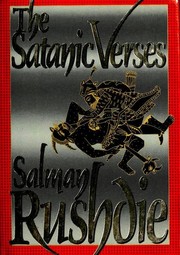
magic realist fiction · 1988
The Satanic Verses
1988 novel by Salman Rushdie
- 1988
- magic realist fiction
Summary
The Satanic Verses is the fourth novel by British–Indian writer Salman Rushdie. First published in September 1988, the book was inspired by the life of the Islamic prophet Muhammad. As with his previous books, Rushdie used magical realism and relied on contemporary events and people to create his characters. The title refers to the Satanic Verses, a group of Quranic verses about three pagan Meccan goddesses: Allāt, Al-Uzza, and Manāt. The part of the story that deals with the satanic verses was based on accounts from the historians al-Waqidi and al-Tabari.
Source: Wikipedia (CC BY-SA).
Historical Background
Published in September 1988 as Rushdie's fourth novel, The Satanic Verses arrived after Midnight's Children (1981) and Shame (1983) had established him as a major voice of postcolonial and migrant fiction. The novel emerged from Rushdie's sustained interest in the intersections of migration, hybridity, and religious identity, and from his engagement with early Islamic historiography, particularly the accounts of al-Waqidi and al-Tabari concerning the so-called "satanic verses" episode in the Prophet Muhammad's career. Written in London during the 1980s, the book reflects the experience of South Asian immigrants in Thatcher-era Britain, a period marked by racial tension and debates over multiculturalism. The novel's publication provoked immediate and severe controversy: it was banned in India within days, and in February 1989 Ayatollah Ruhollah Khomeini of Iran issued a fatwa calling for Rushdie's death, forcing the author into years of hiding under police protection. The book won the 1988 Whitbread Award for Novel of the Year and was shortlisted for the 1988 Booker Prize, though it lost to Peter Carey's Oscar and Lucinda. Its blending of realist migrant narrative with dream-visions of religious history made it a landmark, and deeply contested, text of late twentieth-century world literature.
The Story
The novel opens with two Indian actors, Gibreel Farishta, a Bollywood star famous for playing Hindu gods, and Saladin Chamcha, an Anglicized voice-over artist, falling from an exploded hijacked airliner over the English Channel and miraculously surviving. Their fall triggers a metamorphosis: Gibreel begins manifesting as the archangel Gabriel, while Saladin sprouts horns and hooves, becoming a devil-like figure. Their parallel stories explore migration, identity, and transformation in London, as Saladin faces racism, arrest, and estrangement from his adopted country and his own past, while Gibreel, tormented by religious visions and mental instability, drifts toward tragedy. Interwoven with this contemporary frame are dream-sequences experienced by Gibreel: episodes reimagining the early history of a monotheistic faith led by a merchant-prophet named Mahound in the city of Jahilia, including the controversial incident in which the Prophet initially accepts, then rejects as satanically inspired, verses permitting worship of three pagan goddesses. Further visions follow a fanatical village girl, Ayesha, who leads pilgrims on a fatal walk into the Arabian Sea, and an exiled Imam plotting revolution from London. The narrative threads converge as Saladin's jealousy and vengefulness precipitate Gibreel's final breakdown, while Saladin himself undergoes a reconciliation with his dying father and his Indian roots, ending the novel on a note of tentative redemption amid the wreckage of Gibreel's suicide.
Themes
- Migration, hybridity, and diasporic identity
- Good and evil as intertwined rather than opposed
- Religious faith, doubt, and revelation
- Metamorphosis and the instability of the self
- Cultural translation and mistranslation between East and West
- Exile and belonging
- The power and danger of storytelling
- Postcolonial Britain and racism
Literary Devices
- Magical realism — fantastical metamorphoses and miracles narrated within a realist frame
- Dream-vision narrative — Gibreel's dreams stage an alternate, mythic history alongside the main plot
- Intertextuality — reworks early Islamic historiography (al-Waqidi, al-Tabari) and religious source material
- Doubling and mirroring — Gibreel and Saladin as angel/devil counterparts who reflect and invert each other
- Polyphonic, multi-stranded structure — interwoven timelines and narrators spanning continents and eras
- Hybrid, code-switching prose style — mixes English registers, Bombay film idiom, and vernacular wordplay
- Satire — lampoons religious fundamentalism, celebrity culture, and British racism alike
Symbolism
- Gibreel and Saladin's fall from the airplane — rebirth and the destabilization of fixed identity
- Horns and hooves on Saladin — the demonization of the immigrant 'other' by a hostile society
- The 'satanic verses' episode itself — the anxiety over distinguishing divine revelation from human or demonic corruption
- The sea walk of Ayesha's pilgrims — blind faith and the destructive potential of absolute religious certainty
Critical Interpretation
The Satanic Verses has generated one of the most polarized bodies of response in modern literary history, split between literary-critical readings and the political-religious controversy surrounding it. Postcolonial critics, including readings informed by Homi Bhabha's concepts of hybridity and cultural translation, have treated the novel as a paradigmatic text of migrant consciousness, celebrating its refusal of fixed identity and its playful destabilization of East-West binaries. Other critics have focused on its place within magical realism and postmodern metafiction, linking it to Rushdie's characteristic techniques of narrative excess, allegory, and intertextual play. Simultaneously, the novel became a flashpoint in debates over free expression versus religious sensitivity after many Muslims viewed its dream-sequences concerning the Prophet as blasphemous, leading to book burnings, bans in multiple countries, and Khomeini's 1989 fatwa. Some critics and religious scholars have read the controversy itself as central to the book's meaning, arguing the novel dramatizes precisely the perils of transgressive art in a world of competing certainties, while others have argued that literary analysis was often overshadowed by the political crisis, complicating dispassionate critical assessment of the text on its own terms.
Quotations
To be born again, first you have to die.
Opening motif spoken in connection with Gibreel Farishta's fall and transformation, establishing the novel's theme of metamorphosis.
Influence
The Satanic Verses became a defining, if fraught, touchstone for late twentieth-century debates on free speech, blasphemy, and multiculturalism, reshaping public discussion of the relationship between literature and religious offense in ways that extended well beyond literary circles. Within fiction, it consolidated Rushdie's reputation, alongside Midnight's Children, as a central figure of postcolonial and migrant literature, and its hybrid, maximalist style influenced later diasporic and magical-realist novelists writing about migration and cultural in-betweenness. The controversy surrounding it also became a landmark case study in discussions of censorship, artistic freedom, and the global reach of religious and political reaction to literature, referenced repeatedly in subsequent debates over contested books and cartoons.
Related Works
- Midnight's Children — Salman Rushdie
- Shame — Salman Rushdie
- One Hundred Years of Solitude — Gabriel García Márquez
- The Moor's Last Sigh — Salman Rushdie
- Haroun and the Sea of Stories — Salman Rushdie
Curator's Notes
- 1The novel's title refers to a disputed episode in early Islamic history concerning verses about three pre-Islamic Meccan goddesses, drawn from the medieval historians al-Waqidi and al-Tabari.
- 2The book won the Whitbread Award for Novel of the Year in 1988.
- 3Following Ayatollah Khomeini's 1989 fatwa, Rushdie lived under police protection for years, one of the most extreme responses to a work of fiction in modern history.
- 4The novel was banned in India within days of its publication in 1988.
For the Exam
UGC NET commonly tests The Satanic Verses as a key postcolonial/magical realist text: expect questions on Rushdie's biography and bibliography (placing it after Midnight's Children and Shame), the novel's central technique of magical realism and hybrid identity (Gibreel/Saladin as angel-devil doubles), its treatment of migration and diaspora, and the historical fact of the 1989 fatwa as a landmark free-speech/censorship case. Candidates should also know its 1988 Whitbread Award and its place within Rushdie's broader postcolonial oeuvre.