Summary
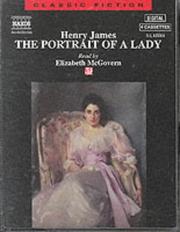
The Portrait of a Lady is a novel by Henry James, first published as a serial in The Atlantic Monthly and Macmillan's Magazine in 1880–81 and then as a book in 1881. It is one of James's most popular novels and is regarded by critics as one of his finest.
Source: Wikipedia (CC BY-SA).
Historical Background
Henry James composed The Portrait of a Lady during his early maturity as an expatriate American living in Europe, serializing it simultaneously in the Atlantic Monthly (Boston) and Macmillan's Magazine (London) through 1880–81 before its book publication in 1881. James had already established the "international theme" — the encounter of American innocence with European sophistication and corruption — in earlier works like Daisy Miller and The American, and Portrait represents its fullest early treatment. Living in London and steeped in the fiction of George Eliot and Ivan Turgenev, James aimed to write a novel centered almost entirely on the consciousness of a single heroine, Isabel Archer, testing how far psychological interiority could carry a plot traditionally driven by external incident. He later revised the novel extensively for the 1908 New York Edition, adding a famous preface comparing the novelist's task to building "the house of fiction" with countless possible windows of perception. The novel reflects James's transatlantic sensibility, his fascination with personal freedom versus social convention, and his belief that a woman's inner moral life could sustain a major novel's architecture.
The Story
Isabel Archer, a spirited young American, is brought to England by her aunt, Mrs. Touchett, and finds herself courted by the wealthy Lord Warburton and the American businessman Caspar Goodwood, both of whom she refuses in her desire for independence. Her ailing cousin Ralph Touchett, who loves her silently, persuades his dying father to leave Isabel a large fortune so she may have the means to fulfill her potential freely. Touring Europe, Isabel befriends the cultivated but scheming Madame Merle, who steers her toward Gilbert Osmond, a refined, impoverished dilettante living in Florence with his shy daughter Pansy. Isabel marries Osmond, only gradually discovering that he is cold, controlling, and married her chiefly for her money, and that Madame Merle and Osmond were once lovers and are Pansy's actual parents, having orchestrated the match. Isabel endures her marriage's suffocation with dignity, torn between the code of fidelity and her crushed autonomy. Returning to England to see the dying Ralph, she is finally able to voice her love for him. Goodwood renews his passionate appeal for her to leave Osmond, but in the novel's famously ambiguous ending, Isabel chooses to return to Rome and her marriage, an act read variously as defeat, moral duty, or continued self-determination.
Themes
- Personal freedom versus social convention
- The American innocent abroad
- Marriage as constraint and self-sacrifice
- Consciousness and moral perception
- Money and the corruption of motive
- Betrayal and manipulation beneath social polish
- The limits and costs of independence
Literary Devices
- Central consciousness — the narrative filters events almost entirely through Isabel's perception and reflection
- Free indirect discourse — blending narrator's voice with Isabel's inner thoughts
- The international theme — contrasting American directness with European refinement and duplicity
- Dramatic irony — readers and other characters sense Osmond's and Merle's falseness before Isabel does
- Symbolic settings — English gardens, Florentine villas, and Roman interiors mirror psychological states
- The unreliable surface — characters' manners conceal true motives, requiring careful reading of appearances
Symbolism
- The house/portrait motif — Isabel as a 'portrait' framed and confined by others' perceptions
- Gilbert Osmond's collection of art objects — his treatment of Isabel as another prized possession
- Gardencourt and its English gardens — lost pastoral freedom and possibility
- Rome and the Palazzo Roccanera — the weight of history and tradition closing in on Isabel
Critical Interpretation
Early readers, including some Victorian critics, found the novel's ending frustratingly inconclusive, wishing Isabel had left Osmond decisively. Twentieth-century formalist and psychological critics, following F. R. Leavis's inclusion of James in "the great tradition," praised the novel's moral seriousness and psychological subtlety. James's own 1908 preface, with its "house of fiction" metaphor, became a touchstone for narrative theory and discussions of point of view. Feminist critics have since debated Isabel's final choice as either a tragic capitulation to patriarchal marriage or a deliberate, self-authored act of moral responsibility and quiet resistance. Critics have also examined the novel through the lens of Jamesian realism and its debt to George Eliot, as well as its treatment of American exceptionalism confronting European experience and corruption.
Quotations
She had an unquenchable desire to think well of herself.
Narrator's early characterization of Isabel Archer's self-regard and idealism (Chapter 6)
Influence
The Portrait of a Lady's technique of channeling narrative almost wholly through a central consciousness anticipated the psychological realism of the modernist novel, influencing writers such as Virginia Woolf, Edith Wharton, and later stream-of-consciousness experiments. James's meditations on point of view, later elaborated in his prefaces, shaped twentieth-century narrative theory, including Percy Lubbock's The Craft of Fiction. The novel's portrait of an independent-minded American woman confronting European social codes helped establish the "international novel" as a durable subgenre, and its ambiguous, morally complex heroine influenced subsequent explorations of female interiority and autonomy in fiction.
Adaptations
- The Portrait of a Lady (1996 film), directed by Jane Campion, starring Nicole Kidman as Isabel Archer and John Malkovich as Gilbert Osmond
Related Works
- Daisy Miller by Henry James
- The Wings of the Dove by Henry James
- The Ambassadors by Henry James
- The House of Mirth by Edith Wharton
- Middlemarch by George Eliot
Curator's Notes
- 1The novel was serialized simultaneously in the Atlantic Monthly in the US and Macmillan's Magazine in Britain before its 1881 book publication.
- 2James substantially revised the novel for the 1908 New York Edition, adding his celebrated preface on the 'house of fiction.'
- 3The novel's ambiguous, open ending has remained one of the most debated conclusions in American literary fiction.
- 4James considered it one of his most fully realized early novels and a turning point toward his mature style.
For the Exam
UGC NET commonly tests Henry James as a key figure in American literary realism and the 'international theme,' asking about The Portrait of a Lady's publication history (1881, serialized 1880–81), its central consciousness narrative technique, the 1908 New York Edition preface and 'house of fiction' metaphor, character relationships (Isabel Archer, Osmond, Madame Merle, Ralph Touchett), and its thematic concern with freedom, marriage, and moral perception.