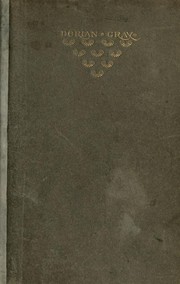
Gothic novel · 1890
The Picture of Dorian Gray
by Oscar Wilde
1890–1891 novel by Oscar Wilde
- 1890
- Gothic novel
Summary
The Picture of Dorian Gray is an 1890 philosophical fiction and Gothic horror novel by Irish author Oscar Wilde. A shorter novella-length version was published in the July 1890 issue of the American periodical Lippincott's Monthly Magazine, while the novel-length version was published in April 1891. As the only novel written by Wilde, it is widely regarded as a classic of both Gothic and English literature, having been adapted many times for films, stage, plays, and other forms of art performances.
Source: Wikipedia (CC BY-SA).
Historical Background
Oscar Wilde wrote The Picture of Dorian Gray during the height of his fame as a wit and aesthete in late-Victorian London. A shorter version appeared in Lippincott's Monthly Magazine in July 1890; Wilde then revised and expanded it, adding new chapters and a defensive preface, for the 1891 book edition. The novel emerged from Wilde's engagement with the Aesthetic and Decadent movements, whose credo of "art for art's sake" he championed against Victorian moralism. Its ideas are steeped in the influence of Walter Pater's aestheticism and echoes of J.-K. Huysmans's decadent novel À Rebours, alluded to in the text as the "yellow book" that corrupts Dorian. The 1890 magazine version provoked outrage from reviewers who condemned it as immoral and decadent, prompting Wilde to add the famous Preface defending art's autonomy from ethics, and to tone down some homoerotic undertones for the 1891 edition. The novel's concerns with duality, hidden sin, and surface beauty also reflect contemporary anxieties about identity and respectability that would later surface, ironically, in the 1895 trials that led to Wilde's own imprisonment for gross indecency.
The Story
Dorian Gray, a beautiful young man, sits for a portrait by the painter Basil Hallward, who is infatuated with his beauty. Through Basil, Dorian meets the cynical aristocrat Lord Henry Wotton, whose seductive philosophy of hedonism and sensation reshapes Dorian's outlook. Struck by the fear that his beauty will fade while the portrait remains young, Dorian wishes that the painting could age in his place. The wish is granted: as Dorian pursues a life of unrestrained pleasure and cruelty, the portrait secretly absorbs the marks of age and moral corruption while he himself remains outwardly youthful. His callous rejection of the actress Sibyl Vane leads to her suicide, marking the beginning of his moral decline. Over the following years, Dorian descends into a life of secret vice, addiction, and scandal, guided in part by a mysterious decadent French novel Lord Henry gives him. He eventually murders Basil after showing him the now-hideous portrait, then blackmails a former friend to dispose of the body. Haunted by guilt yet unable to reform, and pursued by Sibyl's vengeful brother James, Dorian ultimately turns on the portrait itself, stabbing it in an attempt to destroy the evidence of his sins. The act kills him: his servants find a withered, unrecognizable corpse beside a portrait restored to its original youthful beauty.
Themes
- Duality of the soul and the double life
- The corrupting power of unchecked hedonism
- Art versus morality (aestheticism)
- The transience of beauty and youth
- Influence and moral corruption
- Vanity and self-worship
- Sin, guilt, and the impossibility of escaping consequence
- Surface appearance versus inner reality
Literary Devices
- Doppelganger/double motif — the portrait functions as Dorian's hidden, monstrous double
- Epigrammatic dialogue — Lord Henry's paradox-laden wit voices Wilde's aestheticist philosophy
- Gothic conventions — a supernatural, decaying portrait hidden away in a locked room
- Symbolism — the portrait, the yellow book, and gardens/flowers carry moral and thematic weight
- Foreshadowing — early remarks about beauty and age anticipate the novel's tragic reversal
- Frame narrative/preface — Wilde's prefatory aphorisms comment ironically on the story that follows
- Irony — Dorian's outward perfection masks inward decay, inverting Victorian ideals of virtue and appearance
Symbolism
- The portrait — Dorian's conscience and true, corrupted self
- The yellow book — decadence and corrupting artistic influence
- Sibyl Vane's stage roles — the danger of confusing art/illusion with reality
- The locked schoolroom — repression and the hidden, shameful self
Critical Interpretation
Contemporary Victorian reviewers attacked the novel as immoral and dangerous, prompting Wilde's added Preface, which insists "there is no such thing as a moral or an immoral book" and defends art's independence from ethics — a manifesto for aestheticism. Twentieth-century criticism has read the novel through Gothic and decadent traditions, tracing its debts to Poe, Huysmans, and the Faust legend. Later scholarship, especially from queer theory, has examined the novel's coded homoeroticism, particularly Basil's worship of Dorian, in light of Wilde's own trials and the strictures of Victorian sexual morality. Critics have also debated whether the novel ultimately endorses or punishes Lord Henry's hedonistic philosophy, noting the tension between Wilde's aestheticist pronouncements and the moralistic, almost Gothic-horror punishment Dorian receives at the novel's close.
Quotations
There is no such thing as a moral or an immoral book. Books are well written, or badly written.
Wilde's manifesto defending art's autonomy from morality.
I have grown to love secrecy. It seems to be the one thing that can make modern life mysterious or marvellous to us.
Dorian reflecting on his double life.
When one is in love, one always begins by deceiving one's self, and one always ends by deceiving others.
Lord Henry Wotton's epigrammatic wit.
Influence
The novel is a foundational text of Gothic and decadent fiction, extending the tradition of the doppelganger narrative alongside works like Robert Louis Stevenson's Strange Case of Dr Jekyll and Mr Hyde. Its fusion of aestheticist philosophy, Gothic horror, and psychological study of vice influenced later explorations of hidden selves and moral corruption in fiction and film, and it helped cement the "portrait that ages" as a lasting cultural trope. The novel also shaped subsequent debates over art, censorship, and morality, and its author's own downfall lent it enduring biographical resonance.
Adaptations
- The Picture of Dorian Gray (1945 film), directed by Albert Lewin, starring Hurd Hatfield
- Dorian Gray (2009 film), directed by Oliver Parker, starring Ben Barnes
Related Works
- Strange Case of Dr Jekyll and Mr Hyde by Robert Louis Stevenson
- À Rebours (Against Nature) by Joris-Karl Huysmans
- Faust by Johann Wolfgang von Goethe
- The Great God Pan by Arthur Machen
- Wilde's essay The Decay of Lying
Curator's Notes
- 1Wilde's only novel — he was primarily known as a playwright and poet.
- 2The 1890 magazine version was shorter and more sexually suggestive than the revised 1891 book edition.
- 3Passages from the novel were read aloud as evidence against Wilde during his 1895 gross indecency trials.
- 4The character Basil Hallward's devotion to Dorian is often read as reflecting Wilde's own aesthetic and personal preoccupations.
For the Exam
UGC NET frequently tests this novel under Victorian/Aestheticism and Decadent movement questions: identifying Wilde as author, the novel's date (1890/1891), its status as Wilde's only novel, the Preface's aphorisms ("Art for art's sake"), key characters (Dorian, Lord Henry, Basil, Sibyl Vane), and the doppelganger/Gothic device of the aging portrait. Questions may also link it to Aestheticism, Walter Pater's influence, and comparisons with Jekyll and Hyde.