1935
Swami and Friends
novel by Indian author R. K. Narayan
- 1935
Summary
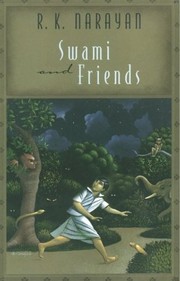
Swami and Friends is a 1935 novel by R. K. Narayan, marking his debut as an English-language novelist from India. It is the first book in a trilogy set in the fictional town of Malgudi during British India. The novel is followed by The Bachelor of Arts and The English Teacher, completing the trilogy.
Source: Wikipedia (CC BY-SA).
Historical Background
R. K. Narayan wrote Swami and Friends in the early 1930s and published it in 1935, his debut novel. The manuscript reached Graham Greene through a friend of Narayan's, and Greene, impressed, arranged its English publication and became a lifelong champion of Narayan's fiction, also reportedly helping settle on the final title. The novel inaugurates the fictional South Indian town of Malgudi, the setting Narayan would use for nearly all his later work, making this book foundational to his entire career. Set in British India, with colonial institutions such as the mission school and, at the margins, the nationalist freedom movement forming a quiet backdrop, the novel draws on Narayan's own boyhood memories of growing up in Madras. It is the first installment of what is loosely called the "Malgudi trilogy," followed by The Bachelor of Arts and The English Teacher, both tracing a similar arc from boyhood toward maturity. The book established the voice for which Narayan became known: gentle irony, unadorned prose, and an affectionate, unsentimental portrait of ordinary Indian life, distinguishing him from more overtly political or stylistically experimental Indian English writers of his generation.
The Story
Swami and Friends follows Swaminathan, a schoolboy in the fictional town of Malgudi, through the small dramas of childhood: school, friendship, play, and family life. Swami studies at the Albert Mission School under teachers he finds by turns tedious and terrifying, and moves within a shifting circle of friends, notably the confident, well-off Rajam, the local police superintendent's son, who becomes captain of the boys' newly formed cricket team, and the impulsive, loyal Mani. A central strand follows the boys' attempt to organize a cricket team, the Malgudi Cricket Club, which brings out rivalries, hurt pride, and reconciliations among the friends, especially between Swami and Rajam. The wider political ferment of colonial India brushes against Swami's world when a nationalist protest draws him into a school boycott, leading to trouble with the mission-school authorities and eventually his withdrawal to a different school. Domestic scenes with Swami's grandmother, father, and the family setting round out the portrait of a middle-class Malgudi household. The novel builds toward an important cricket match and a crisis of loyalty and misunderstanding between Swami and Rajam, culminating in Rajam's family leaving Malgudi and an unresolved, poignant parting between the two boys, which closes the novel on a note of loss characteristic of Narayan's understated style.
Themes
- Childhood and the loss of innocence
- Friendship, loyalty, and rivalry
- Colonial education and its discontents
- The individual amid nationalist politics
- Small-town life in Malgudi
- Authority versus childhood freedom
- Class and social difference among children
- Nostalgia for a vanished world
Literary Devices
- Malgudi as fictional microcosm — an invented South Indian town that grounds the novel in a believable, richly particular social world
- Child's-eye narration — events, including politics, are filtered through Swami's limited, often comic understanding
- Gentle irony — the narrator's wry distance from Swami's self-important logic produces humour without mockery
- Episodic structure — loosely linked incidents (school, cricket, friendship quarrels) rather than a tightly plotted arc, mirroring the rhythm of a child's life
- Colloquial, unadorned English prose — simple diction that became Narayan's trademark style
- Understatement — emotionally significant moments, like the final parting, are rendered with restraint rather than melodrama
Symbolism
- The Albert Mission School — colonial authority and the imposition of foreign discipline on native children
- Cricket and the Malgudi Cricket Club — boyhood aspiration, organization, and the fragility of friendship under pressure
- Malgudi itself — an idealized, timeless India standing apart from the upheavals of colonial politics
- Rajam's departure — the impermanence of childhood attachments and the intrusion of the adult world
Critical Interpretation
Critics have long read Swami and Friends as inaugurating Narayan's distinctive fictional world of Malgudi and his characteristic mode of gentle, ironic realism, often contrasted with the more overtly nationalist or experimental strands of Indian English fiction from writers like Mulk Raj Anand and Raja Rao. Graham Greene's early advocacy framed Narayan as a writer of universal, humane fiction rather than a political novelist, a view that shaped decades of reception. Some postcolonial critics have since questioned this framing, arguing that the novel's apparent political innocence and its comic treatment of the nationalist boycott episode itself register, obliquely, the ambivalence of colonial subjects toward both British authority and the freedom movement. The novel is also frequently discussed as a bildungsroman in miniature, valued for its psychologically convincing portrayal of a child's consciousness and for founding the "Malgudi trilogy" continued in The Bachelor of Arts and The English Teacher. Its plain, unornamented English prose has been praised as a deliberate stylistic choice suited to its subject, though occasionally described by early reviewers as artless compared to more stylistically ambitious contemporaries.
Influence
Swami and Friends established Malgudi as one of the most enduring imagined locales in Indian English fiction, a template later echoed by other regional micro-worlds in South Asian writing. By demonstrating that ordinary, small-town Indian life could sustain serious literary fiction in English without recourse to exoticism or overt political polemic, the novel helped legitimize a distinctly Indian, realist strand of the English-language novel. Narayan's plain prose style and ironic, humane tone influenced generations of Indian writers in English, and Graham Greene's sponsorship of the book helped open the door for Indian novelists to reach British and international publishers. The Malgudi setting, continued across many later Narayan novels and story collections, became a touchstone for discussions of place and fictional world-building in postcolonial literature.
Adaptations
- Swami and Friends was adapted, together with material from other Malgudi stories, into the Indian television series Malgudi Days (1986–87), directed by Shankar Nag.
Related Works
- The Bachelor of Arts by R. K. Narayan
- The English Teacher by R. K. Narayan
- Malgudi Days by R. K. Narayan
- The Guide by R. K. Narayan
- Untouchable by Mulk Raj Anand
- Kanthapura by Raja Rao
Curator's Notes
- 1Swami and Friends was R. K. Narayan's debut novel, published in 1935.
- 2The manuscript was championed for English publication by Graham Greene, who became one of Narayan's closest literary allies.
- 3The fictional town of Malgudi introduced in this novel became the setting for most of Narayan's subsequent fiction.
- 4The novel is the first book of a loose trilogy completed by The Bachelor of Arts and The English Teacher.
- 5The novel was later adapted for Indian television as part of the acclaimed series Malgudi Days.
For the Exam
UGC NET English typically tests Swami and Friends as R. K. Narayan's 1935 debut novel and the founding text of the Malgudi fictional world, often in relation to the "Malgudi trilogy" (with The Bachelor of Arts and The English Teacher). Expect questions on Narayan's place within Indian Writing in English alongside Mulk Raj Anand and Raja Rao, Graham Greene's role in Narayan's early publication history, the novel's child-narrator perspective and ironic realist style, and its treatment of colonial education and nationalist politics from a child's viewpoint.