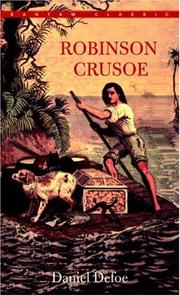
developmental novel · 1719
Robinson Crusoe
by Daniel Defoe
1719 novel by Daniel Defoe
- 1719
- developmental novel
- robinsonade
- adventure fiction
- pirate fiction
Summary
Robinson Crusoe is an English adventure novel by Daniel Defoe, first published on 25 April 1719. It is often credited as marking the beginning of realistic fiction as a literary genre, and has been described as the first novel, or at least the first English novel – although these labels are disputed.
Source: Wikipedia (CC BY-SA).
Historical Background
Daniel Defoe published Robinson Crusoe in April 1719, when he was nearly sixty and already an experienced journalist, pamphleteer, and political agent. The novel drew on the burgeoning genre of travel narratives and castaway accounts, most notably the real-life ordeal of Alexander Selkirk, a Scottish sailor marooned on a Pacific island for several years after a dispute with his captain. Defoe also absorbed Puritan spiritual autobiography and providence literature, which traced a sinner's fall, trial, and eventual repentance, alongside the picaresque tradition of first-person adventure narrative. England in 1719 was expanding its overseas trade and colonial ambitions, and Crusoe's preoccupations with commerce, property, labour, and mastery over nature reflect the emergent mercantile and colonial worldview of the period. Presented on its title page as a true account written by Crusoe himself, the book exploited contemporary readers' appetite for authentic-seeming first-person narrative, and its commercial success led Defoe to write sequels. Its blend of circumstantial realism, economic calculation, and religious self-examination made it a landmark in the emergence of the English novel as a form distinct from prose romance, and it is widely regarded as one of the first novels in English.
The Story
Robinson Crusoe, against his father's wishes, leaves England to go to sea. After surviving a shipwreck and later being captured and enslaved in North Africa, he escapes and eventually settles in Brazil as a plantation owner. Setting out on a voyage to acquire slaves for the plantation, he is shipwrecked on a remote, uninhabited island, the sole survivor. Over many years he salvages tools and supplies from the wreck, builds a fortified shelter, cultivates grain, domesticates goats, and methodically remakes the trappings of civilization through diligence and reason. His ordeal prompts a spiritual crisis and gradual conversion, as he comes to read his isolation providentially, keeping a journal and turning to the Bible for comfort. After many years alone, he discovers a human footprint and learns that cannibals from the mainland occasionally visit the island. He eventually rescues one of their intended victims, whom he names Friday, teaches him English and Christianity, and takes him as a servant and companion. Together they later help put down a mutiny aboard an English ship that arrives at the island, and in gratitude the restored captain carries Crusoe back to England after twenty-eight years on the island. The novel closes with Crusoe safely back in England, now married and prosperous, reflecting on his providential deliverance, with the narrative hinting at further adventures still to come — later recounted in Defoe's sequel, The Farther Adventures of Robinson Crusoe.
Themes
- Providence and religious conversion
- Isolation and self-reliance
- Colonialism and mastery over nature
- Labour, property, and economic individualism
- Civilization versus the "savage"
- Fear and psychological survival
- Guilt, sin, and repentance
- Companionship and hierarchy (Crusoe and Friday)
Literary Devices
- First-person narration — the entire novel is presented as Crusoe's own retrospective account, lending it documentary authenticity
- Journal/diary form — Crusoe's day-by-day log heightens realism and marks the passage of time on the island
- Verisimilitude/circumstantial realism — exhaustive practical detail about tools, food, and building lends the fiction a factual texture
- Providential pattern — recurring interpretation of chance events (storms, illness, the footprint) as signs of divine purpose
- Spiritual autobiography structure — the narrative follows a Puritan pattern of transgression, suffering, and conversion
- Economic/ledger-like accounting — Crusoe literally tallies his "good" and "evil" in balance-sheet form
Symbolism
- The footprint — the sudden intrusion of the human/social world into Crusoe's solitary order
- The island — isolation, self-sufficiency, and a blank space for civilization to be rebuilt
- The Bible — providence, conscience, and spiritual authority
- Friday — the colonized "other," and the unequal, hierarchical model of companionship Crusoe imposes
- Crusoe's fortified dwelling and fence — the imposition of order, ownership, and security on wild nature
Critical Interpretation
Robinson Crusoe has been central to debates about the origins of the English novel, with Ian Watt's The Rise of the Novel treating it as a foundational text of formal realism and Puritan individualism. Marxist and economic critics have read Crusoe as an allegory of homo economicus, emphasizing his accounting mentality, labour, and accumulation of property. Postcolonial critics, following the broader turn in criticism from the later twentieth century, have scrutinized the novel's colonial assumptions, particularly Crusoe's enslavement history, his appropriation of the island, and his paternalistic, hierarchical relationship with Friday; this reading has notably shaped adaptations and rewritings such as J. M. Coetzee's Foe. Religious and spiritual critics emphasize the novel's Puritan providential design, reading Crusoe's ordeal as a conversion narrative modeled on spiritual autobiography. Feminist and psychoanalytic readings have also examined the novel's anxieties about solitude, mastery, and the absence of women. The novel's claim to be a true history, and its narrative techniques of realism, remain central to discussions of its historical significance.
Quotations
I have been in all my Circumstances a Memento to those who are touched with the general Plague of Mankind, whence, for ought I know, one half of their Miseries flow.
Crusoe reflecting on discontent with one's station, early in the narrative
Sometimes I fancy'd it must be the devil; and reason joined in with me upon this supposition; for how should any other thing in human shape come into the place?
Crusoe's terrified reaction upon discovering the footprint on the beach
Influence
Robinson Crusoe gave its name to the "robinsonade," a whole subgenre of castaway and survival fiction that includes Johann David Wyss's The Swiss Family Robinson and countless later works of desert-island and survival narrative, as well as films and games built on solitary resourcefulness. Its first-person, documentary style of realism influenced the development of the English novel and the tradition of fictional autobiography. The book's colonial and racial dynamics, especially the Crusoe–Friday relationship, later became a touchstone for postcolonial rewriting, most famously in J. M. Coetzee's Foe. It also entered political-economic thought as a recurring illustrative figure, invoked by economists and philosophers such as Karl Marx to model isolated individual production.
Adaptations
- The Swiss Family Robinson (1812) by Johann David Wyss — a robinsonade directly inspired by Defoe's novel
- Foe (1986) by J. M. Coetzee — a postcolonial rewriting of the Crusoe story
- Robinson Crusoe (1954), directed by Luis Buñuel, starring Dan O'Herlihy
- Robinson Crusoe (1997), directed by Rod Hardy and George T. Miller, starring Pierce Brosnan
Related Works
- Moll Flanders by Daniel Defoe
- A Journal of the Plague Year by Daniel Defoe
- The Swiss Family Robinson by Johann David Wyss
- Foe by J. M. Coetzee
- Gulliver's Travels by Jonathan Swift
- Life of Pi by Yann Martel
Curator's Notes
- 1The novel's full original title runs to many words, beginning 'The Life and Strange Surprizing Adventures of Robinson Crusoe.'
- 2It was first published anonymously, presented as a factual autobiography rather than a work of fiction.
- 3The novel is widely credited, alongside a few contemporaries, as one of the earliest English novels.
- 4Defoe wrote two lesser-known sequels, including The Farther Adventures of Robinson Crusoe, published later in 1719.
- 5Alexander Selkirk's real castaway experience is often cited as a partial inspiration, though Defoe's plot differs substantially from Selkirk's actual story.
For the Exam
UGC NET English commonly tests Robinson Crusoe (1719) as a foundational text in the rise of the English novel, asking about its claim to being the "first English novel," its first-person/documentary realism, and Defoe's biography and other works (Moll Flanders, A Journal of the Plague Year). Expect questions on genre labels (robinsonade, picaresque, spiritual autobiography), the Puritan providential structure, and postcolonial critiques of the Crusoe–Friday relationship. Candidates should also be able to place Defoe within eighteenth-century literary history alongside Swift and Richardson.